close
Choose Your Site
Global
Social Media
Views: 0 Author: Site Editor Publish Time: 2026-10-28 Origin: Site
The NiSi True Color takes the top spot for 2026. It wins for clean color and sharp glass. The Kase KW Revolution Pro is the versatile square system. It shines when shooters swap lenses or stack filters. A budget-friendly circular set gives the best value for minimalists.
Three criteria drive every pick here: optical sharpness, color neutrality, and system flexibility for landscape work. These traits matter most when one frame holds a wide sky and fine foreground detail.
Readers get a full buying guide and detailed reviews of the best nd filters. They also get a side-by-side comparison table and answers to common questions. Landscape photography rewards gear that stays out of the way.
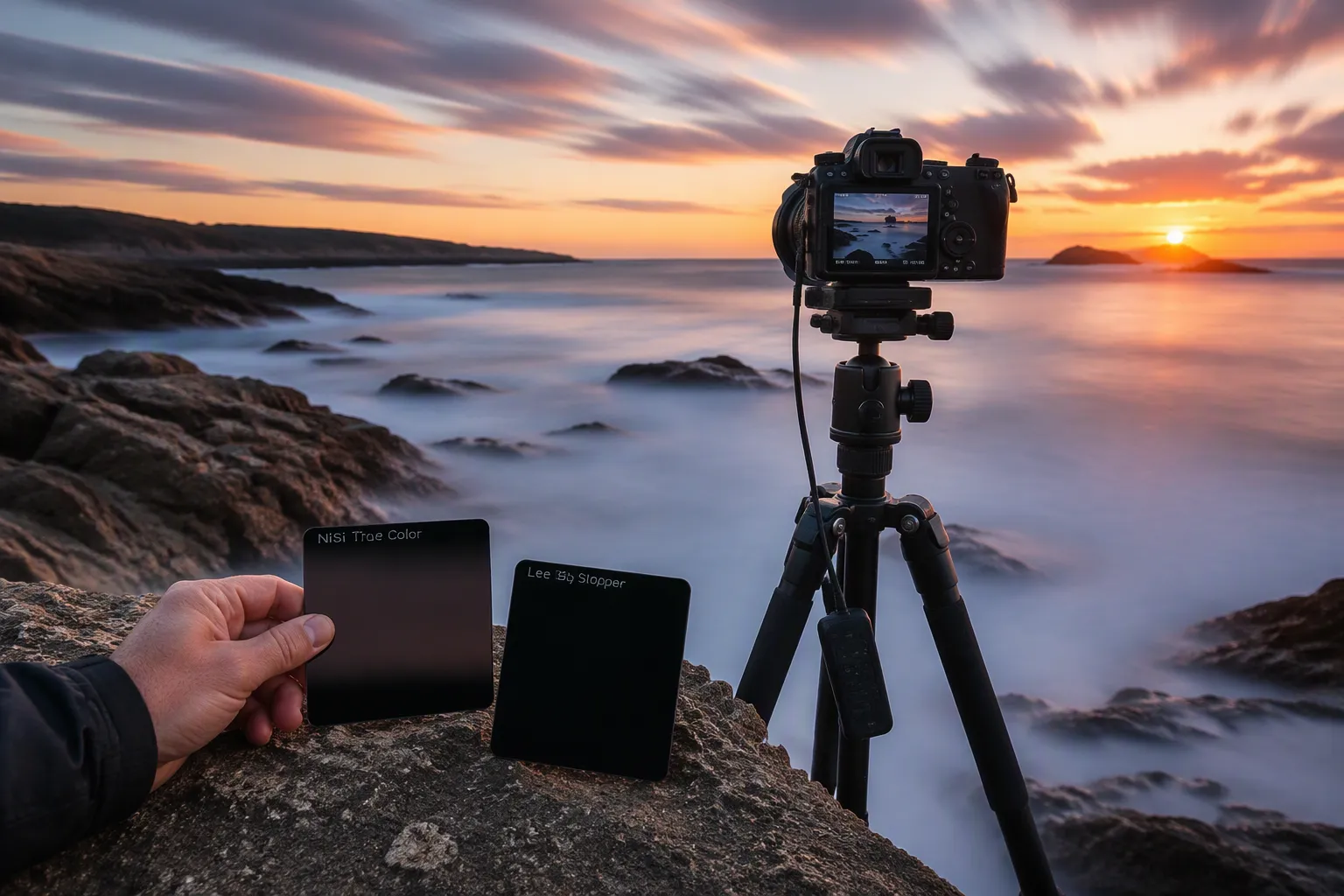
The NiSi True Color filter is the top pick for clear color and sharp glass, so it works great for most landscape scenes.
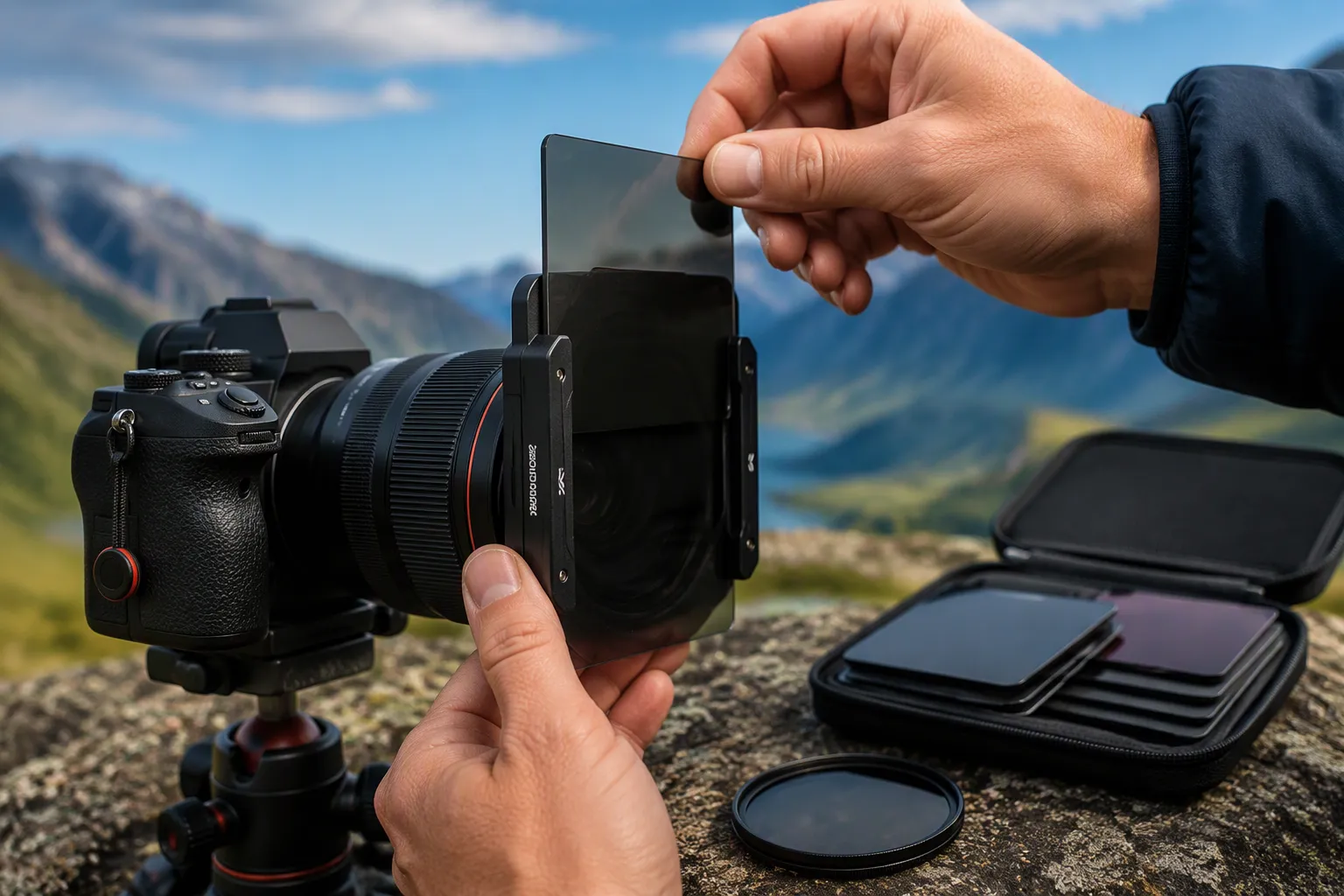
Square filter systems let you use one filter on many lenses and stack filters easily. Circular filters are simpler and lighter for travelers.
A 6-stop ND filter is the best first pick for golden hour shots, and a 10-stop filter works best for bright daylight long exposures.
Always test your filter for color cast and sharpness before a big shoot. Then fix any tint in post-processing.
Stop light from leaking in by covering your viewfinder and taping up any gaps. Clean your filters gently so they keep working well.
The NiSi True Color gets the best overall pick for 2026. It mixes clean color with sharp glass, and that pair works for almost any landscape scene. The Kase KW Revolution Pro takes the square-system title. Shooters who change lenses or stack filters will like how it adjusts.
A budget-friendly circular nd filter set gives the best value. Minimalists and travelers get quick setup without a bag full of extras. The Lee Big Stopper finishes the list as the pick for extreme long exposures. It blocks a huge amount of light, so midday scenes stretch into minutes.
These four picks cover the main paths through landscape photography. One favors pure image quality. Another favors flexibility. The last two favor budget and extreme light control.
Color neutrality came first. A filter with a warm or cool tint forces extra edits on every frame. Sharpness across the frame came next. High-resolution sensors show soft corners fast, so each candidate got a close look at edge detail.
Build quality and light-leak control followed. Gasket seals and frame thickness matter once the sun sits low. Price-to-performance closed out the scoring. A costly filter only wins when it earns that cost.
One more note shaped the list. Fixed nd filters beat variable nd filters for landscape work. Variable designs can add cross-hatch artifacts and uneven density. Fixed strengths keep exposure predictable, frame after frame. That reliability matters more than convenience when a single long exposure carries the shot.
Square systems work well for shooters who use several lenses. One set of square nd filters fits many lenses. A photographer only needs to swap a cheap adapter ring. That is better than buying a separate circular nd filter for each lens size.
Stacking filters is easier too. Most holders have several slots. A shooter can use two neutral density filters at once, or pair an ND with a graduated filter. Screw-in nd filters often cause vignetting when stacked, unless the shooter pays for ultra-thin designs. Square holders avoid that problem.
Square filter systems let you use graduated filters so you can adjust the exposure of something like your sky without affecting your foreground. They also avoid the vignetting that circular filters can cause at wide angles, especially when stacking filters, and their larger size means they can be used across varying lens sizes without issue, making them more versatile for lens selection.
The Kase KW Revolution Pro and Cokin Nuances Extreme both show this strength. Graduated filters need a movable position, and a square holder lets the shooter slide the filter up or down. That control is key for balancing a bright sky against a darker foreground in landscape photography.
Circular filters fit travelers and minimalists. They screw right onto the lens, so setup takes seconds. No holder, no adapter rings, no extra pouch. A hiker who wants one light bag will like that simplicity.
Fixed nd filters in circular form also keep exposure predictable. Variable nd filters can add cross-hatch artifacts at strong settings, which is why many landscape shooters skip them. A plain circular nd filter avoids that risk completely.
Neither format beats the other outright. A square system rewards shooters who stack filters and change lenses often. A circular set rewards shooters who value speed and a small kit. The right choice comes down to workflow, not prestige.
Six-stop neutral density filters are the landscape workhorse. They shine from about half an hour before sunset through sunset, and again from sunrise onward. That window covers most golden hour shooting, and the math stays friendly. Drop the ISO to 50 and the same filter stretches the frame. This 10-stop nd filter quick chart shows why strength matters.
Lighting Condition | ISO | Aperture | Filter | Resulting Exposure |
|---|---|---|---|---|
Golden hour (sunset, sunrise, twilight) | 100 | F11–F18 | 6-stop ND | 2–4 minutes (ideal range) |
Golden hour, extended versatility | 50 | F11–F18 | 6-stop ND | More than double the exposure time |
Golden hour | 100 | F11–F18 | 10-stop ND | Past 8 minutes — unsuitable |
A 10-stop ND is completely useless for sunsets, sunrises, or any shooting during the golden hour because it goes way past the ideal exposure range, usually leading to exposure times that exceed the sunset or sunrise itself.
Save the 10-stop ND1000 filter for bright daylight long exposures of 30 seconds or longer. This nd filter strength guide keeps that split simple. Pick the strength first, then set the shutter.
Keep a small set of nd filters on hand. The staples:
3-stop
6-stop
10-stop
Stack 10-stop nd filters with a 3-stop or 6-stop for extreme durations. A 15-stop filter also works for very long daylight frames. The 10-stop filter earns its keep in bright light, and the 6-stop filter covers lower light. Graduated ND filters balance a bright sky against darker ground, and they slide inside a square holder.
Pros often carry three filters: a polarizer, a graduated ND, and a solid ND. That trio covers long exposures in almost any light. It handles a long exposure waterfall nd filter, an nd filter for ocean photography, and an nd filter for waterfalls. Most landscape photography scenes fall right in line. A circular nd filter set handles the same jobs for travelers who want a light bag. Longer exposures just need more patience and a steady tripod.
Almost every neutral density filter shifts color a little. A tester found a slight green lean on a Tiffen variable ND, and a stronger shift on a B+W 1.8. The lesson is simple: set white balance after you mount the filter. Shoot RAW and correct in post. Color neutrality still matters, though. A filter with a low shift stays easy to fix, and a shift within a few hundred Kelvin counts as good.
Here is a quick way to test any filter before a big shoot:
Set up a tripod, a gray card, and steady lighting.
Shoot the card with no filter. Call this the nominal frame.
Screw on the filter and shoot the card again.
Open both frames in your editor.
White-balance the nominal frame with the picker.
Copy those temperature and tint values.
Paste them onto the filtered frame without re-picking.
A small leftover shift means easy edits. Brand consistency helps too, so buy fixed nd filters from one maker.
Aspect | B+W | Haida |
|---|---|---|
Cast | Orangish-red | Bluish |
Visibility | Less apparent | More apparent |
Fix | White balance in post | White balance in post |
Sharpness matters just as much. High-resolution sensors expose soft corners fast, and wide lenses add vignetting when stacked. Test edge detail before trusting a filter on a landscape shoot.
Light leaks ruin long exposures. Light sneaks between stacked filters, or through the gap between filter and holder. It shows up as haze across the frame. Cover the viewfinder with a hat or gaffer tape. Tape over camera ports and doors. Wrap a dark cloth around the lens and holder.
Light leakage between the filter and the lens can occur if filters are not inserted in the correct order, or if the rubber seal is damaged or missing on high-strength ND filters, which can significantly impact image quality.
Keep the neutral density filter closest to the lens, gasket facing rearward. Use the foam gasket on ProStop and Firecrest filters. Seal gaps with black electrical tape when certainty matters. These habits protect every exposure, and they cost almost nothing.
Two names come up most when people talk about the best neutral density filters for long exposure work. The NiSi True Color earns its spot with neutral color and good glass. The Lee Big Stopper earns its spot by blocking a huge amount of light. Both deserve a place on a shortlist of the best nd filters for long exposure photography.
NiSi has built a name as one of the most trusted brands in landscape filters, and the True Color line shows why. The glass keeps color close to neutral, so edits stay short. Sharpness holds up across the frame, even on high-resolution sensors. Shooters who stack nd filters for long exposures get results they can count on, frame after frame.
These strengths fit long exposure landscape photography well. A six-stop version covers golden hour. A ten-stop version handles bright daylight long exposures. Landscape photography rewards that clean color, and it saves time in post.
No filter is perfect, though. The True Color line costs more than budget circular sets. Shooters who rarely use a filter may not justify the price. Still, for a landscape photographer who shoots long exposures often, the NiSi True Color is a smart buy. It pairs well with a solid tripod and a remote release.
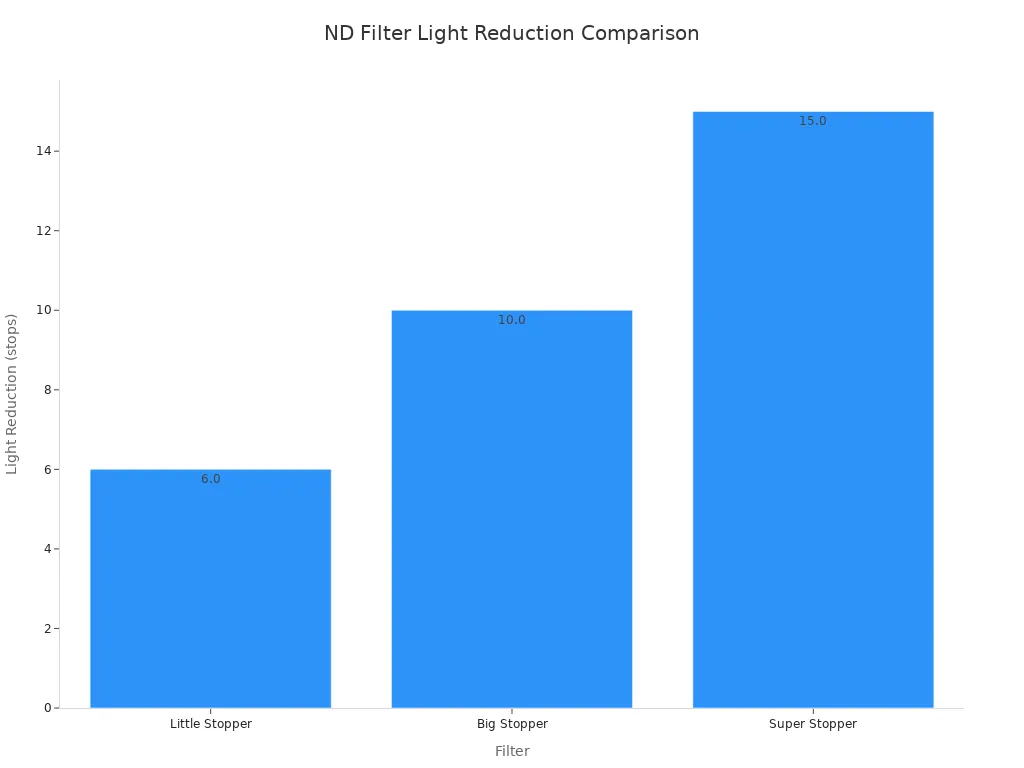
The Lee Big Stopper brings serious light reduction to the table. Here is how the Lee stopper family stacks up:
Filter | Light Reduction |
|---|---|
Little Stopper | 6 stops |
Big Stopper | 10 stops |
Super Stopper | 15 stops |
The 10-stop nd sits in the middle of that range, and it suits classic long exposures. The 10-stop filter flattens moving water and softens clouds. That look defines a minimalist landscape style.
The Lee Big Stopper is a 10-stop long-exposure filter that flattens moving water and softens clouds, making it ideal for a classic, minimalist landscape look.
Build quality is strong. The screw-in versions come in 67mm, 72mm, 77mm, and 82mm sizes. The glass is high-end optical glass with multilayer nano coatings. Those coatings resist scratches, moisture, and fingerprints. An oversized machined-alloy ring makes attachment easy. Vignetting stays minimal to zero, even on wide-angle lenses. The filter also stacks with a circular polarizer and other filters in the LEE Elements range.
Specification | Details |
|---|---|
Light reduction | 10 stops |
Available sizes | 67mm, 72mm, 77mm, 82mm (screw-in) |
Glass construction | High-end optical glass |
Coatings | Multilayer, multi-function nano coatings |
Coating benefits | Scratch resistance, moisture/fingerprint protection, easy cleaning |
Outer ring | Oversized machined-alloy ring for easy attachment/operation |
Vignetting | Minimal to zero, even with wide-angle lenses |
Stacking | Compatible with circular polariser and other VND filters in the LEE Elements range |
Included accessories | Protective case and cleaning cloth |
Color neutrality is the weak spot. LEE's own FAQ includes an entry on removing the blue color cast the Big Stopper produces in long-exposure images. That tells you the tint is known. Neutral density filters should cut light without shifting color, and the Big Stopper falls a bit short of that benchmark. The fix is simple: shoot RAW and correct white balance in post.
The Big Stopper still holds its own. Lee performs well in graduated ND and solid ND up to 3 stops. The Big Stopper just runs a touch warmer in tint than a Firecrest. For a shooter who wants dramatic water and sky in long exposure photography, it delivers.
Square holders are worth it when a shooter wants one filter set to work on several lenses. Two systems stand out for 2026, and each one fits a different kind of workflow.
The Kase KW Revolution Pro works well for landscape and architecture shooters. It covers almost every need a holder system can handle. The kit pairs a magnetic holder with adapter rings, so a photographer can move one set between lenses in seconds. Solid nd filters slide in for long exposures, and graduated filters balance a bright sky against darker ground. A polarizer drops into the same holder, which saves a step when the light changes fast.
The pros are clear. Setup stays quick, the magnetic mount holds firm, and the system handles stacking without trouble. Architecture work benefits from the precise filter positioning. There are cons too. The full kit costs more than a single circular filter, and the holder adds bulk to a travel bag. Shooters who own one lens may not need that flexibility.
The use cases fit well. A landscape photographer who carries two or three lenses gets the most value. So does anyone who shoots buildings and needs clean vertical lines with controlled sky brightness.
The Cokin Nuances Extreme line earns a place among the best nd filters for 2026. The ND1024 delivers a 10-stop reduction, and the ND64 offers a lighter option for shorter frames. Both use tempered glass, and both stay highly neutral even when stacked. The ND1024 works for extended exposures and for cutting depth of field in very bright conditions. It also serves video shooters well, thanks to consistent IR control and stable color across the density range.
The graduated variants deserve a look too. Here is how the two center and reverse options compare:
Filter Variant | Pros | Cons |
|---|---|---|
Center GND ND8 (84×100mm) | Pinpoint dimming of a sun on the horizon; keeps upper sky vivid; tempered glass resists breakage; no color cast when stacked | Only works with a centered split composition; slight misalignment creates a dark stripe |
Reverse GND ND16 (84×100mm) | Survives drops; virtually no color cast; tames the sun near the horizon; easy to clean in seaside spray | 84mm width vignettes on ultra-wide full-frame lenses; needs a separate holder and adapter ring; ineffective with a high sun |
The ideal uses break down simply:
The ND1024 handles long exposure photography in bright light.
The ND64 covers moderate light and shorter frames.
The graduated filters tame a sunset horizon.
The cons matter. The 84mm width vignettes on large-diameter lenses, so APS-C shooters get the cleanest results. A full kit also needs a holder and adapter ring, which pushes the budget up.
Lee Filters remains a solid alternative when a shooter wants strong graduated ND options. Lee holds its own in that category, and the brand gives buyers another path to the same control.
A filter comparison is easiest to read when all the specs are in one spot. The table below shows the top picks for long exposure photography side by side.
Filter | Type | Strengths | Color Neutrality | Mount System | Price Range |
|---|---|---|---|---|---|
NiSi True Color | Circular or square | Clean color, sharp glass | Close to neutral | Screw-in or holder | Premium |
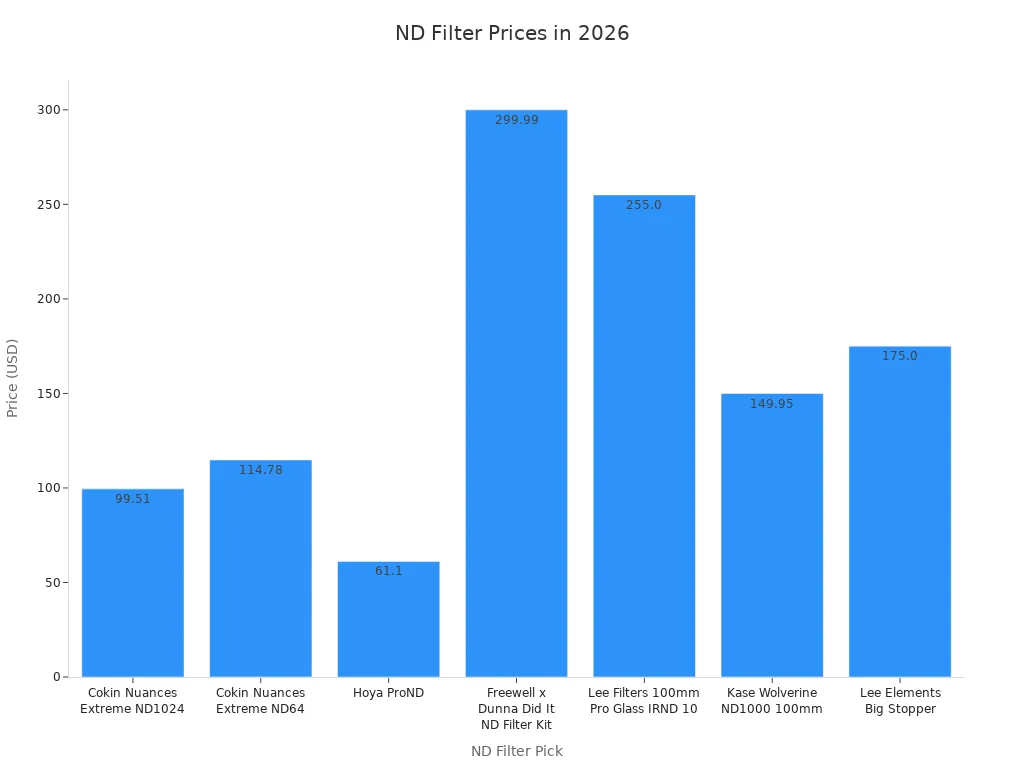
Lee Big Stopper | Circular or square | 10-stop reduction, strong build | Slight blue cast, fixed in post | Screw-in or holder | $175 (Lee Elements) |
Kase KW Revolution Pro | Square | Fast magnetic swaps, stacking | Neutral | Magnetic holder | Mid-to-premium |
Cokin Nuances Extreme ND1024 | Square | 10 stops, neutral when stacked | Highly neutral | Holder and adapter ring | $99.51 |
Cokin Nuances Extreme ND64 | Square | Lighter 6-stop option | Highly neutral | Holder and adapter ring | $114.78 |
The 10-stop filter works well in bright daylight. The 6-stop versions handle golden hour. A shooter can choose a strength first, then match the mount to the lenses they carry.
Budget affects the choice just as much as workflow does. The Cokin square filters start near $100, and the Lee Elements Big Stopper costs $175. A Kase kit costs more, but it takes the place of several circular nd filters across multiple lenses.
Here is where each option fits. The NiSi True Color rewards a shooter who cares about quality and wants neutral color in long exposure landscape photography. The Kase system suits a hybrid user who owns several lenses. The Cokin line gives square-system value seekers a neutral, affordable path. A circular set wins for the minimalist traveler. For landscape photography, the right neutral density filters depend on workflow and budget, not on spending the most.
A few small errors trip up shooters again and again. Here are the big ones:
Pairing a cheap filter with an expensive lens. Low-quality nd filters soften detail, shift color, and cut contrast.
Choosing the wrong strength. Too weak leaves little motion blur. Too strong forces long exposures and makes focusing harder.
Forgetting to cover the viewfinder. On a DSLR, light sneaks in through the eyepiece during long exposures, especially in bright sun.
Leaving stabilization on. Many camera and lens systems do better with it off on a tripod.
Skipping the histogram check. Bright skies and reflections can still clip.
The viewfinder fix is easy. Use the eyepiece cover on the strap, flip the built-in shutter, or tape over the eyepiece. A thumb works in a pinch. Square holders need care too. Slide the filter into the slot nearest the lens so the foam gasket seals out stray light.
Exposure math causes trouble as well. Only the shutter speed should change. Multiply the base time by the filter's factor. A 1/125s frame with an ND1000 becomes about 8 seconds. Variable nd filters make this harder, so most landscape shooters stick with fixed strengths.
Coated glass and resin need gentle care. Resin scratches more easily, so clean it less often and with a lighter touch. Follow this routine:
Blow off loose dust with an air blower before any wiping.
Rinse with fresh water after saltwater contact, then distilled water.
Apply one or two drops of lens cleaner to a microfiber cloth, never onto the filter.
Wipe from the center outward in soft circles.
Store filters in their original hard cases.
Skip paper towels, alcohol, and glass cleaner. Those can harm optical coatings. A clean filter keeps landscape photography simple and predictable.
The right choice depends on how you work and what you can spend, not on the price tag. The NiSi True Color works best for the all-around shooter who cares about quality. The Kase KW Revolution Pro fits the hybrid user who likes square systems. The Cokin Nuances Extreme rewards the value seeker who wants a square system. A circular nd filter set serves the minimalist traveler. Every option here earns its spot, and none of them needs the biggest budget.
A smart next step is a 6-stop filter. It covers golden hour well. Shooters can grow the kit as their style develops. Good nd filters stay out of the way in landscape photography. That freedom lets a landscape shooter focus on light and composition.
A 6-stop filter is the smart first buy. It covers golden hour, from about half an hour before sunset through sunset, and again from sunrise onward. A 10-stop filter suits bright daylight instead. Most shooters add strengths later as their style develops.
Yes, mostly in color and sharpness. A neutral filter keeps edits short, and good glass holds detail across the frame on high-resolution sensors. Budget options can shift color or soften corners. That said, a careful shooter can fix a small cast in post with a RAW file.
Yes. Square holders make this easy, since a polarizer drops into the same holder as the ND. Screw-in users can stack a circular polarizer on top of the filter. Keep the ND closest to the lens, and watch for vignetting on wide lenses.
Blow off dust first, then rinse with fresh water after saltwater contact. Apply a drop or two of lens cleaner to a microfiber cloth, never onto the glass. Wipe from the center outward. Skip paper towels and alcohol, which can harm optical coatings.
Usually not. A square holder adds bulk and cost, and its flexibility pays off across several lenses. A single-lens shooter gets faster setup and a lighter bag from a circular filter. The right call depends on workflow, not on prestige.