
close
Choose Your Site
Global
Social Media
Views: 0 Author: Site Editor Publish Time: 2025-11-24 Origin: Site
Professional photographers often compare L-Mount vs. E-Mount systems to select the best lens mount for their work. The choice depends on a few factors:
Compatibility is crucial because the L-Mount works with various brands.
Ecosystem support is significant, and the E-Mount, particularly the Sony E-Mount, offers a wide range of options.
Brand loyalty and budget also influence photographers' decisions.
Good optics are essential, and companies like Band Optics are leaders in producing exceptional mirrorless lenses featuring high-quality spherical lenses.
Pick lenses that work with your camera and brand. This helps you take better photos.
Use lenses that focus quickly and make clear pictures. These help you catch things that move fast.
Look at both native and third-party lenses. This gives you more choices and helps you save money.
Buy good lenses like Band Optics. They last a long time and make your pictures look great.
Think about the full price of the camera and lenses. This helps you choose wisely when you buy.
Photographers want to know which lens gives the best pictures. They look at l-mount and e-mount lenses for full-frame mirrorless cameras. The lens is important because it affects how much detail the camera can show. The Lumix 24-70mm lens for L-Mount is sharper than some e-mount lenses. This is true when the lens is wide open. Sigma makes lenses for both mounts, and they are almost as sharp as the Lumix. These small differences matter if you need very clear photos for big prints or close-up work.
Band Optics Technology makes spherical lenses that help full-frame mirrorless cameras work better. Their lenses use high-quality materials and smart designs. This helps stop problems like blurry edges and lets more light in. The camera sensor gets a clear picture, so the image looks better. Band Optics spherical lenses give you sharp and detailed photos. They are a good pick for photographers who want perfect pictures.
Here is a table that compares how sharp some popular lenses are:
| Lens Model | Mount | Sharpness (Wide Aperture) | Sharpness (Stopped Down) |
|---|---|---|---|
| Lumix 24-70mm | L-Mount | Excellent | Excellent |
| Sigma 24-70mm | L-Mount/E | Very Good | Very Good |
| Sony 24-70mm G | E-Mount | Good | Very Good |
Full-frame sensors work best with lenses that have great optical quality. Band Optics spherical lenses help photographers reach this goal.
Autofocus speed and accuracy are important for taking pictures of things that move. People talk about l-mount and e-mount autofocus when they shoot sports or animals. Fast and accurate autofocus helps you follow birds or athletes. The 500mm lens for L-Mount focuses quickly and works well for these jobs.
The Sigma 300-600mm lens has a High-response Linear Actuator autofocus system. This makes it faster and better at following moving things.
Many full-frame mirrorless lenses now have special motors and sensors. These help the camera focus quickly and keep the subject sharp.
Band Optics spherical lenses help these autofocus systems by giving a clear path for light. This lets the camera sensor get the right information and focus better. Photographers using full-frame mirrorless cameras like lenses that are sharp and focus fast.
Tip: Pick lenses with good autofocus and sharp images to get the best from your full-frame sensor.
When you compare l-mount and e-mount, think about both sharpness and autofocus. Band Optics spherical lenses are reliable and precise for full-frame mirrorless cameras. They help professionals get great results in many situations.
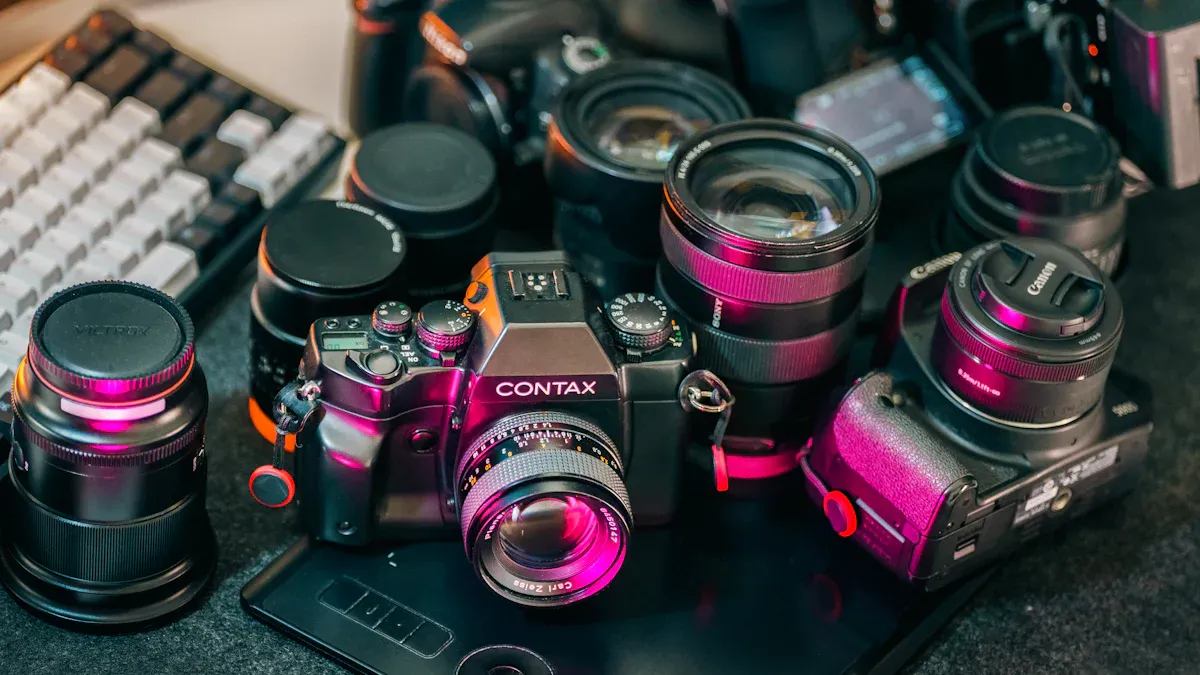
Image Source: pexels
Photographers with full-frame cameras look for native lenses. These lenses fit their camera mount. L-Mount and E-Mount systems have many choices. Native lenses come from the camera brand or trusted partners. They work well with autofocus and image stabilization.
L-Mount users can pick from many focal lengths and apertures. Some popular choices are:
24mm F3.5 DG Contemporary
35mm F2 DG Contemporary
45mm F2.8 DG Contemporary
50mm F2 DG Contemporary
65mm F2 DG Contemporary
90mm F2.8 DG Contemporary
16–28mm F2.8 DG DN Contemporary
20–200mm F3.5–6.3 DG Contemporary
28–70mm F2.8 DG DN Contemporary
100–400mm F5-6.3 DG DN OS Contemporary
200mm F2 DG OS Sports
500mm F5.6 DG DN OS Sports
60–600mm F4.5-6.3 DG DN OS Sports
70–200mm F2.8 DG DN OS Sports
150–600mm F5-6.3 DG DN OS Sports
300–600mm F4 DG OS Sports
Sony FE lenses also give many options for full-frame cameras. These include fast primes, wide zooms, and telephoto lenses. Many professionals use Sony FE lenses for portraits, landscapes, and sports. The E-Mount system works with Sony and Zeiss lenses. This gives photographers even more choices.
Here is a table that shows some native lens options for both mounts:
| Mount | Example Native Lenses | Use Case |
|---|---|---|
| L-Mount | 24-70mm F2.8, 70-200mm F2.8, 90mm F2.8 | Portrait, Sports |
| E-Mount | Sony FE 24-70mm F2.8, FE 85mm F1.4, FE 200-600mm F5.6-6.3 | Portrait, Wildlife |
Native lenses for full-frame cameras give strong performance and reliability. They help photographers take sharp pictures in many situations.
Third-party lenses are important for full-frame mirrorless cameras. Many brands make lenses for L-Mount and E-Mount systems. These lenses often cost less than native ones but still work well. Sigma, Tamron, and Samyang are popular third-party brands. They offer wide-angle, standard, and telephoto lenses for both mounts.
Sony FE lenses have lots of third-party support. Photographers can find many choices for E-Mount cameras. These lenses help users save money and try new styles. L-Mount users also get more third-party lens choices. This makes both systems flexible for different needs.
Band Optics Technology is a top choice for precision spherical lenses. The company makes high-quality lenses for full-frame mirrorless cameras. Band Optics uses advanced materials and strict quality checks. Their spherical lenses give sharp images and low distortion. These lenses work well in medical, laser, and aerospace fields.
Note: Band Optics spherical lenses can be made special for projects. This helps professionals get the exact results they want.
Photographers who want the best often pick Band Optics spherical lenses. These lenses support full-frame sensors and give clear, bright images. The company’s focus on new ideas and quality makes it a trusted partner for tough jobs.
Photographers look at L-Mount and E-Mount when picking a camera. Each mount works with different camera bodies and sensor sizes. L-Mount fits APS-C and full-frame sensors. E-Mount also fits APS-C and full-frame sensors. This lets people choose the camera that fits their needs.
| Mount Type | Sensor Size |
|---|---|
| L-Mount | APS-C |
| L-Mount | Full-frame |
E-Mount cameras come from Sony and other brands. L-Mount cameras are made by Panasonic, Leica, and Sigma. This gives photographers more choices with their favorite brands. Users can switch between APS-C and full-frame sensors without changing the mount. This makes it easy to upgrade and keeps the system flexible.
Tip: Before you buy a camera, check if the mount fits the sensor size you want. This helps you get the best camera for your style.
Many professionals care about using lenses from other systems. Adapters let you use lenses from different mounts. For example, an L-Mount to Sony A/Minolta AF adapter lets you use Minolta AF or Sony A-mount lenses on L-Mount cameras. These adapters let you focus at infinity and use metering in manual or aperture priority mode. But, they do not let the lens talk to the camera with electronics.
| Adapter Type | Compatibility | Features |
|---|---|---|
| L-Mount to Sony A/Minolta AF | Minolta AF/Sony A-mount lenses on L-Mount camera bodies | Lets you focus at infinity, metering in aperture priority or manual mode, no electronic link with the camera |
Lens adaptability changes how autofocus and image stabilization work. L-Mount cameras work with OIS lenses, even third-party ones with adapters. If a lens does not have OIS, you can use IBIS, but you may need to set the focal length yourself. Only one stabilization method works at a time. To use both OIS and IBIS together, the lens and camera must be from the same brand.
| Aspect | L-Mount Lens Behavior |
|---|---|
| OIS with L-Mount Body | Works with OIS lenses, even third-party lenses with adapters |
| Non-OIS Lenses | Can use IBIS, but you may need to set focal length by hand |
| Mixing OIS and IBIS | Only one stabilization method works at a time |
| Combined OIS + IBIS | Needs both lens and camera to be from the same brand |
Mirrorless systems are good at working with many lenses and cameras. Photographers can use different gear to fit their needs. This flexibility helps professionals in many jobs and keeps their equipment useful for a long time.
Professional photographers want lenses that work in hard places. Many pick lenses that are strong and have weather sealing. These features keep out dust, water, and big temperature changes. Lenses with metal barrels last longer than plastic ones. Some brands add rubber rings to stop water from getting in. This helps the lens work in rain or snow.
Band Optics Technology makes lenses with great care. Their spherical lenses go through many tests to check quality. Each lens is checked for surface and strength. The company uses special materials to keep lenses working in many places. Photographers trust these lenses for outdoor and travel jobs.
Note: Weather-sealed lenses help keep your camera safe outside.
A good workflow helps professionals work faster and make fewer mistakes. Lenses with quick autofocus and clear glass help get sharp photos. Many photographers use full-frame mirrorless cameras for speed and easy use. Fast lens changes and simple cleaning help the workflow too.
Band Optics Technology helps by making custom lenses for special needs. Their team works with clients to design the right lens. The company’s ISO 9001:2015 certification proves they care about quality. Good lenses let photographers focus on taking pictures, not on gear problems.
| Feature | Benefit for Professionals |
|---|---|
| Weather Sealing | Keeps lens and camera safe |
| Precision Manufacturing | Gives steady, clear pictures |
| Custom Solutions | Fits special project needs |
Photographers with good lenses and cameras can work anywhere. They get results they can trust and know their gear will work.
Professional photographers look at how much it costs to start with L-Mount and E-Mount systems. The cost includes the camera body, full-frame sensor, and lenses. L-Mount cameras from Panasonic and Sigma usually cost more at first. E-Mount cameras, especially Sony ones, have prices from low to high. Some E-Mount cameras are cheaper, so beginners and pros can buy them without spending a lot.
The price of full-frame lenses changes the total cost too. E-Mount lenses come in many styles and prices. Photographers can pick cheaper lenses or buy expensive ones. L-Mount lenses are often made for high quality, so they can cost more. Both systems have mirrorless cameras that work well, but E-Mount gives more choices for every budget.
Tip: Always check the total price for the camera, full-frame sensor, and lenses before you pick a system.
Buying good lenses is important for professionals. High-quality lenses last a long time and keep their value. Both L-Mount and E-Mount systems have many full-frame lenses. Photographers can collect lenses for wide shots or close-ups.
Band-optics spherical lenses are a smart pick for long-term use. These lenses use strong materials and careful building. Band-optics makes lenses that work well with full-frame mirrorless cameras and sensors. Many professionals pick these lenses because they give sharp pictures and work well.
Band-optics spherical lenses cost less to make than many other lens types.
Making lots of lenses at once lowers the price, so professionals can afford them.
These lenses still give great optical performance, even if they cost less.
Photographers who buy band-optics solutions get good results without spending too much. The company’s focus on quality and new ideas helps professionals get the most from their full-frame mirrorless camera systems.
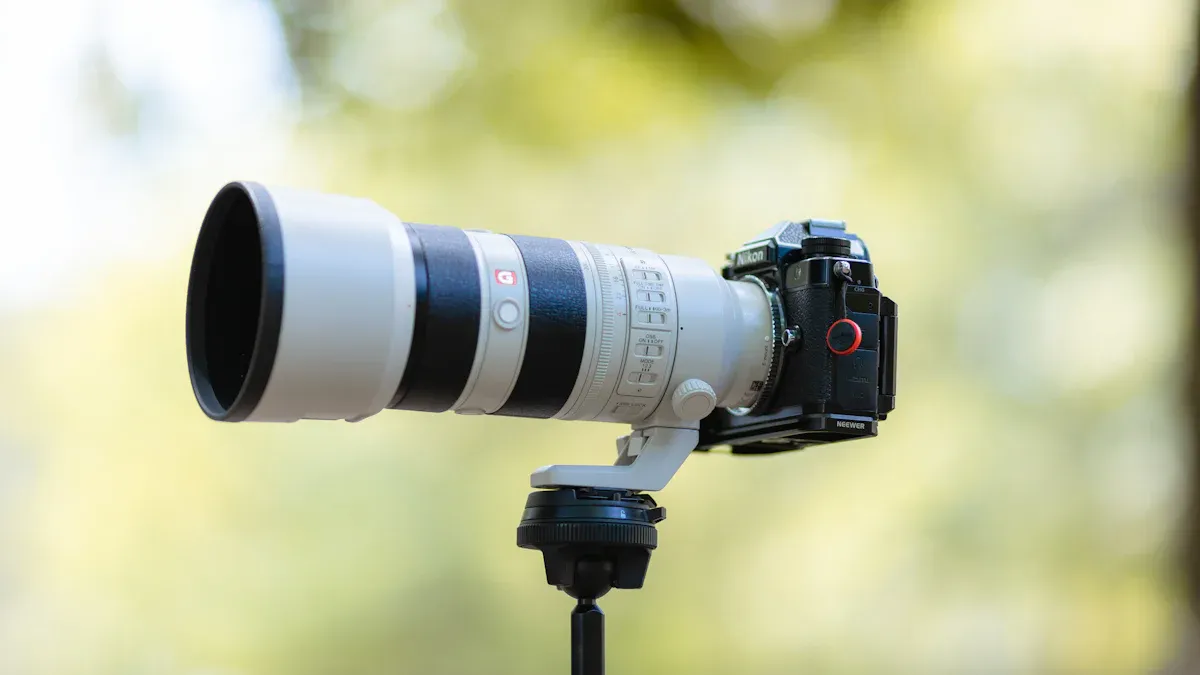
Image Source: pexels
Studio and portrait photographers want lenses that make sharp pictures and nice backgrounds. The Sigma 85mm F1.4 DG DN | Art lens is great for this job. It gives strong bokeh and stays sharp even when the aperture is wide. These things help make portraits look three-dimensional. The lens also cuts down on chromatic aberration, so photos stay clear and deep. Its small size makes it easy to use inside or outside. Many professionals pick full-frame mirrorless cameras for studio work. These cameras use high-quality lenses and give excellent results.
Tip: Lenses with wide apertures and good bokeh help you take portraits that look clear and have depth.
Sports and wildlife photographers need lenses that focus fast and zoom far. They use full-frame mirrorless cameras with lenses like the NIKKOR Z 180-600mm and Sony FE 200-600mm. These lenses help them take pictures of faraway things with accuracy. Canon’s Nano USM motor moves the focus group quickly and quietly. This makes it easier to follow fast-moving subjects. Eye detection in the Sigma 500mm lens keeps animals in focus, even from far away. The Sigma 150-600mm lens has a new autofocus system that locks onto moving things fast. This is important for action shots. Some Sony sports cameras only shoot up to 15 FPS with some lenses. L-Mount systems do not have this limit, but they do not have many high-speed sports camera choices.
Eye detection in Sigma 500mm lens keeps wildlife sharp.
Sigma 150-600mm lens focuses fast for sports.
Sony sports cameras may only shoot 15 FPS with some lenses.
Video professionals want lenses that work well in many places. Good choices for full-frame mirrorless video are the Panasonic Lumix S Pro 24-70mm f/2.8, Sigma 24-70mm f/2.8 DG DN II Art, and Leica Summilux-SL 50mm f/1.4 ASPH. These lenses have useful zoom ranges, quiet fast autofocus, and strong builds. Focus breathing is low, so the view does not change much when focusing. High-response Linear Actuator autofocus systems work quietly and quickly. This is perfect for recording video.
| Lens Name | Key Features |
|---|---|
| Panasonic Lumix S Pro 24-70mm f/2.8 | Wide zoom, steady aperture, silent autofocus |
| Sigma 24-70mm f/2.8 DG DN II Art | Bright aperture, quick autofocus, tough build |
| Leica Summilux-SL 50mm f/1.4 ASPH | Very sharp, easy manual controls |
| Feature | Description |
|---|---|
| Focus Breathing | Lens keeps focus breathing low for steady video |
| Autofocus | High-response Linear Actuator gives quiet, fast autofocus |
Full-frame mirrorless cameras with advanced lenses help professionals make great video in many places.
Photographers look at l-mount and e-mount to pick what works best. Both mounts give good image quality and lots of lens choices. They also work with many cameras. Band-optics spherical lenses help pros get clear and sharp photos. People who shoot in studios, sports, or video pick the mount that matches their job. If you want good value and accuracy, both l-mount and e-mount are great picks.
Pick top lenses to take better pictures.
Band-optics spherical lenses help pros get great shots.
L-Mount lenses fit cameras from many brands. E-Mount lenses mostly fit Sony cameras. Both mounts work with full-frame sensors. Photographers pick based on brand, lens choices, and what they need.
Yes. Band Optics can make spherical lenses for L-Mount or E-Mount. These lenses are very precise and work well with full-frame mirrorless cameras.
Many professionals use third-party lenses. Brands like Band Optics, Sigma, and Tamron make good lenses. These lenses often cost less and still give sharp pictures.
Some L-Mount and E-Mount lenses have weather sealing. This keeps dust and water out. Photographers who shoot outside often pick weather-sealed lenses.
High-quality spherical lenses give sharp pictures and less distortion. Band Optics lenses use strong materials and smart design. Professionals trust these lenses for important jobs.


