
close
Choose Your Site
Global
Social Media
Views: 0 Author: Site Editor Publish Time: 2025-11-11 Origin: Site
Optical glass cutting helps make telescope lenses very exact. Prism optics, made by optical glass cutting, fix light bending and make images clearer. New optical glass cutting tools help astronomers see more details in space objects. Optical glass cutting makes sure each lens lets light pass well. Careful optical glass cutting gives sharper pictures and helps telescopes work better.
Optical glass cutting is very important for making telescope lenses. Careful cutting helps light pass through and makes images look sharp.
New ways to cut, like water jet and laser cutting, make lenses better. These ways stop heat from hurting the glass and keep surfaces smooth.
Cleaning and finishing lenses often is very important. Clean lenses help us see stars and planets more clearly.

Image Source: pexels
Optical glass cutting is very important for telescope lenses. Engineers use special ways to shape and size lenses. These ways help make lenses very accurate. Each lens must be the right thickness and have a smooth surface. CNC cutting stops tiny cracks from forming. Tiny cracks can make lenses work worse. Cooling methods, like blowing cool air, keep glass from getting too hot. Special oils help the cutting tool slide easily. Keeping the room cool helps workers do careful jobs.
Telescope lenses need careful cutting for exact sizes. Exact sizes help telescopes work well.
How well optical glass is cut changes lens quality. The table below shows two key things:
| Aspect | Description |
|---|---|
| Center Thickness Tolerance | The allowed mistake in lens thickness at the center. This mistake changes how light travels and how well the lens works. |
| Surface Irregularity | How much a surface is not perfect. This is important for how well optical systems work. |
Adaptive optics use these good lenses to fix problems from air movement. Fixing these problems makes pictures sharper and clearer. Cutting lenses well helps make better images. Good telescopes need these methods to see faraway stars and galaxies.
How well glass is cut changes how light goes through lenses. Diamond wire cutting and water jet cutting help keep glass working well. Water jet cutting uses strong water to shape glass. This does not make the glass hot. It also saves material and keeps the lens smooth.
Scratches or marks on glass can spread light. This makes pictures less clear and systems work worse. Engineers use water jet cutting to stop these problems. This way, lenses let more light through. Lenses that let more light through help telescopes work better. More light helps see faint things in space and study light from stars.
Uses for glass that lets lots of light through:
Help light go through telescope lenses better.
Help astronomers see dim things in space.
Make it easier to study light from stars and planets.
Help big observatories find new things.
Water jet cutting and other new ways help make great telescope lenses. These ways keep lenses clear and working well.
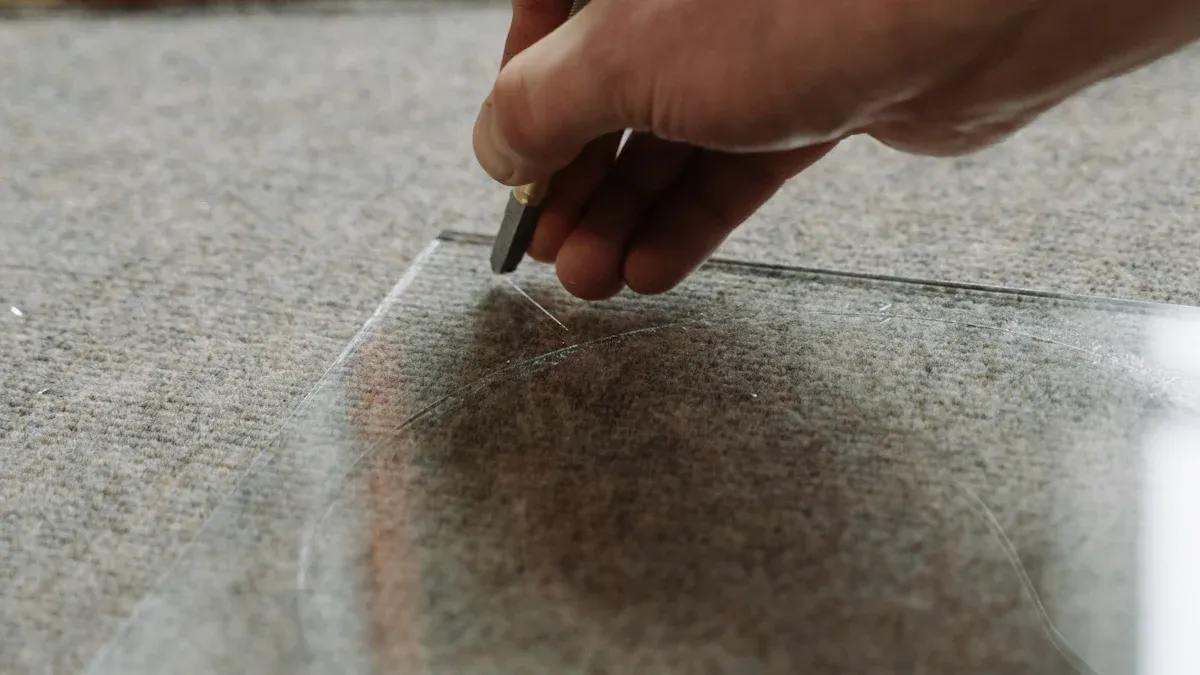
Image Source: pexels
Mechanical cutting and diamond blade cutting are important for making telescope lenses. Engineers use mechanical cutting to make rough shapes first. Milling machines help with rough grinding. Special abrasives are used for fine grinding to smooth the glass. Polishing takes away uneven layers and makes the glass clear.
Diamond blade cutting is very exact. It helps make special optical designs for telescopes. Diamond wire cutting, like endless diamond wire saw cutting, gives clean cuts. This does not hurt the lens. It lowers heat stress and stops tiny cracks. Diamond blade cutting can make hard shapes and detailed designs.
Mechanical cutting methods include:
Rough grinding for basic shapes
Fine grinding for smooth surfaces
Polishing for transparency
Diamond wire cutting for delicate materials
Diamond blade cutting gives better control and works faster. It lowers the chance of chipping and helps get more good lenses. CNC glass machining keeps things accurate and the same every time. These cutting ways make sure telescope lenses are high quality.
Laser cutting has changed how telescope lenses are made. Femtosecond laser cutting uses very short light pulses to cut glass exactly. This way stops heat damage and helps glass take in energy better. Bessel-like beams cut thick glass fast.
Laser cutting has many good points:
It is exact for hard shapes and close sizes
It is fast and saves time
It makes little waste, which is good for the planet
It can cut many thicknesses and layers
Femtosecond laser cutting makes controlled cracks for easy cutting. It is good for special optical designs and glass that lets lots of light through. Laser cutting helps make detailed designs with little heat. Makers use laser cutting for lenses with smooth surfaces and strong quality.
Water jet cutting is another way. It does not make heat, so it stops heat stress. Water jet cutting works best for thick glass with layers. Laser cutting is better for thin glass and hard shapes. Mechanical cutting can make rough edges and tiny cracks, so it is not as good for top lenses.
Surface finish changes how well a lens works in a telescope. After cutting, engineers check surface roughness with different tools. They use optical profilometers, surface metrology tools, and 3D optical profilers. These tools look for bumps, dips, and problems.
| Parameter | Description | Typical Application Context |
|---|---|---|
| Ra | Measures the average height of surface bumps. | Used in drawings and general surface checks. |
| Rq | Shows the standard deviation of surface heights. | Helps find big problems in surface texture. |
| Rz | Calculates the average of the five highest peaks and five lowest valleys. | Good for sealing surfaces and wear checks. |
Spindle polish can make a surface roughness of 10-15 Angstroms. Super polished surfaces can be 1-2 Angstroms but need more time and special tools. Better surfaces help lenses work better but cost more.
Quality control checks include:
Measuring diameter, thickness, and flatness
First article inspections before mass production
Polishing to enhance smoothness
Final tests for scratches and pits
Reporting each step for compliance
Automation and real-time checks help keep things the same in big batches. CNC glass machining helps do careful work and lowers mistakes.
Post-processing steps clean optical glass. Clean lenses work better in telescopes. Dirt can spread light and make images blurry. It also lowers how much light gets through and raises sensor background.
Best ways to control dirt include:
Blow off dust with an air ball.
Clean the lens with dry acetone and a cotton ball in circles.
Rinse with weak vinegar if needed, then clean with acetone again.
Polish with fine aluminum paste for tough spots, then rinse with pure water.
Use isopropyl ethanol to take off any leftover polish and water.
Makers also use bake-out steps to stop glass from getting worse. Clean rooms are important, especially for big lenses. Good alignment and clean workspaces help keep things exact when cutting. Picking good optical glass with strong light passing and evenness is key.
Tip: Clean lenses and careful post-processing help telescopes capture clear images of distant stars.
New technology like magneto-rheological finishing, plasma etching, and fluid jet polishing have made surfaces smoother and cleaner. Companies like SCHOTT have made new glass for amazing telescopes.
New optical glass cutting methods help telescope lenses work better. The table below shows how these new ways make lenses better:
| Evidence Description | Contribution to Quality |
|---|---|
| Advanced polishing methods improve surface finish | Makes lenses work better by stopping light from spreading |
| Laser cutting increases precision | Makes lens shapes more exact, so focus and resolution get better |
| Surface roughness control reduces distortion | Keeps images clear by stopping uneven light from bouncing off |
Astronomers can see sharper pictures and find faint things more easily. In the future, people will make glass with very high refractive index. They will also create glass with special dispersion. More types of infrared and ultraviolet optical glass will be made.
High-transmittance optical glass lets more light go through. This helps telescopes show dim stars and planets clearly.
Cnc machining shapes optical glass parts very well. Engineers use cnc to cut, grind, and polish lenses. This makes lenses better for telescopes.
Engineers use cnc because it makes exact cuts. Cnc keeps lens sizes right and stops cracks in high-transmittance optical glass.
Tip: Clean optical glass parts help telescopes work well and last longer.
| Method | Benefit for High-Transmittance Optical Glass |
|---|---|
| cnc machining | Makes smooth surfaces and exact shapes |
| Polishing | Improves clarity and light transmission |


