
close
Choose Your Site
Global
Social Media
Views: 0 Author: Site Editor Publish Time: 2025-11-21 Origin: Site
Optical lenses work by bending light to create clear images or focus beams. Scientists utilize these lenses to observe small details and measure changes effectively. In factories, workers benefit from optical lenses, allowing them to see better and work faster. For instance, tea pickers in India received reading glasses and increased their tea picking by 22 percent. Band Optics provides precise optical solutions that enhance the efficiency and accuracy of various industries.
Optical lenses bend light to make clear pictures. They are very important in science and industry. Different lenses, like convex and concave, have special jobs. Some make things look bigger. Others help people see better. In factories, optical lenses help check for mistakes early. This helps make better products. Custom lenses from companies like Band-optics fit special needs. They are used in medicine and aerospace. These lenses help people work more carefully and do better. Knowing how lenses work helps people pick the right tools. This makes work faster and results better.
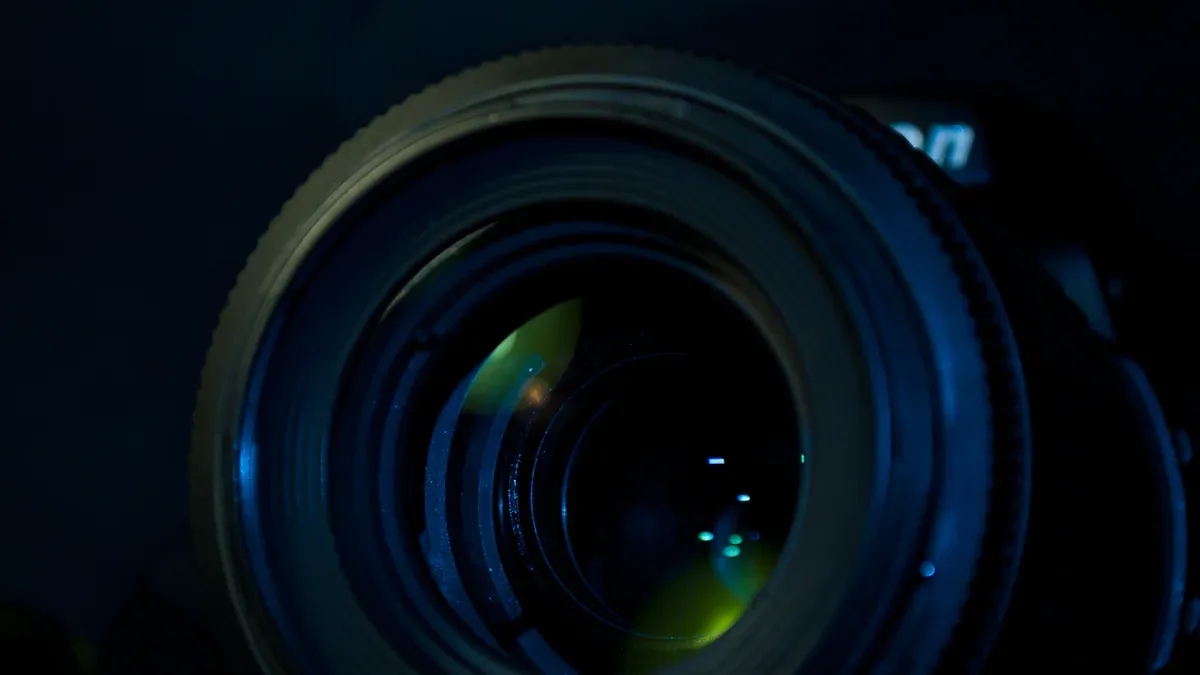
Image Source: pexels
Optical lenses are important in science and industry. They help people see better and measure things well. Lenses make images look sharp and clear. Many people wonder what optical lenses are and how they work. These questions help us learn about light and how it acts in different materials.
Optical lenses change the way light moves. This is called refraction. When light goes from air to glass, it bends. How much it bends depends on the refractive index. Each lens material has its own refractive index. This helps lenses focus or spread light.
Tip: Crown glass has a refractive index of about 1.52. Diamond has a refractive index of 2.42. Bigger numbers mean more bending.
Engineers use refraction to make lenses for glasses and cameras. They figure out how much light bends to make images clear. The lens shape is important too. Convex lenses bring light together at one spot. Concave lenses spread light apart. These actions help people see better and make things look bigger.
| Aspect | Description |
|---|---|
| Principle of Refraction | Refraction happens when light moves between materials and bends. |
| Refractive Index | Each material bends light differently because of its refractive index. |
| Lens Types | Convex lenses focus light at one spot. Concave lenses spread light out. |
Optical lenses are used in many tools. Microscopes use lenses to make tiny things look bigger. Cameras use lenses to focus light for pictures. Each lens is made for a special job and uses different materials.
People want to know how optical lenses work in different places. There are many kinds of lenses, and each does something special. Here are some common types:
Convex lenses: These are thick in the middle. They focus light to one spot. Scientists use them in microscopes and magnifiers.
Concave lenses: These are thin in the middle. They spread light out. They help people with nearsightedness see better.
Spherical lenses: These have curved surfaces. They are used in cameras and telescopes for clear images.
Cylindrical lenses: These focus light into a line. They are used in laser scanners and barcode readers.
Laser lenses: These work with strong light beams. Factories use them for cutting and measuring.
UV lenses: These block or focus ultraviolet light. They protect eyes and help in science.
IR lenses: These work with infrared light. They are used in night vision and thermal cameras.
Custom optical lenses: Engineers make these for special jobs. They can have different shapes or coatings.
Different materials change how lenses work. Glass lenses are strong and do not scratch easily. Plastic lenses are light and do not break easily. High-refractive-index glass bends light more and is good for cameras. Fused silica is used in lasers because it handles heat and stays clear.
Optical lenses are used in many areas. Scientists use them in microscopes and eye tools. Factories use them for cutting and measuring. Phones use small lenses for photos and videos. Good lenses make images clear and reduce mistakes.
People use optical lenses for seeing, measuring, and doing careful work. The right lens and material help things work better.
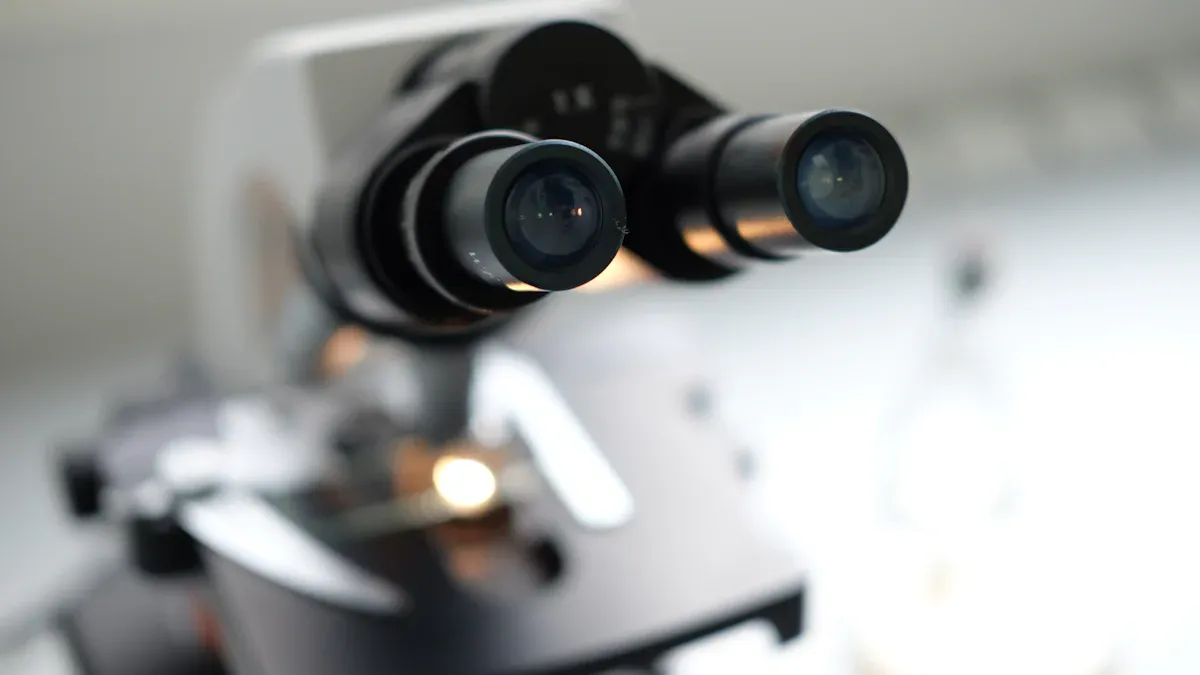
Image Source: unsplash
Scientists use optical lenses to see tiny details. These details are too small for our eyes. People ask how optical lenses work in microscopes and cameras. Optical lenses bend and focus light. This helps us see things clearly. Good lenses make images sharp. Designers pick a camera first. Then they choose a lens that matches the camera. The lens design and quality matter a lot. Good lenses fix optical problems. They get close to the best possible image.
Biological research uses special optical lenses. Some technologies use these lenses for 3D images. Optical Coherence Tomography and Photoacoustic Tomography are examples. These systems show tiny features. They can see things at the micrometer scale. Light helps show important parts of tissues. It makes the images clearer. Fluorescence imaging uses optical lenses too. These lenses collect and focus weak light. This helps scientists study cells and molecules.
Microscopes use different lenses for different jobs. Here are some common types:
| Type | Overview |
|---|---|
| Reflective Objective Lenses | Use mirrors, good for long distances and no color problems |
| Refractive Objective Lenses | Use clear materials, fix optical mistakes |
| Oil-immersion Objective Lenses | Use oil for better resolution |
| Water immersion Objective Lenses | Use water for clearer images |
| Air immersion Objective Lenses | Use air, common in regular setups |
| Glycerol immersion Objective Lenses | Fix color problems, good for sharp images |
| Achromat | Fix two colors, used for general work |
| Plan-Achromat | Makes flat images, good for checking things |
| Plan Semi Apochromat | Fix three colors, some small mistakes left |
| Plan-Apochromat | Best type, fixes three colors and makes flat images |
Environmental monitoring uses optical lenses for good data. Some systems use telecentric lenses for sharp images. The 3P® STATION takes pictures every hour. These pictures help track changes in growth plates. Scientists get alerts when something important happens. Optical lenses focus light for clear pictures. This helps monitor changes in the environment.
Astronomers use optical lenses too. They put them in telescopes to study space. Lenses and mirrors make images better. They help reduce mistakes in pictures. Adaptive optics use special mirrors. These mirrors fix problems from the atmosphere. This makes images sharper. New cameras and sensors help scientists see far away things.
| Technology Type | Description |
|---|---|
| Lens and Mirror Technologies | Make images better, fix mistakes |
| Adaptive Optics Systems | Use mirrors to fix air problems |
| Imaging Technology Innovations | Use new cameras and sensors for better pictures |
People wonder what optical lenses are and how they work. Optical lenses focus and direct light very well. Science and industry need these lenses for clear images. They help scientists discover new things and watch changes in the world.
Factories use optical lenses to help machines see products. These lenses let cameras take clear pictures. Workers and robots look at these pictures to find mistakes. They also measure parts to make sure they fit. Optical lenses focus light so small problems can be seen.
Many jobs in factories need optical lenses for checking quality.
Eyewear makers use lenses to check if glasses are clear and strong.
Machines need people to check if parts line up and balance.
Before packing, workers test lenses for good quality.
Companies try to make every lens the same with few mistakes.
Expensive lenses need very careful checks.
Automated Optical Inspection systems use lenses to work faster. These systems change the lens to see different sizes and shapes. This helps check many kinds of products. Finding problems early stops bad products from moving ahead.
Factories make more products that are good.
Work gets done faster and better.
Incoming parts are checked well.
Machines can be as good as people at checking.
Old data helps make new products better.
Here is a table that shows how lenses help with quality checks:
| Benefit | Description |
|---|---|
| Early defect detection | Stops bad products from moving ahead |
| High accuracy | Checks as well as people or better |
| Efficiency | Makes work faster and saves money |
| Data-driven improvements | Uses old results to make new ones better |
Industrial lasers need optical lenses for careful work. These lenses make laser beams small for cutting and welding. Lenses also keep beams straight for far jobs and can make beams into lines or rings.
Optical lenses do many things in laser factories:
Make laser beams sharp for cutting and marking.
Keep beams straight for steady work.
Shape beams for scanning and measuring.
Point beams to make lines or patterns.
Change beams for special jobs.
Special coatings on lenses help lasers work better.
Reflection control stops light from bouncing off.
Transmission enhancement lets more light go through.
Polarization management helps with lasers and signals.
Custom coatings can reflect almost all laser light and let most IR and visible light pass. This helps with heat checks and watching work. Coatings also stop extra reflections, making signals stronger and measurements better.
Factories use optical lenses for seeing, measuring, and controlling things. These lenses help make work exact and steady. People ask what optical lenses are and how they work in these jobs. The answer is that lenses focus, shape, and guide light to get good results.
Band-optics makes spherical lenses for special optical systems. These lenses focus and direct light very well. Engineers use them for careful jobs. Each lens is made to exact standards. Band-optics uses many materials like Schott, CDGM, Sapphire, and Silicon. This helps meet different needs in science and industry.
The table below lists key features of Band-optics Spherical Lenses:
| Feature | Description |
|---|---|
| Precision Optics | Made with high precision, reducing image errors and improving light focus. |
| Wide Material Selection | Many materials available for different wavelengths and uses. |
| Customization Capabilities | Lenses can be tailored for size, coatings, and optical designs. |
| Rigorous Quality Control | Each lens passes strict tests to ensure reliability and performance. |
Band-optics uses advanced ways to make high-quality lenses. Their lenses make images clearer and help shrink devices. They help with checking and measuring in factories. Spherical lenses are important in machines that make computer chips. Car engineers use these lenses in cameras and LiDAR to make driving safer.
Band-optics makes custom lenses for medical, laser, and aerospace jobs. Medical devices need lenses with exact sizes. Band-optics makes lenses for endoscopy, skin care, and eye tools. These lenses meet strict rules and help doctors see tiny things.
Laser technology uses spherical lenses to focus beams for cutting and measuring. Aerospace companies use these lenses for navigation and taking pictures. Band-optics works with customers to design lenses for special needs. They offer coatings and shapes for each project.
Quality checks are very important in these industries. Band-optics gives spectrometers that stay steady when temperatures change. This helps stop mistakes in measurements. Their focus on quality means each lens works well in hard places.
Band-optics shows what optical lenses are by helping many industries. Their lenses help scientists, engineers, and doctors do better work. The company keeps researching to make new and reliable lenses for the future.
Optical lenses are very important in science and industry. They help doctors see inside the body. They make surgeries easier and help find new things in life sciences.
Lenses make projectors shine brighter and help telescopes see better.
Doctors and engineers use lenses to see small details.
Band-optics makes strong spherical lenses for new ideas. Lens technology will keep changing in the future:
| Trend | Description |
|---|---|
| Miniaturization | Tiny lenses for phones and smart devices |
| Customization for Automotive | Special lenses for safer cars and better driving |
| Sustainability | Green materials and ways to make lenses |
Optical lenses will keep helping many areas grow and improve.
Spherical lenses focus light very well. Scientists use them in microscopes and cameras. Factories use them to check products. These lenses help people see tiny details. They also make work better and more accurate.
Yes, Band-optics can make custom lenses. They change the size, shape, and coatings for each project. Engineers and researchers ask for special lenses. These are used in medical, laser, and aerospace jobs.
Band-optics uses many kinds of materials. Some are Schott, CDGM, Ohara, Hoya, and Corning glasses. They also use Sapphire, Silicon, Zinc Selenide, and Zinc Sulphide. Each material works best for certain types of light.
Band-optics checks every lens with special tools. They test the surface and shape of each lens. Every lens must pass strict tests before leaving the factory. This makes sure the lenses work well every time.
People use these lenses in many places. Medical devices and laser machines need precise lenses. Aerospace systems use them too. Spherical lenses also work in cameras, sensors, and science tools.


