close
Choose Your Site
Global
Social Media


Medical device optics are transforming healthcare by harnessing the power of light to improve both diagnosis and treatment. Medical optics utilize components such as lenses, filters, and prisms, which are essential for developing innovative tools used by doctors and scientists. The global medical fiber optics market reached USD 4.6 billion in 2024 and is projected to experience rapid growth. These advanced optical components provide clearer images, leading to more accurate diagnoses. Portable medical optics enable patient care in a variety of settings, while hybrid systems combine multiple optical technologies for enhanced results. Precision and innovation continue to drive advancements in this field. Trusted brands like band-optics deliver high-quality optical solutions for both medical optics and medical device optics, supporting the evolving needs of the healthcare industry.
Medical device optics help healthcare by using light to see better and treat people. - Optical parts like lenses and filters make images clearer, so doctors can check patients more accurately. - Portable medical optics let doctors help patients quickly, even far from hospitals. - New ideas like optical coherence tomography and AI are changing how doctors look at and find health problems. - Good quality and careful design in optics are very important for safe and trustworthy medical devices.
Medical optics are very important in today’s medical devices. These systems use light to help doctors look inside the body. They also help doctors find diseases and guide treatments. Medical optics work well because they follow some key rules.
The way an optical system is designed affects how it works. Designers pick the best parts for each device.
Controlling optical aberrations helps make images clear. Aberrations can make pictures blurry or strange, so good design matters.
Alignment and calibration keep medical optics working right. These steps help each device give correct results.
| Principle | Description |
|---|---|
| Optical System Design | Needed for optical medical devices to work well and meet goals. |
| Importance of Optical Components | Needed for good imaging and finding problems in medical use. |
| Precise Alignment and Calibration | Needed for keeping performance and image quality in complex systems. |
Medical optics use different optical effects to do their jobs. Fiber optics are used in surgeries that do not need big cuts. These fibers let doctors make small cuts and help patients feel less pain after surgery. Photonics use special light to help with tests and treatments. Optical filters and coated parts are used in tools that do not cut the skin. Better diagnostic tools use photonics and different colors of light. Making devices smaller is a trend in medical optics. Coatings are put right on photodetectors. Non-invasive ways are liked more, so optical filters are very important.
Medical optics also get better from prototyping and testing. Early models let designers see how devices work and get ideas from users. Testing checks if medical optics meet the rules. Changes from feedback make devices work better.
Tip: Medical optics need careful design and testing. These steps help make devices that doctors and patients can trust.
Medical optics help healthcare in many ways. They let doctors find diseases early and treat people more safely. Optical imaging uses safe light, so it is safer than X-rays or CT scans. Medical optics are sensitive and can find small changes in the body. This is important for finding diseases early.
Real-time imaging helps doctors act fast. Medical optics show cancer cells during surgery. This helps doctors take out tumors and keep healthy tissue safe.
Medical optics help with personalized medicine. They give details about diseases, so doctors can pick the best treatment.
Many medical optics devices are cheap and easy to carry. These tools are good for quick tests, even in places with few resources.
Medical optics also help save money and make healthcare work better. Point-of-care ultrasound (POCUS) uses less energy and makes less pollution. It does not need big machines and saves money. Medical optics also cut down on energy used for moving patients and long hospital stays.
| Evidence Description | Impact |
|---|---|
| Carbon savings per consultation | From 0.70 to 372 kg CO₂e, mostly by lowering travel pollution. |
| Reduction in hospital visits | 78.6% fewer visits by using remote talks and prescriptions at Moorfields Eye Hospital. |
Medical optics help make healthcare greener. They save energy and lower pollution. These good things help hospitals and clinics save money.
POCUS uses less energy and makes very little standby pollution.
Medical optics do not need big setups, so they save money.
They cut down on energy used for moving patients and long hospital stays.
Medical optics keep changing healthcare by making it safer, more accurate, and easier to get care. Their role gets bigger as technology grows and new devices are made.

Image Source: unsplash
There have been big changes in medical imaging lately. Optical coherence tomography is now very important for doctors. It gives clear, real-time pictures that help find diseases early, especially cancer. Many hospitals use optical coherence tomography to look at tissues without surgery. This way is safe and gives good results.
Doctors also use multimodal imaging systems. These systems mix optical coherence tomography with ultrasound. This gives more details and helps doctors make better choices. Biophotonics is a new technology that uses light to study tissues. It can find cancer early. High-resolution optical instruments, like 4K endoscope lenses, let doctors see inside the body better. These tools help doctors find problems sooner.
| Innovation Type | Description | Impact on Early Detection Rates |
|---|---|---|
| High-definition endoscopes | Offer 35× magnification for better tissue views. | Improved accuracy in detecting early-stage cancers. |
| Magnification endoscopy | Up to 150× magnification for micro-structures. | Over 90% accuracy in finding malignant tumors. |
| Narrow band imaging | Enhances contrast of microvessels. | Increases detection of pre-cancerous lesions. |
| Low-cost imaging solutions | Digital widefield imaging with automated checks. | High accuracy and easy use in low-resource settings. |
| Wavefront encoding | Extends depth of field while keeping resolution. | Better imaging of fresh tissue. |
Quantum optical imaging and computational optical imaging are also making a difference. These methods use math and quantum effects to make images better, even in tough cases.
Lasers and micro optics have made surgeries safer and more exact. Optical coherence tomography helps guide doctors during eye surgeries and other careful work. Laser technology has made treatments for glaucoma and cataracts better. It is also important in LASIK surgery, making eye operations more exact.
Microrobotic laser-steering devices use piezoelectric actuators to move the laser beam. These devices work with flexible endoscopes and help doctors do hard tasks with less risk. New materials, like composites and amorphous alloys, are used in medical devices. Laser surface modification makes these devices work better and last longer.
Band-optics helps these advances by making high-quality optical parts. Their precision lenses, prisms, and filters help build better imaging and surgical tools. Band-optics spends money on research to keep up with new needs in medical optics. Their products help doctors and patients get the best results from new technology.
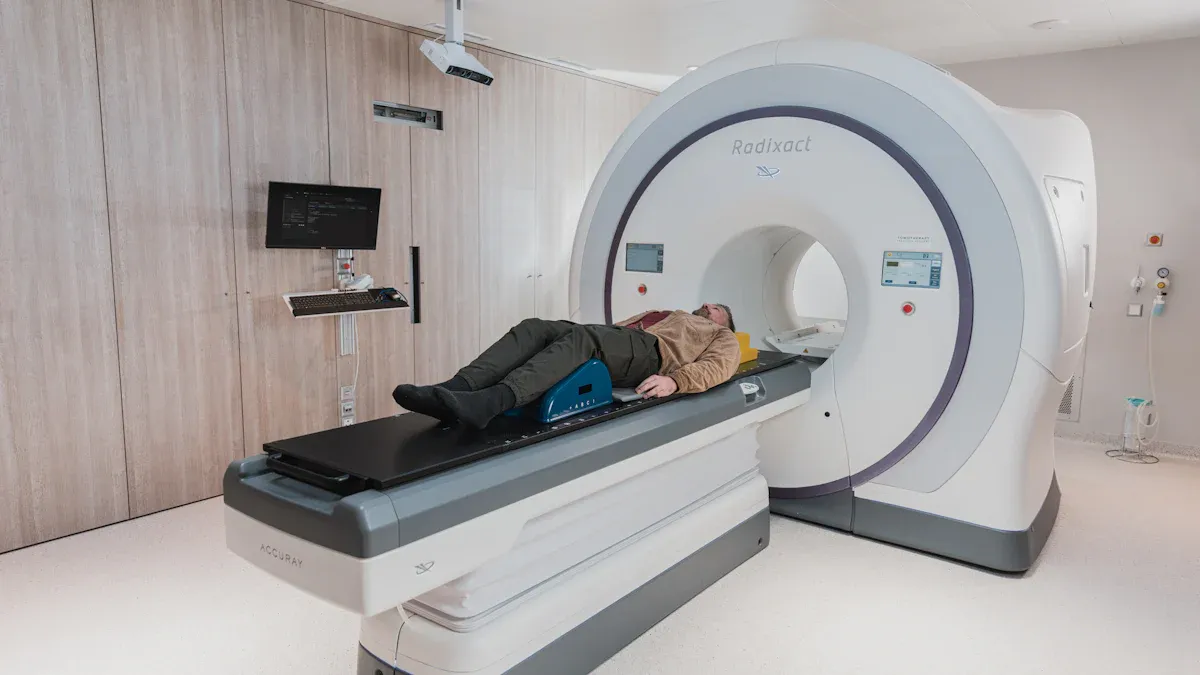
Image Source: unsplash
Optics-based medical devices are very important in imaging. Endoscopes let doctors look inside the body without big cuts. Rigid endoscopes are used for surgery. Flexible endoscopes check the digestive system. Fundus cameras take close-up pictures of the retina. These pictures help find eye diseases like diabetic retinopathy and glaucoma. Optical coherence tomography gives sharp images of the retina. This helps doctors find many eye problems. Imaging systems use special optical parts to show clear pictures of organs. New technology, like 4K endoscope lenses, gives sharper and deeper views. These tools help doctors make better choices during small surgeries.
Endoscopes help doctors see inside the body
Fundus cameras take pictures of the retina
Optical coherence tomography scans eyes with high detail
Special lenses make images even clearer
Optical medical imaging has changed how doctors find diseases. Optical sensors are very sensitive and give correct results. These sensors can check many things at the same time. This makes them useful in healthcare. Pulse oximeters use optical sensors to check oxygen without breaking the skin. Glucose monitors also use optical sensors for easy testing. New sensors can find viruses, bacteria, and markers in real time. They use special optics to study samples with great care. Using orbital angular momentum light makes images more exact. This helps doctors see small changes in tissues. It means fewer people need biopsies. Some new sensors can find cancer signs in spit. This lets doctors find diseases early without pain.
Note: Optical medical imaging helps doctors find diseases fast and safely. This makes patients feel more comfortable.
Many medical devices use optics to treat and help patients. Endoscopes guide doctors during surgery and show clear views. Lasers are used in eye and skin surgeries because they are very exact. Laser eye surgery fixes vision problems with great accuracy. Optical sensors help doctors find diseases during surgery. They give information right away. Optical fibers move laser beams to cancer cells and keep healthy cells safe. Special lenses and filters make these treatments safer and better. Micro-endoscopy uses tiny lenses to help doctors see during small surgeries. These new tools make surgery safer and help people heal faster.
Lasers are used for careful surgeries
Optical fibers send therapy to the right spot
Micro lenses help doctors see better in small spaces
Optics-based medical devices keep getting better. They help patients and make healthcare stronger.
Band-optics uses new technology to make very exact optical parts for medical devices. The company makes lenses, prisms, filters, and windows with a lot of care. Every part must pass tough rules. Optical metrology checks each piece to make sure it is correct. This helps stop mistakes and keeps products safe and strong. Band-optics picks good materials like fused silica, sapphire, and optical glass. The team uses modern machines for grinding, polishing, and coating. These steps help the parts fit just right in medical devices. Band-optics helps new ideas by making special parts for new tools and systems.
Quality matters a lot in medical optics. Band-optics follows strict rules so every product is made well. The company has ISO 9001:2015 certification. This shows they care about quality management. This certification is important for making optical parts for medical use. Band-optics also meets other rules, like AS9100 for aerospace. These awards show the company uses best practices and keeps products safe for patients and doctors.
| Certification | Description |
|---|---|
| ISO 9001:2015 | Certification relevant to production of optical components, including medical optics. |
Band-optics checks every step carefully. This makes sure each part works well in real medical devices.
Each medical device needs different things. Band-optics gives custom solutions for special projects. The team works with customers to design and build parts that fit their needs. Band-optics can make small or big batches, depending on what is needed. The company uses rapid prototyping to test new ideas fast. This helps new medical devices get to market sooner. Band-optics also helps during design and testing. The company’s experience and focus on quality help customers make better medical devices.
Note: Band-optics mixes precision, quality, and custom service to help the next generation of medical optics.
Artificial intelligence is changing how doctors use medical optics. AI helps make custom eyewear for each person. It also lets doctors check eyes from far away with smart devices. Generative AI makes it easier to build and test optical devices. These smart systems help doctors work faster and give more personal care.
AI helps design eyewear that fits better and feels good.
Teleophthalmology uses AI to check eyes from a distance.
Generative AI helps make new optical devices and checks if they work well.
The market for smart medical devices is growing fast. It is worth over 90billionnow.Itcouldreach185 billion by 2030. This shows smart optics will be even more important for patient care.
| Technology | Impact on Patient Monitoring and Diagnostics |
|---|---|
| Biophotonics | Finds diseases early by using light to study tissues. |
| Optical Coherence Tomography (OCT) | Gives real-time, clear images of tissues for better diagnosis. |
| Integration with AI | Automates scan analysis for faster and more accurate results. |
| Multimodal Imaging Systems | Combines different imaging tools for better data and decisions. |
| High-Resolution Optical Instruments | Shows clear views of organs, helping with precise diagnosis and surgery. |
New optical technology helps people check their health at home. Optical biosensors can find single molecules without extra labels. Wearable sensors made with optical fibers measure vital signs all the time. Microfluidics lets sensors use very small amounts of fluids. Flexible sensors make home health devices easier to use.
| Advancement Type | Description |
|---|---|
| Optical Biosensors | Detect single molecules for early disease signs. |
| Optical Fiber-based Wearable Sensors | Measure health indicators like pulse and temperature without pain. |
| Microfluidics | Control small fluid samples for better testing. |
| Flexible and Stretchable Sensors | Improve comfort and accuracy in home health devices. |
These systems can check body temperature, pulse, and breathing. They use light instead of wires, so there is less electronic waste. Flexible materials make these devices comfortable to wear every day.
Optical sensors give quick results right after taking a sample. This helps in emergencies and supports testing at the point of care. People who live far away can get tests at home. This makes healthcare easier to get.
Medical optics help more people get care, even in hard places. Mobile clinics bring eye care to remote areas. Community health workers use optical tools to check and teach people. Local groups help make sure resources reach those who need them. Public health campaigns teach about eye health and remind people to get checkups.
Portable optical devices let doctors watch patients from far away. These tools give care all the time and help doctors act fast. Telemedicine uses optical imaging for eye exams. This is important for diseases like diabetic retinopathy.
Mobile clinics and community workers bring care to remote places.
Telemedicine and portable devices help doctors watch patients.
Public campaigns teach people and help communities stay healthy.
Medical optics will keep making healthcare safer and easier for everyone.
Medical device optics help make healthcare better by making devices safer and more dependable. Doctors use tools like optical coherence tomography to find eye problems early. Brands like band-optics make new designs and follow strict quality rules.
Medical optics help save money with smart designs.
Home health checks and molecular sensing will become more common.
Small probes and throwaway fiber tools are being used more.
| Innovation in Medical Optics |
|---|
| Optical filters help doctors see better and diagnose in clinics. |
| Tunable filters let many medical devices work in different ways. |
The medical optics market is getting bigger, which is good news for patients and doctors.
Medical device optics use light to help doctors look inside the body. These tools have things like lenses, filters, and sensors. They make pictures easier to see and help find sickness early.
Optical components give doctors clearer pictures. They help devices work better and make tests safer. Doctors can spot small things and make good choices.
Precision helps devices give the right results. Good optics help doctors trust what they see and test. Patients get safer care when tools are precise.
Medical optics use glass, fused silica, sapphire, and aluminum. These materials help devices last longer and work well in hard places.
Band-optics makes custom optical parts for medical devices. The company uses new machines and checks quality carefully. Doctors and hospitals trust band-optics for good solutions.


