close
Choose Your Site
Global
Social Media

Views: 0 Author: Site Editor Publish Time: 2026-07-02 Origin: Site



Image Source: unsplash
Optical transceiver window glass is a barrier. It protects sensitive parts inside. It lets light go through for data to move. The material used, like borosilicate glass, is important. It helps keep the glass clear and stable. Good optical window materials lower signal loss. They help devices work in tough places. Coatings and specifications affect how the window works over time. Picking the right optical glass keeps signals strong. It also makes sure communication is reliable.
Optical transceiver window glass keeps important parts safe. It lets light signals go through. This helps data move without problems.
Picking the right material is very important. Materials like borosilicate or fused silica work well. They help stop signal loss. They also make the glass last longer in different places.
Coatings help the glass work better. Anti-reflective and protective layers let more light pass. They keep the glass safe from scratches and damage from the environment.
Always use the right optical window material. Match it to the laser’s wavelength and power. This keeps the signal clear. It also helps the system work well.
Good materials and coatings cost more at first. But they save money later. They make optical systems last longer. They also cut down on repairs.
Optical transceiver window glass is a clear shield. It sits between the inside of a device and the outside. This window lets light signals go through. It stops dust and water from getting in. The optical window needs to let light pass with little loss. This keeps the signal strong and easy to read. In many devices, the window is in front of a laser. The laser sends data using light pulses. The window keeps the laser safe. It also protects other sensitive parts. It makes sure the light path stays clean and safe from harm.
The optical window must work with many kinds of lasers. Some lasers use visible light. Others use infrared light. The window should not block or change the laser’s light. If the window does not match the laser, the signal can get weak. It can also get messed up. This can cause trouble with communication. The right optical window helps the laser send data fast and safely.
Many industries use optical transceiver window glass. These windows are found in data centers, medical devices, and factory machines. In data centers, the window protects lasers that move information between computers. Medical tools use optical windows to guide laser beams for surgery or tests. Factories use lasers for cutting, measuring, and marking. Each laser job needs a window that fits the laser’s wavelength and power.
Note: Picking the right window for each laser job helps stop damage and keeps the system working well.
Some windows must handle strong lasers. Others work with weak beams. The optical window must fit what each laser needs. This helps the glass last longer and keeps the signal clear.
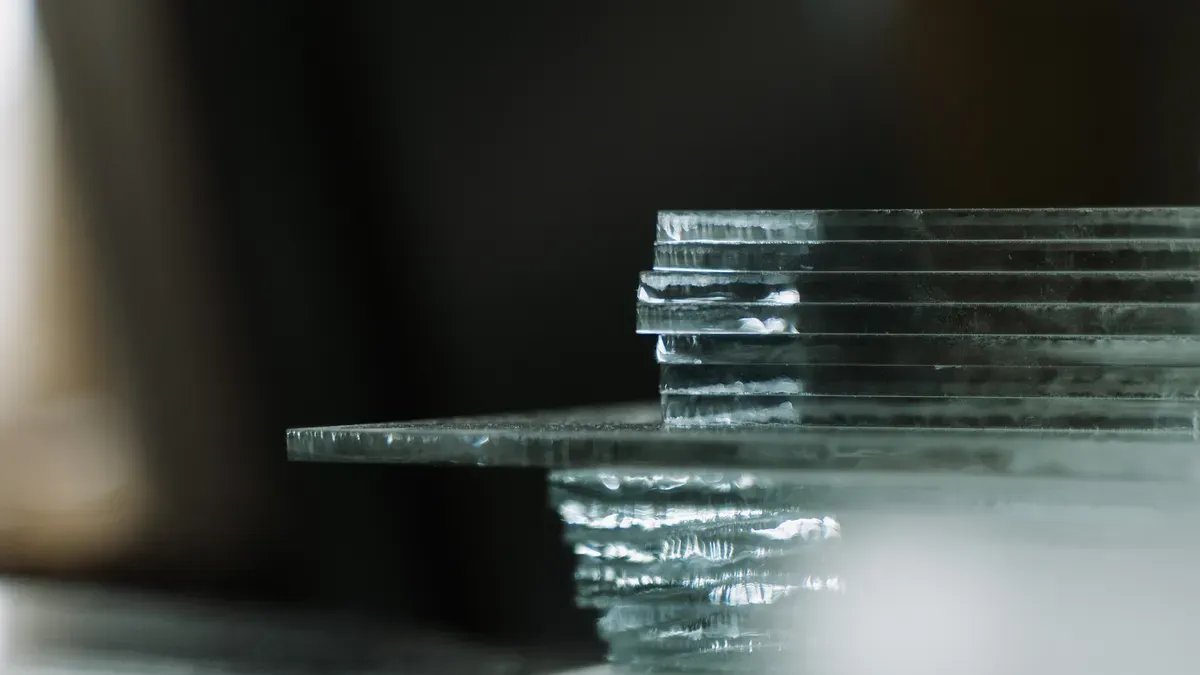
Image Source: pexels
Many optical windows are made from glass. Each glass type has special features for different uses. The most common types are borosilicate, fused silica, and N-BK7.
Property | BK7 | Fused Silica |
|---|---|---|
Thermal Expansion (×10⁻⁶/°C) | 7.1 | 0.55 |
Laser Damage Threshold | Moderate | High |
Recommended for Precision Mirrors | No | Yes |
BK7 is used a lot for optical windows. It does not scratch easily and works in labs and factories. BK7 is stable and passes many chemical tests. It costs less than fused silica. Fused silica is harder to make, so it is more expensive. But fused silica has a smoother surface after polishing. This makes it best for very exact optical work.
Fused silica is also strong against heat and laser damage. It does not change shape much when heated. This keeps the window flat and clear, even if the laser is hot. Borosilicate glass is another choice. It is tough and does not break easily from heat changes. Many optical transceiver window glass designs use these materials to keep the window strong and clear.
Some optical windows use crystalline materials instead of glass. These materials are good for special lasers and tough places.
Infrared (Ge):
Lets light through from 2 to 23 micrometers. This covers many infrared lasers.
Has a high refractive index. This helps with lens design and reduces errors.
Works well for CO2 laser lenses, especially at 10.6 micrometers.
Zinc Selenide (ZnSe):
Lets light through from 0.5 to 20 micrometers.
Has high purity and is easy to shape.
Has low light loss and is good for high-power CO2 laser windows.
Used in thermal imaging systems to protect sensors.
Sapphire:
Very hard and does not scratch easily.
Handles high heat and strong chemicals.
Used where the optical window faces harsh conditions.
Note: Zinc selenide and zinc sulfide are softer than germanium. They need careful handling and often get protective coatings. Zinc selenide can take in water, so sealing and anti-reflective coatings help protect it.
Picking the right material for an optical transceiver window glass is important. The material affects how well the window works with the laser and how long it lasts.
Criteria | Description |
|---|---|
Material Hardness | Harder materials may take longer to make and cost more. |
Transmission Range | The optical window must fit the right spectrum (UV, visible, IR). |
Surface Quality | High polishing quality is needed for the best performance. |
Coating Options | Different coatings can improve performance and protect the material. |
The transmission range shows what kind of laser the window can handle. Fused silica is best for ultraviolet and visible lasers. Infrared and zinc selenide are better for infrared lasers. Surface quality is important to keep the laser beam clear and strong. Harder materials like sapphire last longer but cost more and take longer to make.
Coating options are also important. Anti-reflective coatings help more light go through the window. Protective coatings keep the window safe from scratches and water. When picking a material, think about the laser type, the environment, and the cost.
Tip: Always match the optical window material to the laser’s wavelength and power. This helps keep the signal strong and the device safe.
Optical window coatings are very important for how well optical transceiver window glass works. These coatings help control how light goes through the glass. They also protect the glass from getting damaged. The right coatings can help a laser system work better.
Anti-reflective coatings are thin layers put on the optical window. These coatings make less light bounce off the glass. More light can go through the window. This keeps the laser signal strong and easy to read. There are different kinds of anti-reflective coatings for optical windows:
Type of Coating | Description | Performance Benchmark |
|---|---|---|
Single-Layer AR Coatings | Uses low-index materials like MgF2 for certain wavelengths. | Lowers reflectivity from about 4% to 1%. |
Multi-Layer AR Coatings | Has layers of high and low-index films for many wavelengths. | Drops reflectivity to less than 0.2%. |
Specialized Functional Coatings | Adds features like anti-scratch and UV-blocking. | Less than a 1% drop in transmission. |
Multi-layer coatings are good for devices that use more than one laser color. These coatings help keep the refractive index even across the window. This is important for strong laser systems.
Protective coatings make the optical window stronger. These coatings use tiny materials to make a hard layer on the glass. They block harmful UV and infrared light. This keeps the window and laser safe. Some coatings make the window hard to scratch or even self-cleaning. This means you do not have to clean it as much.
Specialty coatings can help the window keep out heat. This helps the window last longer in hot places. The coatings keep the refractive index steady, even if the laser is hot. Many coatings can block over 90% of UV and IR light. They also reach a hardness of at least 4H, so they do not scratch easily.
Tip: The right protective coatings help the optical window last in tough places and keep the laser safe.
Coatings help optical transceiver window glass work better in many ways. They let more light go through the window. This keeps the laser signal strong and lowers signal loss. Coatings also protect the window from scratches, dust, and water. This means the window lasts longer and needs less cleaning.
The refractive index of the coatings matches the window to the air and the laser. This lowers glare and keeps the signal clear. For strong laser systems, coatings stop heat from changing the window’s shape. This keeps the light path safe and steady.
Optical coatings are important for any optical window. They help the window work better and last longer. Picking the right coatings is important for strong and safe optical systems.
Image Source: unsplash
The transmission range shows how much light can go through the window. This depends on what the glass is made of and how thick it is. Each optical transceiver window glass needs to match the laser’s wavelength. If it does not match, the signal can get weak or even disappear.
Deep UV (200–250 nm): About 40% to 75% of light gets through at 0.5 mm thickness. At 10 mm, at least 45% of light passes inside the glass.
UVC (250–280 nm): At 254 nm and 0.5 mm, at least 70% of light goes through. This is important for killing germs and for sensors.
UVB/UVA (280–400 nm): At 10 mm, at least 75% of light passes for 300–350 nm. For 350–400 nm, at least 90% of light gets through.
The refractive index tells how much the light bends in the glass. If the refractive index matches the light source, the signal stays strong. Different windows work best with different wavelengths. Fused silica works well for UV and visible light. Infrared and zinc selenide are better for infrared. Always check the transmission range before picking a window.
Tip: Make sure the transmission range and refractive index fit your needs. This keeps the optical signal clear and strong.
Surface quality means how smooth and clean the window is. Flatness shows if the window is even from one side to the other. Both are important for letting light pass and keeping the signal sharp.
Aspect | Description |
|---|---|
Transmitted Wavefront Error | Surface errors and refractive index inhomogeneity can distort the transmitted wavefront, leading to image quality degradation. |
Surface Flatness | High precision applications require specific flatness values (e.g., λ/20) to maintain optical performance. |
Sensitivity to Defects | Variations in surface quality can increase sensitivity to defects, affecting overall performance. |
If the window has bad surface quality, it can scatter light. This makes the signal weaker and less clear. Good surface quality means there are not many scratches or bubbles. Flatness is also important. If the window is not flat, light can bend the wrong way. This can cause mistakes in the system.
The refractive index should be the same everywhere on the window. If it changes, light can bend or scatter. This makes the signal worse. For the best systems, the window should be very flat, like λ/20. This keeps the light path straight and the image sharp.
Note: Always check surface quality and flatness before choosing an optical window. This helps stop problems with signal loss or blurry images.
Tolerances show how close the window is to its design. This includes thickness, diameter, and flatness. Tight tolerances help the window fit better in the device. This keeps the light path steady and safe.
Thickness tolerance: Small changes in thickness can change how light moves. This can affect the signal.
Diameter tolerance: The window must fit tightly in its holder. If it is loose, it can move and cause problems.
Flatness tolerance: Good flatness keeps the light path straight. This is important for lasers and cameras.
Durability means the window can handle scratches, heat, and chemicals. Harder materials like sapphire last longer. Coatings can help protect the window more. The refractive index should not change much over time. If it stays the same, the window will keep working well for years.
A strong window with good tolerances and durability will last longer. It will also keep the signal clear and strong. Always pick windows with high surface quality, tight tolerances, and a stable refractive index.
Tip: Picking a tough window with the right tolerances helps protect your device. It also keeps the optical system working well.
Making optical transceiver window glass takes careful steps. Each step helps make sure the window is clear and strong. Here is how the process usually goes:
Raw Material and Blank Preparation: Workers pick materials that are free from cracks or bubbles. The materials go through annealing to remove stress.
Cutting and Thickness Calibration: Machines cut the material into the right shape. The thickness is checked and adjusted to match the design.
Generating: The material gets rough grinding. This step shapes the window close to its final form.
After these steps, the window goes through fine grinding and polishing. These steps make the surface smooth. A smooth surface helps more light pass through the optical window. The last step is cleaning. Workers remove dust and tiny particles. This keeps the window ready for coatings and use.
Tip: Each step in the process helps keep the optical window clear and strong for lasers and sensors.
Quality control is important for every optical window. Testing checks if the window meets all the rules for size, shape, and clarity. Workers use special tools to measure thickness and flatness. They also check the surface for scratches or bubbles.
A table shows some common tests for optical windows:
Test Type | What It Checks For |
|---|---|
Transmission Test | How much light passes through |
Surface Inspection | Scratches, chips, or dust |
Flatness Check | Evenness of the window |
Some tests use lasers to see if the window bends light the right way. Other tests check if the window can handle heat or chemicals. If a window does not pass, it does not go into a device.
Note: Careful testing helps make sure every optical window works well and lasts a long time.
Picking the right materials and coatings starts with knowing what the optical window must do. Every optical system is different. Some systems use lasers that are very strong. Others need to work where there is dust or chemicals. The material should match the laser’s wavelength. Fused silica works best for ultraviolet and visible light. Infrared and zinc selenide are good for infrared light.
Coatings are important too. Anti-reflective coatings let more light go through the window. Protective coatings keep the window safe from scratches and water. Specialty coatings can block heat or harmful rays. When you use the right material and coating, the optical window lasts longer and keeps the signal clear.
Tip: Always check what kind of laser you have, where it will be used, and if it needs extra protection before picking materials and coatings.
It is important to balance how well the window works and how much it costs. High-quality materials and coatings may cost more at first. But they can save money later. A strong optical window lasts longer and needs fewer repairs. This means less downtime and lower replacement costs.
The table below shows how better materials and coatings help:
Factor | Benefit |
|---|---|
Durability | Longer life and less damage mean fewer replacements and repairs. |
Economic Factors | Devices last longer, so the total cost of ownership goes down. |
Environmental Impact | Some coatings are safer for the environment, which can lower costs in the long run. |
Choosing the right optical window keeps the system working well. It also protects your investment. Think about the price now and how much you will save later. Picking a good window can help your system work better and save money in the future.
Picking the best optical window materials, coatings, and specifications is important for good performance. The table below shows how these choices change important things:
Parameter | Description |
|---|---|
Optical Materials and Coatings | Better glass and coatings make the window clearer and protect it from damage. |
Focal Length and Field of View | The right choice helps with wide or far-away optical jobs. |
Good materials and coatings help the optical system stay safe and keep signals strong.
Custom solutions from suppliers make sure the window works for your needs in any industry.
Optical transceiver window glass protects sensitive parts inside a device. It lets light signals pass through with little loss. This keeps data moving fast and safe.
Coatings help more light pass through the glass. They also protect the window from scratches, dust, and water. Some coatings block harmful rays or reduce glare.
Fused silica and sapphire work well for high-power lasers. These materials resist heat and damage. They keep the window clear and strong during use.
Tip: Match the window material to your laser’s wavelength and power. Check if you need special coatings for protection. Ask your supplier for advice if you are unsure.


