close
Choose Your Site
Global
Social Media

Views: 0 Author: Site Editor Publish Time: 2026-08-06 Origin: Site


Global demand for precision custom optics expands rapidly across aerospace, semiconductor, laser processing, and medical imaging sectors in 2026. You must partner with a qualified custom optical lens manufacturer to ensure exceptional optical performance. Selecting top optical lens manufacturers requires balancing technical capabilities, material availability, surface specifications, and volume scalability. Experienced precision optical manufacturers like Band Optics simplify this custom manufacturing pipeline from initial prototype design to full-scale cleanroom assembly. This analytical framework provides engineering and procurement teams actionable evaluation metrics for global optics suppliers. Comparing qualified component manufacturers and trusted suppliers empowers your team to select the ideal production partner.
Evaluate manufacturer technical tools and process stability to ensure high quality optical components.
Choose optics suppliers with unified production platforms to scale smoothly from prototypes to mass production.
Select correct substrate materials and specialized coatings to maximize lens durability for harsh environments.
Provide detailed engineering data in your quote request to reduce production costs and prevent delays.
Table of Contents
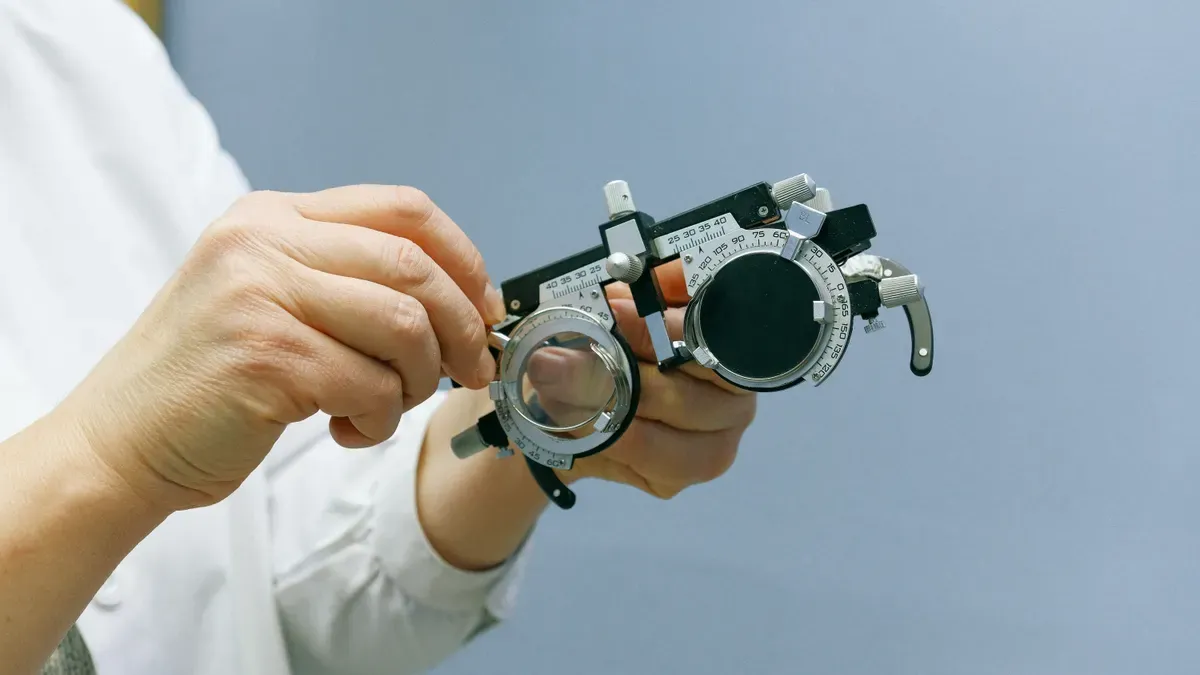
Image Source: pexels
You must evaluate core technical capabilities carefully when you select an optical lens manufacturer for modern industrial applications. Precision custom optics demand advanced optical fabrication methods, rigorous process control, and smooth volume scalability. Leading optical suppliers maintain state-of-the-art production machinery to handle complex geometric specifications, challenging environmental conditions, and strict surface tolerances. Evaluating these critical manufacturing criteria helps engineering and procurement teams secure reliable suppliers for long-term production success.
You should verify an OEM's technical machinery and process stability first. Experienced suppliers utilize CNC grinding, high-speed polishing, double-sided lapping, and Magnetorheological Finishing (MRF) to fabricate high-precision components. These advanced tools remove sub-surface damage and deliver exact surface figures across diverse optical substrates. Employing digital freeform surfacing engines further decreases form errors during complex prescription optics fabrication. Engineers can refine custom prescription parameters using interferometric testing and parametric pilot runs before committing to high-volume production runs. Additionally, integrating automated coating lines within cleanroom setups allows technicians to deposit specialized anti-reflective stacks without introducing micro-particulate defects. Band Optics leverages extensive expertise in precision glass fabrication to manufacture custom optical components that satisfy demanding standards.
Manufacturing Criterion | Process Control Actions | Impact on Defect Rates & Yield |
|---|---|---|
Process Control & Stability | Regulated molding settings, controlled cooling, tool status tracking, material lot tracing | Stabilizes quality, reduces reliance on end-of-line inspections, and lowers scrap |
Measurement System Alignment | Proper calibration, matching instrument precision directly to part tolerance requirements | Prevents false quality failures caused by overly stringent tolerances relative to measurement capabilities |
Custom Lens Design & Prototyping | Tailoring optical properties specifically for application specs alongside rapid SPDT modeling | Enhances defect detection accuracy and boosts overall production yield |
You need a competent component vendor that transitions seamlessly from initial prototype validation to high-volume cleanroom assembly. Top optics suppliers manage production risks across every development phase to safeguard your delivery schedule, control costs, and uphold exact optical quality.
Early Design & Engineering: Experienced optical engineers conduct thorough tolerance analysis, material selection, and design-for-assembly reviews to optimize custom lens designs for volume output.
Unified Platform Integration: Executing custom prototyping and volume manufacturing under a single unified manufacturing platform eliminates project transfer delays and prevents critical data loss between separate vendors.
Automated Scaling: Deploying robotic pick-and-place tools, automated adhesive dispensers, and machine vision systems minimizes human assembly error while maintaining prototype-level optical precision.
In-Line Quality Monitoring: Embedded sensors monitor critical assembly parameters like element alignment force, adhesive cure temperatures, and cleanroom air quality to provide real-time operational feedback.
Band Optics provides the technical expertise and flexible customization necessary to guide your optical program through this entire manufacturing pipeline. Experienced custom suppliers utilize unified production platforms to bridge the gap between initial prescription modeling and final cleanroom opto-mechanical assembly. By enforcing strict ISO-compliant cleanroom controls and performing comprehensive 100% interferometric wavefront checks, qualified manufacturers shield sensitive optics from micro-particulates and guarantee consistent end-product performance.

Image Source: pexels
You must evaluate major industry leaders when you select an optical lens manufacturer for advanced industrial applications. Top lens suppliers like Edmund Optics, Shanghai Optics, Optimax, SCHOTT, and Carl Zeiss supply standard components and specialized builds. Many global optical lens brands serve distinct market niches. Commercial ophthalmic lens companies focus on vision correction. Meanwhile, precision optical manufacturers build specialized systems for defense, aerospace, and medical fields. You can evaluate top optical lens suppliers by analyzing their material catalog, engineering support, and production stability. Top optical lens manufacturers offer distinct manufacturing capabilities for specialized prescription optics. Global suppliers maintain diverse material inventories to support varied optical spectrums. Evaluating top optical lens manufacturers helps engineering teams fulfill rigorous optical design criteria across custom development cycles. These suppliers simplify complex sourcing for demanding applications.
Substrate Material | Operational Spectrum | Key Physical Attributes |
|---|---|---|
UV Fused Silica | ~180 nm to 3.5 μm | Low thermal expansion, high laser damage threshold |
Calcium Fluoride (CaF2) | ~170 nm to 8000 nm | Soft structure, strong chemical resistance |
Sapphire | ~150 nm to 5.5 μm | Mohs 9 hardness, high impact stability |
Silicon | ~1.1 μm into MIR | Opaque in visible spectrum, moderate hardness |
Zinc Selenide (ZnSe) | 600 nm to 16000 nm | Low absorption for high-power optics |
Evaluating optical lens brands allows engineering teams to secure suitable substrates. Selecting the correct glass type ensures high efficiency across ultraviolet, visible, and infrared wavelengths. Material selections dictate system durability, laser damage thresholds, and optical performance stability under challenging environmental conditions. Proper material selection prevents costly operational failures.
You can rely on specialized suppliers to solve complex production bottlenecks. Band Optics Technology operates as an ISO 9001:2015 certified company with over 15 years of optics expertise. The team delivers reliable OEM custom glass solutions for challenging optical setups. Band Optics builds custom optical components. Their broad portfolio includes spherical lenses, aspherics, domes, prisms, wedged windows, high-power plate polarizers, and high-precision optical assemblies like beam expanders or cemented achromatic doublets.
Top lens suppliers must deliver exceptional optical precision across diverse custom prescription parameters. Band Optics uses high-end 5-axis CNC machining for complex housing geometries and repeatable contours. Their technicians apply Ion Beam Sputtering coatings to minimize absorption losses and maximize laser durability. For demanding infrared applications, Band Optics fabricates custom sapphire IR domes. These domes achieve parallel optical surface tolerances under ±2 μm to eliminate image distortion. Qualified suppliers protect system performance by maintaining tight mechanical tolerances across every manufacturing phase from raw shaping to final packaging.
You gain significant lead-time flexibility when you partner with specialized producers. Specialized manufacturers maintain end-to-end oversight over all fabrication processes. Their optical engineers review each prescription requirement before launching rapid prototyping or full-scale volume manufacturing runs. Band Optics combines technical expertise with rigorous quality management. Their team maintains consistent product quality across every production batch. You can meet your exact prescription tolerances and achieve custom prescription design goals by collaborating with trusted OEM suppliers. Experienced manufacturers refine production workflows to eliminate delays and deliver reliable components. This comprehensive manufacturing approach safeguards your project schedule.
You must define exact physical parameters in technical drawings to guarantee superior optical performance. Advanced precision glass fabrication allows technicians to control surface figure accuracy down to λ/20 and maintain surface roughness ≤ 0.2 nm. High-precision optical elements require strict cosmetic quality, so engineers specify scratch-dig ratings reaching 10/5 to prevent light scattering. Band Optics manufactures custom optical components with center thickness tolerance of ±0.025 mm to satisfy demanding prescription specs.
Optical Tolerance Metric | Standard Precision | High Precision Class |
|---|---|---|
Diameter Tolerance | ±0.025 mm | 6 μm |
Surface Figure Accuracy | λ/4 | λ/20 |
Scratch-Dig Quality | 20-10 | 10/5 |
Parallelism | 30 arcsec | <2 arcsec |
Fabricating custom lens geometries requires careful alignment during edge grinding processes. You avoid unwanted beam deviation by keeping full-frame distortion strictly under <0.1%. Extensive customization helps you refine prescription parameters for complex optical systems. The engineering team delivers custom elements to match your exact application requirements.
Substrate selection depends directly on your system operational spectrum. You can choose UV fused silica for ultraviolet lasers or traditional optical glasses for visible imaging systems. Infrared optics require specialized materials to maintain high light transmission across broad thermal ranges. Sapphire transmits light from 150 nm up to 5 µm while providing exceptional mechanical strength. Silicon operates efficiently in the 3 µm to 5 µm band, and Zinc Selenide covers broad spectral bands from 0.45 µm to 21 µm. Band Optics provides custom glass solutions to deliver high-performance optical solutions across demanding infrared environments.
You can apply specialized coatings to optimize total light throughput. High-power laser optics require anti-reflective or high-reflectivity stacks with qualified damage thresholds. Specialty ITO coatings provide electrical conductivity for thermal defrosting without blocking visible optics paths. Technicians apply specialized thin films during precision manufacturing to fulfill your prescription targets. The manufacturing team creates durable custom lenses that keep your prescription aligned. This rigorous quality process ensures your optics retain exact prescription standards under severe environmental stress.

Image Source: pexels
Quality assurance validates the design accuracy of custom optics before final delivery. Engineers use 100% interferometric testing to measure surface figure deviations across every optical element. Technicians conduct careful visual inspection to detect fine surface defects. Modulation Transfer Function testing assesses total image sharpness, while spectral checks verify light transmission across target wavelengths. Selecting high-precision components safeguards overall optical performance in demanding industrial optics projects.
High-reliability sectors like defense, aerospace, biotechnology, and semiconductor manufacturing require absolute quality consistency. ISO 9001:2015 quality management compliance ensures rigorous process control throughout every manufacturing stage. Unlike basic eyeglass production, custom prescription lenses demand strict metrology validation. Band Optics leverages deep technical expertise to verify each optical element. Our production facility applies rigorous testing protocols to satisfy your exact prescription tolerance on every delivery batch.
Harsh operational environments require rigorous environmental testing to ensure long-term durability across challenging field applications. Technicians simulate severe atmospheric stress to verify component reliability before full field deployment in advanced optics systems.
Protocol Type | Test Parameters / Standard | Purpose & Application |
|---|---|---|
Temperature Cycling | Commercial: -40°C to +85°C | Evaluates thermal expansion effects on optical alignment and phase stability. |
Humidity Testing | Up to 95% RH (Standard: IEC 60068-2-78) | Assesses corrosion resistance and surface degradation. |
Salt Spray Testing | Standard: ASTM B117 | Tests corrosion resistance for maritime and coastal operational environments. |
Environmental chambers subject precision elements to extreme thermal shifts and high humidity levels. Extreme operational conditions can alter the optical quality of precision lenses over time. Rigid environmental testing verifies that your specialized build preserves its target prescription parameters. Premium prescription lenses maintain high structural integrity under severe operational stress. Robust quality management guarantees exceptional accuracy for your demanding prescription project.
You must submit complete engineering data when you request a quote from a custom optical lens supplier. Clear documentation helps optical suppliers evaluate your exact project requirements. You should provide revision-controlled drawings, CAD models, prescription details, sag files, and clear interface specifications.
Your submission package requires explicit substrate details and coating standards. You need to define precise physical dimensions, centration, surface roughness, and target operating environments. Specifying inspection methodologies, measurement uncertainty limits, and metrology protocols ensures that qualified suppliers meet your prescription specifications. Band Optics reviews these technical prescription parameters, offering flexibility in customization to deliver cost-effective optical solutions tailored to your system requirements.
You must balance unit costs against batch sizes when you negotiate with precision suppliers. Ordering a single custom element can cost approximately $2,000. Increasing your batch size to 100 pieces reduces the unit cost to under $50 per element. Fixed overheads, such as $1,000 specialized curvature tooling, spread across larger runs to lower unit pricing. A flat $2,000 vacuum coating chamber fee yields massive savings when you fill the chamber completely.
Unit costs for custom optics depend entirely on volume and technical specifications, ranging from cents for mass-produced molded components to thousands of dollars for low-quantity, high-precision glass lens elements. Low-volume orders focus on reducing upfront non-recurring engineering (NRE) costs, whereas high-volume orders focus on optimizing cycle times, tooling yields, and per-unit expenses.
Evaluating delivery schedules prevents operational bottlenecks across your project lifecycle. Urgent custom optics orders often trigger a 25%–100%+ cost premium over standard lead times. Optical suppliers manage production risks across initial prescription validation and final volume outputs. Partnering with experienced suppliers like Band Optics simplifies manufacturing and guarantees steady product quality. You can manage project timelines effectively by setting clear prescription milestones with primary suppliers.
Selecting a reliable custom optical lens manufacturer in 2026 requires careful evaluation of technical capabilities, material availability, and volume scaling. Top manufacturers maintain strict quality systems and design for manufacturability to streamline production transitions. Band Optics brings over 15 years of industry expertise to your optical programs. Our team combines deep technical expertise with advanced metrology to deliver high precision components at competitive prices.
You can simplify complex sourcing by partnering with specialized suppliers. Trusted optics suppliers reduce supply chain risks through complete design support and reliable quality control. Consult our optical design engineers today and submit your RFQ with detailed custom technical specifications to accelerate your project.
Standard ophthalmic lens companies produce basic eyeglass products for vision correction. In contrast, a precision optical lens manufacturer like Band Optics creates specialized custom prescription components. We deliver high-precision optical systems with tight tolerances for demanding laser, medical, and aerospace applications.
Off-the-shelf options limit your system design capabilities. Tailored customization allows you to optimize diameter, substrate materials, coatings, and exact optical tolerances. Band Optics provides tailored optics to maximize system performance and meet your specific design prescription parameters.
Top optical lens brands apply rigorous metrology testing to inspect high-precision prescription lenses. Band Optics utilizes 100% interferometric testing and MTF checks under an ISO 9001:2015 system. This strict quality control ensures every optical component satisfies your target prescription specifications.
You should evaluate technical machinery, material choices, quality certifications, and lead times. Leading optical lens manufacturers support your transition from rapid prototypes to high-volume production. Component manufacturers like Band Optics offer deep engineering expertise and competitive lead times for your complex prescription requirements.
You must specify clear aperture, focal length, substrate materials, surface accuracy, and coating requirements. Band Optics stands among trusted optical lens brands. We evaluate your prescription data to deliver accurate quotes and reliably produce high-grade prescription lenses.


