
close
Choose Your Site
Global
Social Media
Optical lens technology changes how people see things every day. This technology helps people read, drive, and take pictures with phones and cameras. The market for optical lens technology is growing quickly. Consumer electronics and healthcare are the main areas using this technology.
In 2023, people bought more than 1.34 billion smartphones and 7.2 billion DSLR cameras. This shows that many people want good lens solutions.
Digital and custom lens solutions now give sharper pictures, wider views, and more comfort than old lenses.
Advanced manufacturing helps each lens fit what a person needs. This gives people clearer vision.
Optical lens technology keeps getting better. It makes life easier and helps in science, medicine, and entertainment.
Optical lens technology helps with things like reading, driving, and taking pictures. It makes life easier for people. Digital customization lets people get lenses made just for them. This helps people see better and feel more comfortable. Some people have special vision needs. New lens materials and designs, like aspheric and diffractive lenses, lower distortion. They also make images look clearer. Companies care about the environment when making lenses. They use materials that are better for the planet. This helps cut down on waste. In the future, lens technology will have smart glasses and adaptive lenses. These will use digital features to make things better for users.
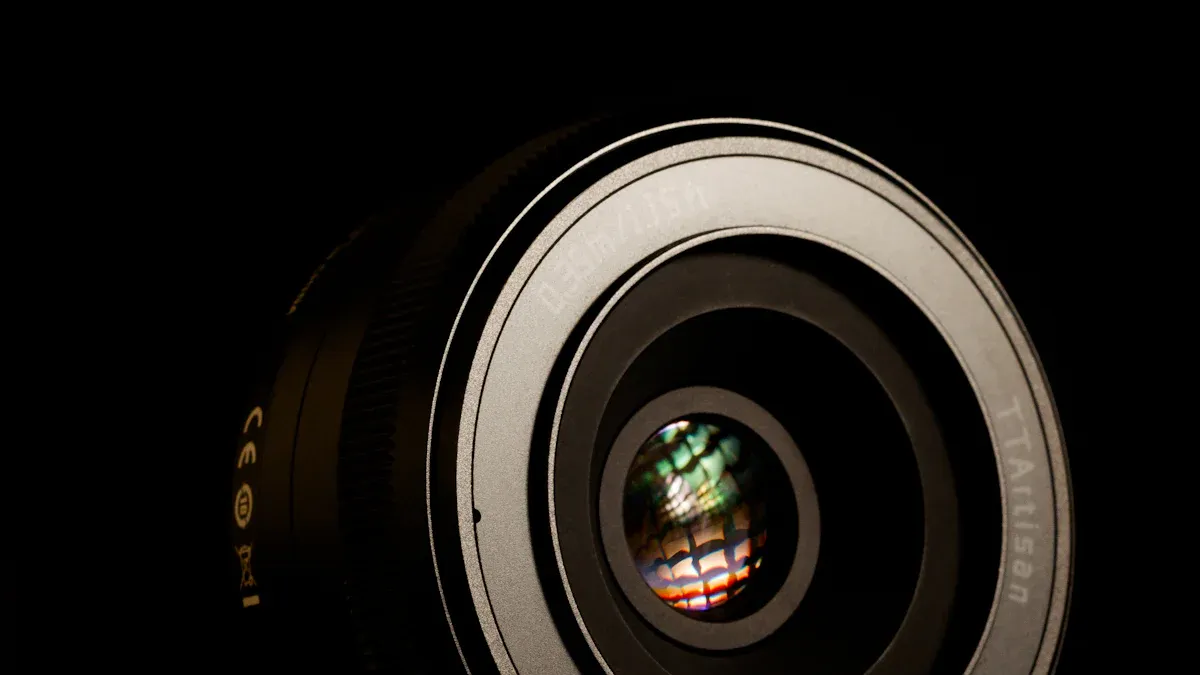
Image Source: pexels
An optical lens is made from clear glass or plastic. It bends light, which is called refraction. Lenses let light pass through them. People use lenses to help them see, take photos, and do science. The shape of a lens changes how it works with light. There are different types of lenses:
Convex lens: Curves out and brings light rays together.
Concave lens: Curves in and spreads light rays apart.
Plano lens: Has one flat side and one curved side.
Meniscus lens: Both sides curve, but one curves more.
Special machines make lenses with the right shape and surface. These machines help make lenses for many different uses.
Lenses bend light by slowing it down. This is called refraction. When light goes into a lens, it changes direction. This helps focus or spread out the light. The shape and material of a lens change how it works. Scientists use three main ideas to explain lenses:
Refraction bends light when it goes from air to lens.
Lens shapes like concave and convex change how light moves.
The focal point and focal length decide where light rays meet or split, which changes the picture made by the lens.
Experts use these ideas to make lenses for many things. Making lenses uses these rules to help people see better and take clear pictures.
Lenses are made from different materials. Each material works in its own way. The material changes how the lens works with light. Common materials are:
Inorganic materials (glass): Regular glass, glass with a high refractive index, colored glass, and photochromic glass. Glass lenses are very clear and hard, but they are heavy and can break.
Organic materials: Thermoset, regular resin, high refractive index resin, colored resin, photochromic resin, and thermoplastic. Organic lenses like CR-39, PMMA, and PC are light and bend easily, but they can scratch.
Crystal lenses: Made from silicon dioxide, these lenses are very pure and have special optical features.
The table below shows how glass and plastic lenses are different:
| Property | Glass Lenses | Plastic Lenses |
|---|---|---|
| Durability | Very strong, not easy to scratch | Hard to break or crack |
| Scratch Resistance | Harder to scratch | Easier to scratch |
| Optical Clarity | Very clear | Not as clear because of dispersion |
| Weight | Heavy | Light |
| Flexibility | Not flexible | Flexible |
| Impact Resistance | Breaks easier | Does not break easily |
Glass lenses are very clear because of their high refractive index. Plastic lenses are lighter and good for people who move a lot. They do not break as easily and can bend more. Making lenses keeps getting better to fit what people need today.
Lens makers also think about the environment. Making contact lenses uses a lot of energy and resources. This makes more greenhouse gases. Throwing away lenses the wrong way causes plastic pollution and microplastics in water, which hurts fish and other animals. Many companies now use plant-based and biodegradable materials to make less waste and use less energy. These changes help make lens making better for the planet.
Convex and concave lenses change how light moves. Each lens has its own curve. This curve makes light go in a new direction. Convex lenses stick out. Concave lenses bend in. The table below shows how they are not the same:
| Feature | Convex Lens | Concave Lens |
|---|---|---|
| Shape | Outward-curved | Inward-curved |
| Lens Type | Converging lens | Diverging lens |
| Light Behavior | Focuses light to a point | Spreads light out |
| Focal Length | Positive | Negative |
| Image Formation | Real or virtual | Always virtual |
| Common Applications | Cameras, magnifiers, projectors | Glasses for myopia, peepholes |
Convex lenses bring light together at one spot. Cameras use convex lenses to make pictures clear. Magnifying glasses use convex lenses to make things look bigger. Projectors use convex lenses to show big pictures. Concave lenses spread light apart. Glasses for nearsighted people use concave lenses to help them see far away. Peepholes use concave lenses to give a wide view. Laser tools and telescopes use concave lenses to change light beams and fix blurry spots.
Aspheric lenses make pictures better by changing their shape. These lenses help stop blurry spots and astigmatism. Spherical lenses can make pictures fuzzy because they do not focus all light together. Aspheric lenses fix this and make pictures sharper. They also help colors stay clear. Aspheric lenses can take the place of many old lens parts. This makes things lighter and easier to use.
Diffractive lenses have special patterns on them. These patterns bend light in new ways. Diffractive lenses help control how light spreads and focuses. Cameras and medical tools use diffractive lenses to make pictures clearer and stop glare. Aspheric and diffractive lenses help people see better and make pictures look sharp.
Tip: Aspheric lenses are found in good cameras and special eyeglasses. They help people see bright colors and sharp details.
Custom lenses help people with special vision needs. These lenses match the shape of each eye. They give clearer vision. New ways to measure the eye use real-time data. These ways check the eye’s surface and pupil size. Wavefront-guided designs fix more vision problems and make sight better. Multifocal designs help people see near and far. This helps people with presbyopia.
Custom lenses use silicone hydrogel to let more oxygen reach the eye. This keeps the eye healthy and comfy. Some new lenses change color when light changes. Scleral lenses help people with odd-shaped corneas or dry eyes. Toric lenses fix astigmatism with special shapes. Multifocal lenses help people read and see far away.
Lenses stay in place when blinking
Help for hard prescriptions
Custom lenses help people who cannot use regular lenses. They give clear sight and comfort for many eye problems.
Digital lens technology helps people see better. It uses special machines to shape each lens very carefully. These machines use computers to cut and polish the lens. The lens is made to fit each person’s eyes. Old lens making uses molds and simple tools. That works for easy prescriptions. Digital surfacing uses special data for each eye. It helps people who have hard vision problems.
The table below shows how old and digital lens making are different:
| Aspect | Traditional Lens Surfacing | Digital Lens Surfacing |
|---|---|---|
| Precision | Up to 0.12 diopter accuracy | Up to 0.01 diopter precision |
| Customization | Limited to pre-made tools and semi-finished lenses | Fully customized lenses tailored to individual needs |
| Suitability for Complex Prescriptions | Reliable for simpler prescriptions | Ideal for complex prescriptions and wraparound frames |
| Cost-Effectiveness | Economical for standard lenses | Higher precision often comes at a higher cost |
Digital lens technology uses clear pictures and smart computer programs. These tools measure each eye’s shape. The lens is made to match these numbers. This gives people sharper sight and more comfort.
Digital customization gives many good things to users. It does not use the same lens for everyone. Each lens is made for one person. This helps people see better and makes life easier.
People with strong prescriptions see much better.
Digital lenses help people see clearly at the sides.
The technology makes seeing things feel more normal.
The table below lists the main good things about digital customization:
| Benefit | Description |
|---|---|
| Improved Visual Clarity | Digital customization provides a prescription that optimizes vision balance, enhancing clarity. |
| Reduced Distortion | The technology minimizes the thick, distorting effects of strong prescriptions for better vision. |
| Enhanced Comfort | Personalized fit ensures comfort, reducing physical discomfort during use. |
| Personalized Fit | Precise measurements lead to a better fit, optimizing lens performance for individual users. |
Digital lens technology uses real numbers to measure eyes. It does not guess or make mistakes. The process is quick and saves time. People and eye doctors do not need long exams. Custom eyeglass lenses help people see and feel better.
New lens designs use spiral shapes and smart controls. Spiral lenses make special light patterns called optical vortices. These patterns change how light moves in the lens. The spiral shape lets the lens focus at many spots. People said they saw clearer at different distances and in different lights.
The spiral diopter lens keeps things clear at many distances and light levels.
Special machines shape the lens very carefully.
The lens uses a spiral shape to focus at many points.
People saw better in many lighting situations.
Adaptive lens technology uses smart materials and computers. These lenses can change shape or prescription right away. Workers can wear glasses that switch for far or close vision. This helps them stay safe and work better. Adaptive lenses help with augmented reality. They keep both real and digital things clear.
Lenses can change for different jobs.
Glasses that adapt help keep workers safe.
Augmented reality stays clear with these lenses.
Spiral and adaptive lenses may be used in small cameras. Wearable tech and drones can use these lenses too. The market for digital lens technology is growing fast. Smart glasses, augmented reality, and AI make people want better lenses. Tech companies race to make the best and most advanced lenses.
Note: Spiral-shaped lenses and adaptive optics help people see well in many ways. These new designs use light in smart ways to help vision and comfort.
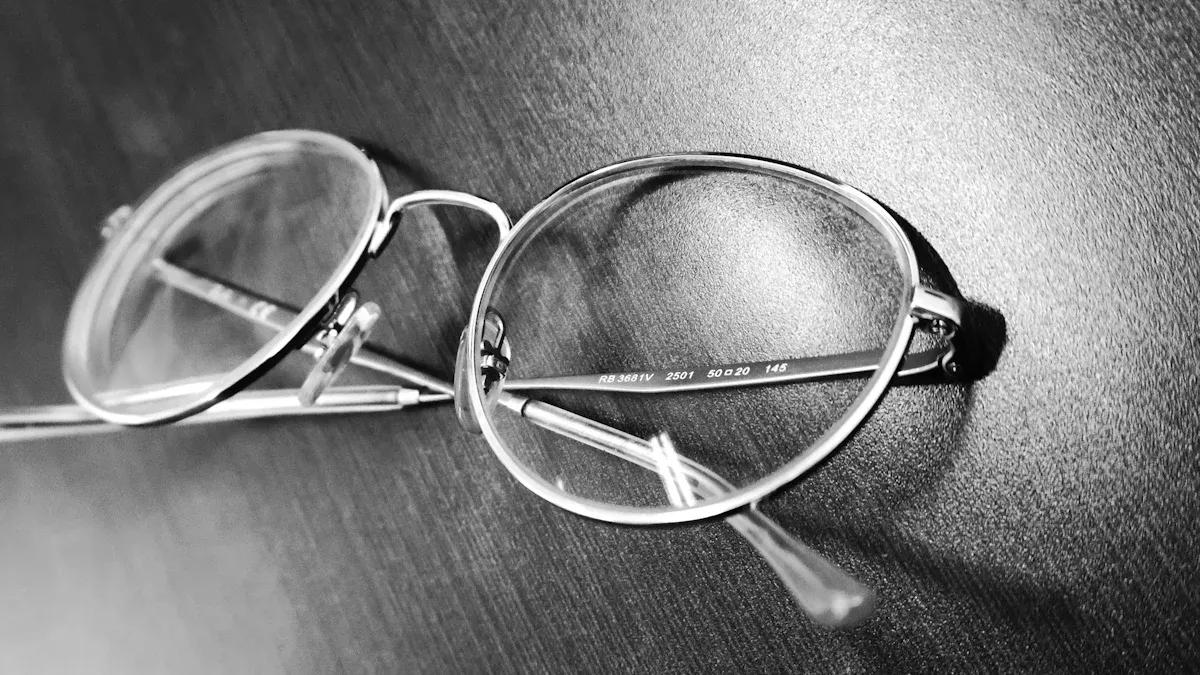
Image Source: unsplash
People wear lenses in glasses to help them see better. These lenses fix problems like nearsightedness, farsightedness, and astigmatism. High-tech glasses use new lens designs for clear sight and comfort. The table below lists the most common lens types for vision correction:
| Lens Type | Description |
|---|---|
| Single Vision Lenses | Lenses for correcting one field of vision |
| Multi-vision Lenses | Lenses for correcting multiple fields of vision |
| Progressive Lenses | Lenses that provide a gradual transition between different vision zones |
| Others | Other types of lenses not specified |
Single vision lenses help people see close or far. Multi-vision lenses let people see at different distances. Progressive lenses change smoothly between vision zones. These lens choices help millions of people every day.
Lenses are important in cameras and imaging devices. They focus light to make sharp and clear pictures. Camera and smartphone optics use special lens designs and materials. These help reduce blurry spots and color problems. The table below shows how lenses make pictures better:
| Function | Description |
|---|---|
| Lenses as Linchpins | Lenses focus light to create clear, sharp images, essential for high-quality photography. |
| Design and Material | Critical for minimizing aberrations, ensuring clarity and detail in images. |
| Aspect | Explanation |
|---|---|
| Role of Sensor Lenses | Act as a gateway between the environment and image sensor, focusing light for sharp images. |
| Minimization of Aberrations | Specific optical elements reduce distortions and chromatic aberrations for true-to-life images. |
| Manufacturing Techniques | Advanced materials and precise techniques enhance image quality, capturing intricate details. |
Photographers use optics to control how light moves. Refraction, reflection, and diffraction help make images. New lens designs use high-refractive index glass and many lens parts. Image stabilization helps cameras take clear photos, even if they move.
Lenses help many science tools and electronics work better. Optics in smartphones focus light for photos and videos. Virtual reality and augmented reality devices use lenses to show 3D images and digital layers. Microscopes use lenses to make tiny things look bigger. Telescopes use lenses to see stars and planets far away. Spectroscopes use lenses to study light and learn about materials.
Smartphones use lenses for pictures and videos.
VR and AR devices use lenses for cool experiences.
Microscopes use lenses to look at small things.
Telescopes use lenses to see faraway objects.
Spectroscopes use lenses to study light from stuff.
Medical imaging uses lens technology too. Optical coherence tomography uses lenses for detailed eye pictures. Doctors use these pictures to find eye diseases. Laser surgeries need exact optics for safe and accurate work. These new lens advances help keep people healthy and safe.
Smart glasses now mix digital things with real life. These glasses show information right in front of your eyes. Many smart glasses have displays, voice controls, and AR features. Some brands like Vuzix and North add gesture controls and instant translation. The AR glasses market was $6.4 billion in 2024. It is growing fast. New glasses are thinner and have more AI tools. AR lets people see digital layers on real objects. Smart glasses help workers, students, and gamers use digital tools in new ways.
Smart glasses make life better by joining digital and real worlds.
AR glasses give special experiences with new lens designs.
AI helps users and changes to fit their needs.
New lens making uses special glass and strong glass. These new materials help lenses work better with light. Lenses made from these materials bend and focus light well. Strong glass does not break easily, so lenses last longer. Special coatings help lenses let light through, stop glare, and fight scratches. These changes help lenses last longer and keep pictures sharp. New ways to make lenses also lower prices and help more people buy good lenses. Small companies can now sell better lenses to more people.
Lens technology will change how people use optics every day. Lenses in smart devices help people read, learn, and work faster. Better lenses in cameras and phones make pictures clearer. Medical lenses help eyes and give new treatments. As lens making gets better, lenses will cost less and more people can buy them. But there are still problems. Companies must make lenses very carefully and need skilled workers. They need good tools to make strong coatings and fix lens mistakes. Changes in the market, higher prices, and caring for the planet also matter. Even with these problems, new lens technology will help people see better and have more choices.
New lens technology has made life easier for people. The table below shows how new lens materials, designs, and digital tools help people see better and feel more comfortable.
| Advancement Type | Impact on Vision Technology |
|---|---|
| Materials | Thinner, lighter lens for comfort |
| Design | Progressive lens for different viewing distances |
| Digital Integration | Personalized lens selection through digital tools |
| Blue Light Filters | Specialized lens coatings for screen time |
| Virtual Try-On Features | Better lens selection experience |
People can now pick lenses that fit their eyes better. This helps them see more clearly and feel good wearing them. Learning about new lens ideas helps workers and users choose the right lens. Lenses keep making vision and technology better for everyone.
Clearer lenses help people read and drive.
New coatings cut down glare and eye strain from screens.
Smart lens features help keep people healthy and safe.
The lens market is growing with more choices like high-index and contact lenses.
Lens technology helps more people and makes users happy.
A lens bends light in specific ways to focus or spread it. Regular glass does not change the direction of light much. People use a lens to improve vision or create clear images in cameras and microscopes.
A lens changes the path of light entering the eye. This adjustment helps focus images on the retina. People with vision problems use a lens in glasses or contacts to see clearly at different distances.
Manufacturers often use plastic to make a lens. Plastic lenses are lighter and less likely to break than glass ones. Many people choose a plastic lens for comfort and safety in daily use.
Cameras use several lenses together to control light and reduce blurry spots. Each lens in a camera system has a special job, such as focusing or correcting color. This combination creates sharp and detailed photos.
A custom lens matches the unique shape of a person’s eye. Eye doctors use special tools to measure the eye. They design a lens that gives the best vision and comfort for each person.


