close
Choose Your Site
Global
Social Media

Views: 0 Author: Site Editor Publish Time: 2026-01-09 Origin: Site


Welding lenses stop dangerous light and keep eyes safe when welding. Telescope lenses help us see faraway things in space. Welding lenses have dark filters. Telescope lenses use clear glass to make sharp pictures. Welding lenses do not show stars or planets clearly. It is important to know these differences. This helps people pick the right lens and stay safe. Band-optics experts make special lens systems for many jobs.
Welding lenses protect your eyes from bright light but do not show stars clearly. They block most harmful rays.
Telescope lenses let in a lot of light and provide clear images of space. They are made from special glass for sharp pictures.
For solar viewing, only use welding lenses with shades 12, 13, or 14. These shades block enough sunlight to keep your eyes safe.
Never use homemade filters for solar viewing. They may not block harmful rays and can damage your eyes.
Always check your lenses for damage before use. Proper care helps ensure safety and clear views.
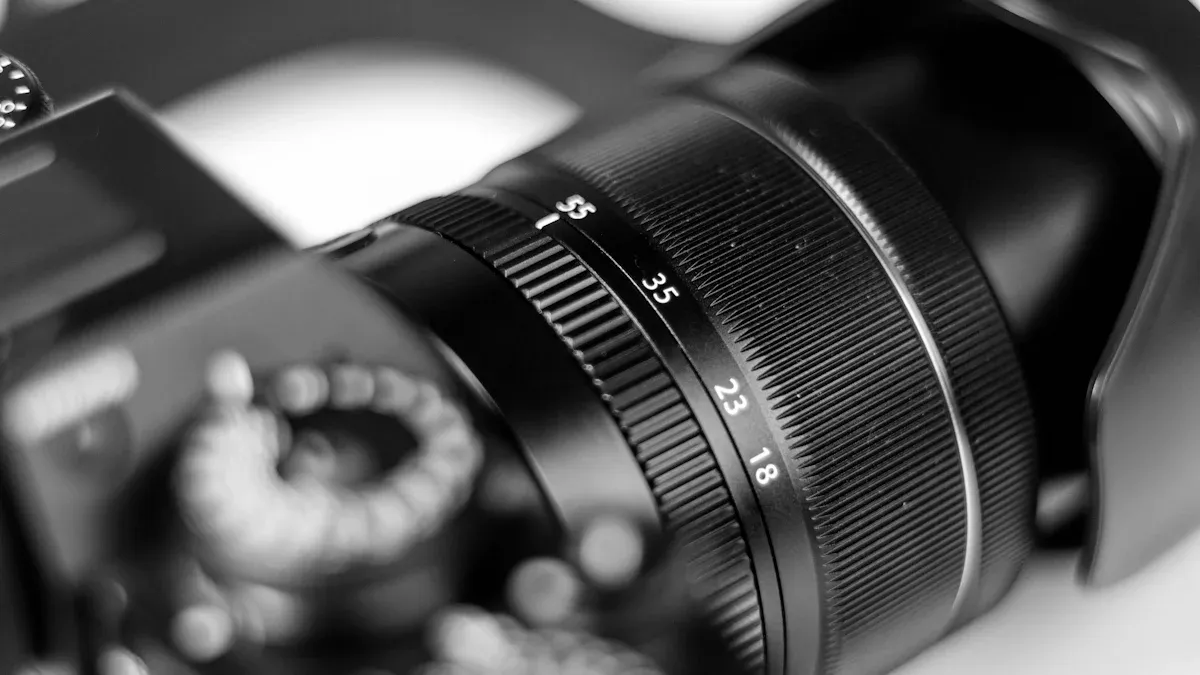
Image Source: pexels
Welding lenses keep your eyes safe from bright light. They are made from special glass or polycarbonate. These materials stop ultraviolet (UV) and infrared (IR) rays. The lenses are usually dark. This darkness cuts down glare and protects your sight. Band-optics uses smart technology to make exact optical parts for many jobs.
Welding lenses are very good at filtering light.
They block almost all blue light, letting only 0.008% through.
They stop most UV rays and follow tough safety rules.
They limit IR light, letting between 0.765% and 3.220% through.
All tested lenses block UV and blue light well.
These features make welding lenses safe for welding but not good for looking at stars.
Telescope lenses help people see far things in space. They use clear glass like crown glass and flint glass. Achromatic triplets use three lens pieces to fix color mistakes. Flint glass bends light a lot. Crown glass goes around the flint glass. This setup brings all colors of light to one spot. Band-optics makes telescope lenses with great materials for sharp pictures.
Telescope lenses let a lot of light pass through.
They have exact optical numbers.
They show steady and even optical features.
Lenses can be made from silicate, borate, phosphate, fluoride, or chalcogenide types.
They take in and let through certain wavelengths in UV, visible, and IR light.
These things help telescope lenses make clear and detailed space pictures.
| Feature | Welding Lenses | Telescope Lenses |
|---|---|---|
| Main Purpose | Eye protection during welding | Viewing distant space objects |
| Materials | Tinted glass, polycarbonate | Crown glass, flint glass |
| Light Transmission | Low (blocks UV/IR/blue light) | High (transmits visible light) |
| Image Clarity | Low | High |
| Wavelength Coverage | UV, IR, blue light blocking | UV, visible, IR transmission |
Tip: Always pick the right lens for what you do. Band-optics can help you choose the best optical solution.
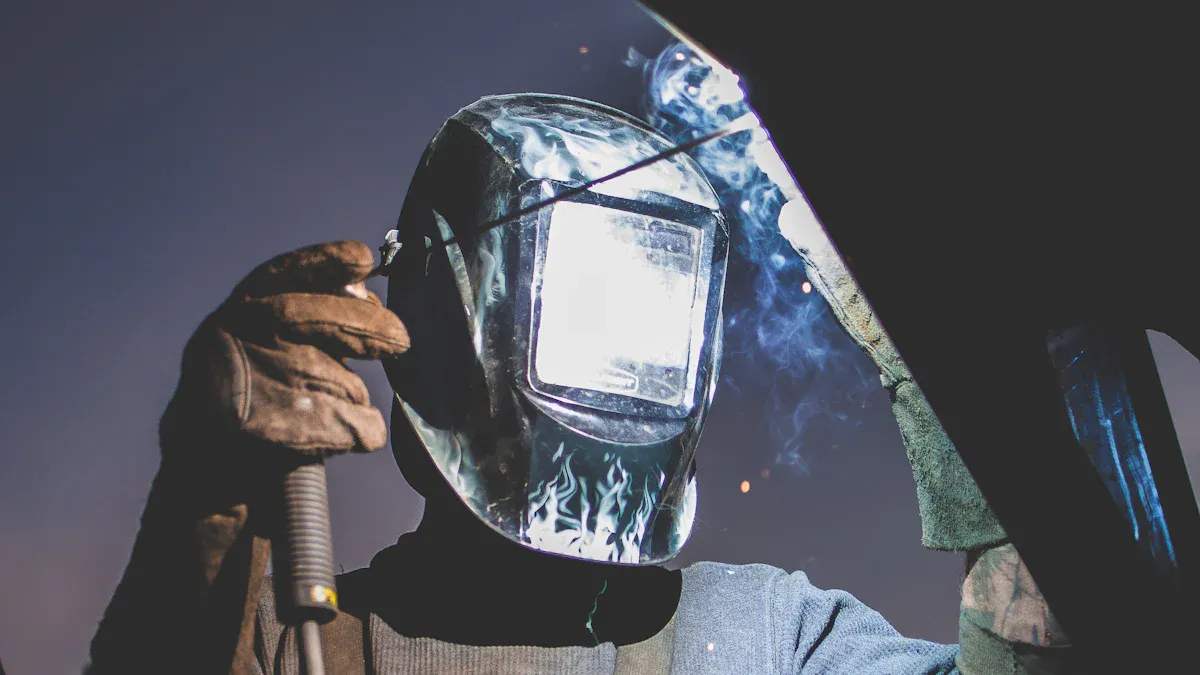
Image Source: unsplash
Astronomy needs pictures that are clear and sharp. Telescopes must gather a lot of light. Astronomers search for dim stars and planets. The lens should let visible light go through. It should not block important colors of light. Good telescope lenses show details and colors well. They help scientists learn about space objects. The lens must keep the picture steady. Many astronomy tools use special coatings to help light pass better. Safety matters when looking at the sun. Experts say to use filters that follow strict rules. Band-optics makes optical parts that meet these rules for astronomy.
Note: Astronomers pick lenses that let lots of visible light through. This helps them see faraway things in space.
Welding lenses keep eyes safe from bright welding light. They block most ultraviolet and infrared rays. They also stop almost all blue light. This makes welding lenses very dark. If used for astronomy, welding lenses do not show stars or planets well. The darkness stops much light from reaching your eyes. Dim objects cannot be seen. Colors may look strange because welding lenses block some light. Pictures can look blurry or not clear. Welding lenses are not made for sharp focus or clear images. They do not work for astronomy needs.
Safety is very important. Using welding lenses to look at the sun can be dangerous. Not every welding lens is safe for solar viewing. Some may let harmful rays get through. Experts say to use filters that follow ISO 12312-2 rules for solar viewing. Band-optics uses smart technology to make safe optical filters. These filters protect eyes and give clear pictures.
| Limitation | Impact on Astronomy |
|---|---|
| Low light transmission | Dim objects not seen |
| Color distortion | Colors look wrong |
| Blurry focus | Images not clear |
| Safety risk | Eyes can get hurt |
Tip: Always make sure a lens is safe and right for astronomy. Band-optics can help you find the best optical solution for your needs.
Some people use welding lenses to look at the sun. They do this during solar eclipses. This can be safe if you pick the right shade. Astronomy groups say to use shade 12 or higher for solar viewing. Shades 13 and 14 work best. These shades block enough sunlight to protect your eyes. They give a view like eclipse glasses. Never use adjustable welding helmets for looking at the sun. Auto-darkening helmets might not block all harmful rays. This can hurt your eyes.
Many people try to make their own solar filters. Homemade filters do not meet safety rules. Non-standard materials can let dangerous rays through. This can damage your eyes. For safe solar viewing, use filters made by experts. Band-optics makes high-quality filters that follow safety rules. These filters protect your eyes and show a clear image of the sun.
Note: Always check the shade number before using a welding lens for solar viewing. Only use shades 12, 13, or 14.
Eye safety matters a lot when looking at the sun. Not all welding lenses protect against solar radiation. Only shades 12 and above are safe for direct solar viewing. Looking at the sun can cause solar retinopathy. This can make you lose your vision forever. You need proper eyewear to keep your eyes safe. Never use homemade filters or unsafe materials.
You need eye protection during every part of a solar eclipse.
Solar retinopathy can make you lose your vision forever.
Use only proper eyewear for solar viewing.
Welder’s glass is okay if it is shade #14 or darker.
Band-optics cares about quality and safety. The company makes optical solutions that meet strict standards. Band-optics products work well and are reliable in tough situations.
Picking the right lens for astronomy keeps you safe. It also helps you see better pictures. Telescope lenses are made to show space objects clearly. They let in lots of light and keep colors looking real. Welding lenses are for eye safety during welding. They block most light and can make things look dark or fuzzy.
Experts warn that welding glass may not stop all harmful UV rays when looking at the sun. Some welding glass can also make things hard to see. Using welding glass for the sun is risky and not worth it. For most space viewing, telescope lenses work best.
Think about what you want to see with your telescope. If you want to see faint stars or galaxies, pick a telescope with a big opening. This helps it catch more light. Decide if you want to look with your eyes or take photos. The kind of telescope you need can change based on this. Make sure your telescope has a strong mount to keep the view steady.
Safety is very important when looking at the sky. Never look at the sun with normal sunglasses or homemade filters. Only use welding lenses with shade 12 or higher for short sun viewing, and only if they are safe. For the best safety and clear views, use filters made for astronomy.
Here are some tips to stay safe and get good results:
Always check your lens for cracks or damage before using it.
Use a steady tripod or mount so the view does not shake.
Keep your lenses in a clean, dry place.
Ask experts for help if you do not know which lens to use.
Band-optics makes special optical tools for different needs. Their team can help you pick the right lens for your project. If you have special needs, talk to professionals to stay safe and see the best views.
Welding lenses and telescope lenses have different jobs. Welding lenses block harmful light and keep eyes safe. Telescope lenses let in more light and show clear images of space. Welding lenses can help with solar viewing if you use the right shade. They do not work well for seeing stars or planets. Safety matters most. Always use proper filters. For advanced optical needs, ask experts like band-optics for help.
Tip: Choose the right lens for your task. Protect your eyes and enjoy safe viewing.
No. Welding lenses block most light and make images dark. Telescope lenses let in more light and show clear pictures. Welding lenses do not work well for seeing stars or planets.
Shades 12, 13, or 14 are safe for short solar viewing. Always check the lens for cracks. Never use lower shades or damaged lenses. For more details, see Solar viewer safety.
Clear lenses let in more light. This helps you see faint stars and planets. Clear glass also keeps colors true and images sharp.
No. Homemade filters may not block harmful rays. Only use filters made by experts or that meet safety standards. Your eyes need strong protection.
You can ask optical experts for advice. Band-optics offers help with picking the best lens for your needs. You can also learn more about lenses from Wikipedia.


