close
Choose Your Site
Global
Social Media

Views: 0 Author: Site Editor Publish Time: 2025-12-26 Origin: Site


Choosing the right photography lenses changes the picture a photographer takes. Many photographers know there are different camera lenses for different needs. The main types are:
Standard lenses
Telephoto lenses
Wide-angle lenses
Macro lenses
Prime lenses
Zoom lenses
Knowing about camera lenses and how to use them helps photographers pick the best lens for their ideas and subjects.
Learn about the main types of lenses. These are standard, telephoto, wide-angle, macro, and zoom. Each lens is good for different photos.
Focal length changes how much you see in a photo. Short focal lengths show more of the background. Long focal lengths make things look closer.
Aperture lets in light and changes focus. A wide aperture makes the background blurry. A small aperture keeps more things clear. Pick the right one for your subject.
Make sure your lens works with your camera brand. Each brand uses its own mounts. Some lenses need adapters to fit.
Think about your budget and how easy it is to carry. Lighter lenses are simple to bring with you. Prime lenses often cost less and give better quality.
Focal length is very important in a camera lens. It decides how much of the scene you see. Short focal length shows a wide view. You see more background and surroundings. Long focal length brings far things closer. It makes the view smaller and the subject bigger. Photographers use focal length to change how a photo looks. Wide-angle lenses have short focal length and show more. Telephoto lenses have long focal length and show far objects. Normal lenses give a balanced view. Focal length also changes how close you stand to your subject. Picking the right focal length helps make the photo you want.
Tip: Focal length changes how much background you see in a photo. Think about what you want to show or hide.
Aperture is the hole inside a lens that lets light in. The f-stop number shows how big the hole is. Small f-stop means a big hole and more light. Big f-stop means a small hole and less light. Aperture changes how bright the photo is and how much is in focus. Large aperture like f/2.8 makes the background blurry and the subject clear. Small aperture like f/16 keeps more things sharp. Photographers use aperture to pick what is clear in the photo.
Lens mounts attach the lens to the camera. Each brand has its own mount type. Some mounts only work with certain lenses. Some mounts use adapters for more choices. The table below lists common lens mounts and what they do:
| Lens Mount Type | Flange Distance | Compatible With | Best For |
|---|---|---|---|
| Canon EF Mount | 44mm | RF, Sony E, MFT, L-mount (with adapters) | Canon DSLR users |
| Canon RF Mount | 20mm | Native RF lenses only | New Canon mirrorless cameras |
| Sony E Mount | 18mm | Limited adaptation options | Sony camera users |
| Micro Four Thirds (MFT) | 19.25mm | Native MFT lenses only | Compact systems |
| L Mount | 20mm | Native L mount lenses only | Multi-brand flexibility |
Autofocus helps the camera focus fast on the subject. It makes it easier to get clear photos, even if things move. Image stabilization stops blur from shaky hands or movement. Some lenses use optical stabilization to steady the image. Some cameras use in-body stabilization to move the sensor. Both help you get sharp pictures in low light or with long focal length.
Note: Autofocus and stabilization work together to make photos better. They help you take sharp pictures in many situations.
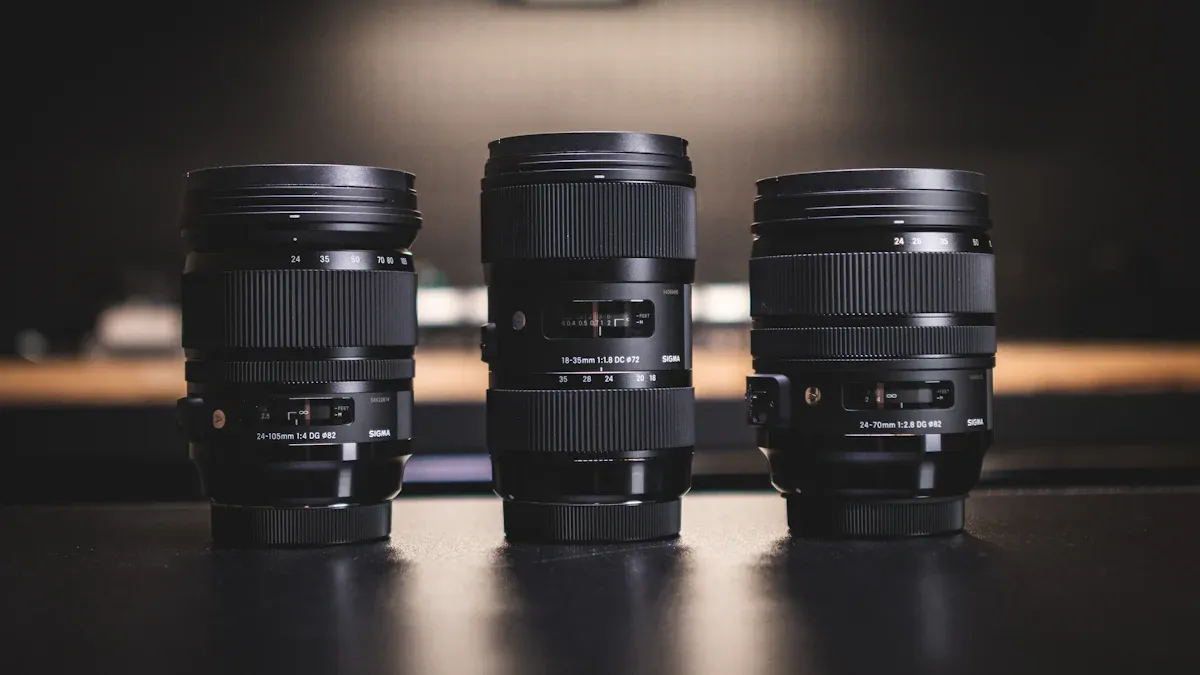
Image Source: unsplash
Standard lenses are a balanced choice for many photographers. Their focal length is close to what people see with their eyes. Photographers like standard lenses because they look natural and work for many things. Most standard lenses are 50mm, but some are between 35mm and 50mm. These lenses give good depth of field. You can get sharp pictures from near to far with small apertures. Many standard lenses have wide apertures like f/1.2 or f/2.0. This helps make the background look soft and blurry.
| Characteristic | Description |
|---|---|
| Focal Length Range | Between 35mm to 50mm, with 50mm being the most common for 35mm cameras. |
| Relation to Human Vision | Focal lengths are similar to how the human eye perceives the world. |
| Angle of View | Close to one radian (~57.296˚) of the optical system's image circle. |
| Depth of Field Characteristics | Good hyperfocal depth-of-field, allowing sharpness from near to far with small apertures. |
| Maximum Aperture | Typically ranges from f/1.2 to f/2.0, allowing for background blurring. |
Standard lenses do not change how things look in the scene. Beginners and professionals both use these lenses a lot.
Wide-angle lenses show much more of the scene than standard lenses. They have a short focal length, usually less than 35mm. Some wide-angle lenses can show almost a 180-degree view. This is great for pictures that need lots of space. Wide-angle lenses make things look farther away from the camera. They help show big areas and add depth to photos. Photographers can put things in the front of the picture to make it more interesting.
Wide-angle lenses make scenes look bigger and farther away.
These lenses can bend close objects inward for cool effects.
Wide-angle lenses are good for landscapes and big spaces.
They let you add things in the front of your photo.
These lenses help show depth and space, which is important for buildings.
Wide-angle lenses can show almost a 180-degree view for wide shots.
Pointing the camera up with these lenses shows more sky and clouds.
Wide-angle lenses are important for showing lots of the environment in one photo.
Telephoto lenses have a long focal length, usually 60mm or more. These lenses make faraway things look closer and bigger in the picture. Telephoto lenses squeeze the scene so things look closer together. Ultra-telephoto lenses do this even more, letting you take pictures of things very far away.
Telephoto lenses usually start at 60mm or longer.
These lenses are great for taking pictures of animals from far away.
Telephoto lenses help in landscape photos by bringing far things closer.
They are also good for product photos to show small details.
Ultra-telephoto lenses let you reach even farther for distant subjects.
Telephoto and ultra-telephoto lenses help you take pictures of things you cannot get close to.
Macro lenses are made for close-up photos. These lenses let you take pictures of tiny things very close up and still keep them sharp. Macro lenses have something called magnification ratio. A true macro lens has a 1:1 ratio, so the subject looks life-size on the camera sensor. Some macro lenses can go even higher, like 5:1, for super close shots.
Macro lenses are special for close-up photos with high magnification.
These lenses let you take sharp pictures of small things up close.
A true macro lens has a 1:1 magnification ratio for life-size photos.
Some macro lenses can go up to 5:1 for even closer pictures.
Macro lenses show tiny details and textures you cannot see with your eyes.
Zoom lenses let you change focal lengths without switching lenses. These lenses are very flexible, so many photographers like them. A zoom lens can go from wide-angle to telephoto in one lens. This makes it easy to change your photo quickly.
| Feature | Zoom Lenses | Prime Lenses |
|---|---|---|
| Versatility | Greater versatility; can change focal lengths without swapping lenses. | Limited to a single focal length. |
| Image Quality | More susceptible to distortion; high-end models can match prime quality. | Generally better image quality with less distortion. |
Zoom lenses let you change focal length fast for different photos.
Prime lenses are sharper and have less distortion because they do not zoom.
A zoom lens is good for photographers who need to change their photos quickly. Modern zoom lenses are much better than older ones.
Specialty lenses are unique and make special effects or solve problems. These lenses do more than the main types and help with creative ideas.
| Lens Type | Unique Effects |
|---|---|
| Macro Lenses | Capture extreme close-ups, revealing fine details and textures, with shallow depth of field for emphasis. |
| Tilt-Shift Lenses | Control perspective and plane of focus, correcting distortions and creating miniature-like effects. |
| Fisheye Lenses | Create highly distorted, curved perspectives, enhancing storytelling with dramatic compositions. |
| Lensbaby Optics | Allow manipulation of focus for selective blur effects, creating dreamy, painterly images. |
Macro lenses: Best for close-ups and showing tiny details.
Tilt-shift lenses: Help fix lines and change how things look.
Fisheye lenses: Make pictures look curved and dramatic.
Lensbaby optics: Let you blur parts of the photo for dreamy looks.
Specialty lenses help photographers do things that regular lenses cannot do. They give more creative choices and help with special photo problems.
Note: Knowing about the main lens types and their features helps photographers pick the right lens. Each lens type has its own strengths and creative uses.
Photographers use standard lenses for portraits because they look natural. The 50mm lens is good for taking pictures of people’s faces and upper bodies. The 85mm lens is great for close-up photos. It makes the background blurry and keeps faces looking real. The 35mm lens lets you see more of the place around the person. Here is a simple guide:
| Lens Type | Use Case | Characteristics |
|---|---|---|
| 35mm | Environmental portraits, full body shots | Wide-angle, captures more of the scene |
| 50mm | General portraits, upper body shots | Versatile, not too wide or zoomed |
| 85mm | Close-ups, impactful portraits | Minimal distortion, beautiful background blur |
The 85mm lens makes people stand out and does not bend faces.
The 50mm lens is not expensive and works in many ways.
The 35mm lens shows more background for telling stories.
Wide-angle lenses are best for nature and landscape photos. These lenses make things look bigger and deeper. They keep the front and back of the picture sharp. Wide-angle lenses show big views and let you get close for cool effects. The edges might look a little bent, which can make photos more exciting.
Wide-angle lenses show big spaces and add depth.
These lenses help make strong pictures in nature.
Sports and action photos need lenses that focus fast and let in lots of light. Telephoto lenses are important for taking pictures of players far away. These lenses help freeze movement and keep things clear. Strong and weatherproof lenses are good for outdoor sports.
| Feature | Importance |
|---|---|
| Fast Autofocus | Captures fast-moving action with precision and speed. |
| Wide Aperture | Improves performance in low light and enables faster shutter speeds. |
| Focal Length Options | Different sports need different focal lengths. |
| Durability and Weather Sealing | Protects the lens during unpredictable conditions. |
Wildlife photographers use telephoto lenses to take pictures of animals far away. Lenses like 100-400mm or 150-600mm help show animals that are not close. A long focal length, like 400mm or 600mm, is best for close-ups and full-body animal shots. Telephoto lenses let you take pictures without scaring the animals.
Telephoto lenses are needed for animals and faraway things.
Lenses with a 10x optical zoom, like a 60-600mm, are flexible in the wild.
Macro lenses are made for close-up pictures. These lenses can focus very close and show small things in detail. Macro lenses have a 1:1 magnification ratio, so the subject looks life-size on the camera. Nature, bugs, and patterns look best with macro lenses because you can see tiny details.
Macro lenses are important for sharp, close-up photos.
These lenses are best for flowers, bugs, and small things.
People who travel or take everyday photos need lenses that do many jobs. A 35mm prime lens works for landscapes, street photos, and portraits. Wide-angle lenses are good for city views and big groups. Telephoto lenses help you zoom in on far things. Macro lenses are nice for close-ups of food or small objects. All-in-one zoom lenses cover many focal lengths, so you do not have to change lenses a lot.
Tip: All-in-one zoom lenses are great for travel because one lens can do many things.
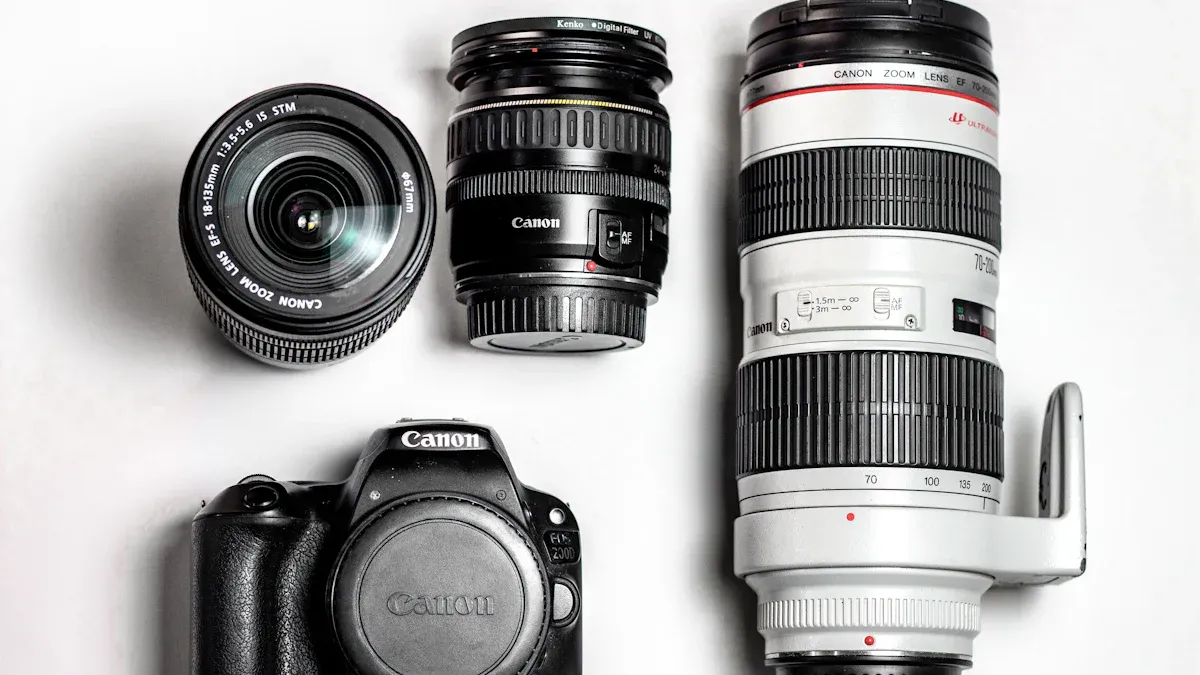
Image Source: pexels
Wide-angle lenses let you see more in your photo. These lenses have a focal length less than 35mm. Ultra wide-angle lenses are even shorter, under 24mm. The focal length changes how things look in the picture. Wide-angle lenses make things close look bigger. Far away things look smaller. This makes the space between objects seem bigger.
Wide-angle lenses have less than 35mm focal length.
Ultra wide-angle lenses are under 24mm focal length.
These lenses show a lot of the scene.
They make things in front stand out.
Far objects look tiny and far away.
Photographers use wide-angle lenses for cool effects and big spaces. The focal length guide helps you pick the best lens for wide photos.
Tip: Wide-angle lenses are great for landscapes, buildings, and group shots.
Standard lenses give a view that looks normal to most people. Their focal length is between 35mm and 70mm. These lenses work for many kinds of photos, like portraits and street scenes. The table below shows what standard lenses are used for.
| Focal Length Range | Common Uses |
|---|---|
| 35mm - 70mm | Good for medium and everyday photos |
Standard lenses do not change how things look much. They help you take real-looking pictures of daily life.
Telephoto lenses have a focal length over 50mm. Photographers use these lenses to make things look closer. The view gets smaller as the focal length goes up. Telephoto lenses make the background look closer to the subject. This helps the main subject stand out and removes extra stuff.
Telephoto lenses come in three types. Medium telephoto lenses are about 80-100mm. Regular telephoto lenses are from 100mm to 300mm. Ultra-telephoto lenses start at 300mm or more. Each type helps you take pictures of faraway things and focus on one subject.
Note: Telephoto lenses are best for sports, animals, and portraits when you want the subject to stand out.
Photographers should use the focal length guide to find the right lens. Picking the right focal length changes how your photo looks and feels.
Photographers pick a lens that fits what they want to shoot. Focal length and aperture are important for this choice. Focal length changes how close or far things look. Wide-angle lenses are good for landscapes because they show more. Telephoto lenses help with sports or animals by making far things look closer. Aperture controls how much light comes in and what stays sharp. A wide aperture makes the background blurry and helps in dark places, which is nice for portraits.
To pick a lens for a subject, photographers use these steps:
Use zooms: Pick wide, mid, and telephoto zoom lenses to cover 14mm to 200mm.
Use primes: Choose prime lenses with fixed focal lengths from 14mm to 135mm for sharp photos and fast apertures.
Mix zoom and prime: Use a zoom lens and a fast prime lens for more choices and better low-light shots.
Tip: Think about what you want to take pictures of before picking a lens. Wide views are best for landscapes. Soft backgrounds work well for portraits.
Photographers need to think about what works best for their subject. The lens features should match what they want to shoot. Wide-angle lenses are good for big scenes. Telephoto lenses are better for faraway things. Autofocus and vibration help when things move or when your hands shake. Weather resistance is important for taking pictures outside.
Here are steps to help pick the right lens:
Pick a lens that matches your subject and its features.
Check if the lens has autofocus and vibration help.
Think about weight and size, especially for travel or long days.
Focal length and aperture change how your photos look.
Autofocus and stabilization help you get clear pictures.
Weather-sealed lenses keep your gear safe in bad weather.
It is important to make sure the lens fits your camera. Each camera brand has its own lens mount. Not every lens works with every camera. Some mounts need adapters to fit other lenses. Photographers should check if the lens matches their camera before buying.
| Camera Brand | Lens Mount Type | Adapter Needed? | Notes |
|---|---|---|---|
| Canon | EF, RF | Sometimes | RF for mirrorless, EF for DSLR |
| Sony | E | Rarely | E-mount for most Sony cameras |
| Panasonic/Olympus | Micro Four Thirds | No | Shared mount for both brands |
| Leica/Panasonic/Sigma | L-mount | No | Multi-brand flexibility |
Note: Always check the lens mount and if it fits your camera before buying. This helps avoid problems and saves money.
How much money you have and how easy the lens is to carry matter too. Lens prices are different. Some good lenses cost less and still work well. Prime lenses like 35mm or 50mm are cheaper and give sharp photos. All-in-one super zoom lenses cost more but cover many focal lengths, so they are good for travel.
| Lens Type | Price Range |
|---|---|
| Sigma 18-250mm f/3.5-6.3 DC MACRO OS HSM Zoom | $349.00 |
| All-in-one super zoom lenses | Moderate to high |
| Prime lenses (35mm, 50mm) | Lower for quality options |
Photographers who travel or shoot for a long time like light and small lenses. All-in-one super zoom lenses let you use just one lens. Small lenses are good for street photos because they do not stand out. Mirrorless lenses are lighter and easy to carry.
All-in-one super zoom lenses are great for travel.
Small lenses are good for street photos.
Light mirrorless lenses make carrying gear easier.
Tip: Try to balance price, quality, and how easy the lens is to carry. Good lenses give value and work well for beginners and experts.
Beginner photographers often feel confused by the many choices. They can start with a few recommended lenses that work well for most situations. These include:
50mm f/1.8: This lens is affordable and sharp. It works for portraits, street scenes, and low light.
24-70mm f/2.8: This zoom lens covers wide to short telephoto. It helps beginners try different styles.
35mm f/1.4: This lens is good for events and everyday photos. It gives a natural look.
Kit lenses: These come with many cameras. They are light and easy to use, but not the best quality.
70-200mm f/2.8: This lens is heavy, but it helps with sports and distant subjects.
Prime lenses give better image quality and large apertures. Zoom lenses offer flexibility for many scenes.
Portraits look best with recommended lenses that have wide apertures and flattering focal lengths. Many photographers choose:
50mm f/1.8: This lens is light and sharp. It makes backgrounds soft and subjects stand out.
85mm f/1.8: This lens gives a natural look for faces. It works well for close-ups.
24-70mm f/2.8: This zoom lens helps with group shots and environmental portraits.
Wide apertures like f/1.8 or f/2.8 create beautiful background blur. Fast autofocus helps keep faces sharp.
Landscape photography needs recommended lenses with wide views and sharp details. The table below shows good choices:
| Lens Type | Focal Length Range | Use Case |
|---|---|---|
| Wide Angle | 12-24mm, 16-35mm | Big scenes, night shots |
| Mid Range | 24-70mm | Versatile, walk around |
| Telephoto | 70-200mm | Distant views, wildlife |
Wide angle lenses help capture mountains, skies, and fields. Telephoto lenses bring faraway details closer.
Sports and wildlife need recommended lenses that focus fast and reach far. Telephoto lenses are the top choice for these subjects. Beginners should look for:
70-200mm f/2.8: This lens is bright and sharp. It works for sports and animals.
150-400mm zoom: This lens helps capture birds and wildlife from a distance.
Image stabilization: This feature reduces blur from movement.
Lighter telephoto lenses: These are easier to hold for long periods.
Telephoto lenses let photographers shoot action and wildlife without getting close.
Travelers want recommended lenses that are light and flexible. All-in-one zoom lenses cover many needs. Good options include:
24-70mm f/2.8: This lens works for landscapes, portraits, and street scenes.
28-200mm zoom: This lens covers wide to telephoto. It means fewer lens changes.
35mm prime: This lens is small and sharp. It fits in a pocket and works for many scenes.
Travelers can use one or two lenses for most trips. They save space and capture memories with ease.
Tip: Beginners should try different recommended lenses to find what fits their style.
Knowing about photography lenses helps photographers pick wisely. They can choose a lens that fits their subject and style. The best way to learn is by trying different lenses. Many photographers get better by using new lenses and practicing a lot. You can test suggested lenses or join a workshop to learn more.
A prime lens has only one focal length. A zoom lens can change how close things look. Prime lenses usually make sharper pictures. Zoom lenses let you take many kinds of photos.
No, not all lenses work with every camera. Each camera brand has its own lens mount. You must check if the lens fits your camera before you buy it.
Wide apertures let more light into the camera. They make backgrounds blurry and keep the subject sharp. Photographers use them for portraits and dark places.
Image stabilization stops blur from shaky hands or movement. It helps you get clear photos in low light or with long lenses.


