close
Choose Your Site
Global
Social Media
Views: 0 Author: Site Editor Publish Time: 2026-10-28 Origin: Site
An nd filter reduces the amount of light entering the lens evenly across the frame. A polarizer works differently. It controls reflections and glare, and it deepens colors in the scene. Both are common photography filters, and each one solves a distinct problem. Each filter changes the picture in its own way. So which one does a photographer need, and when?
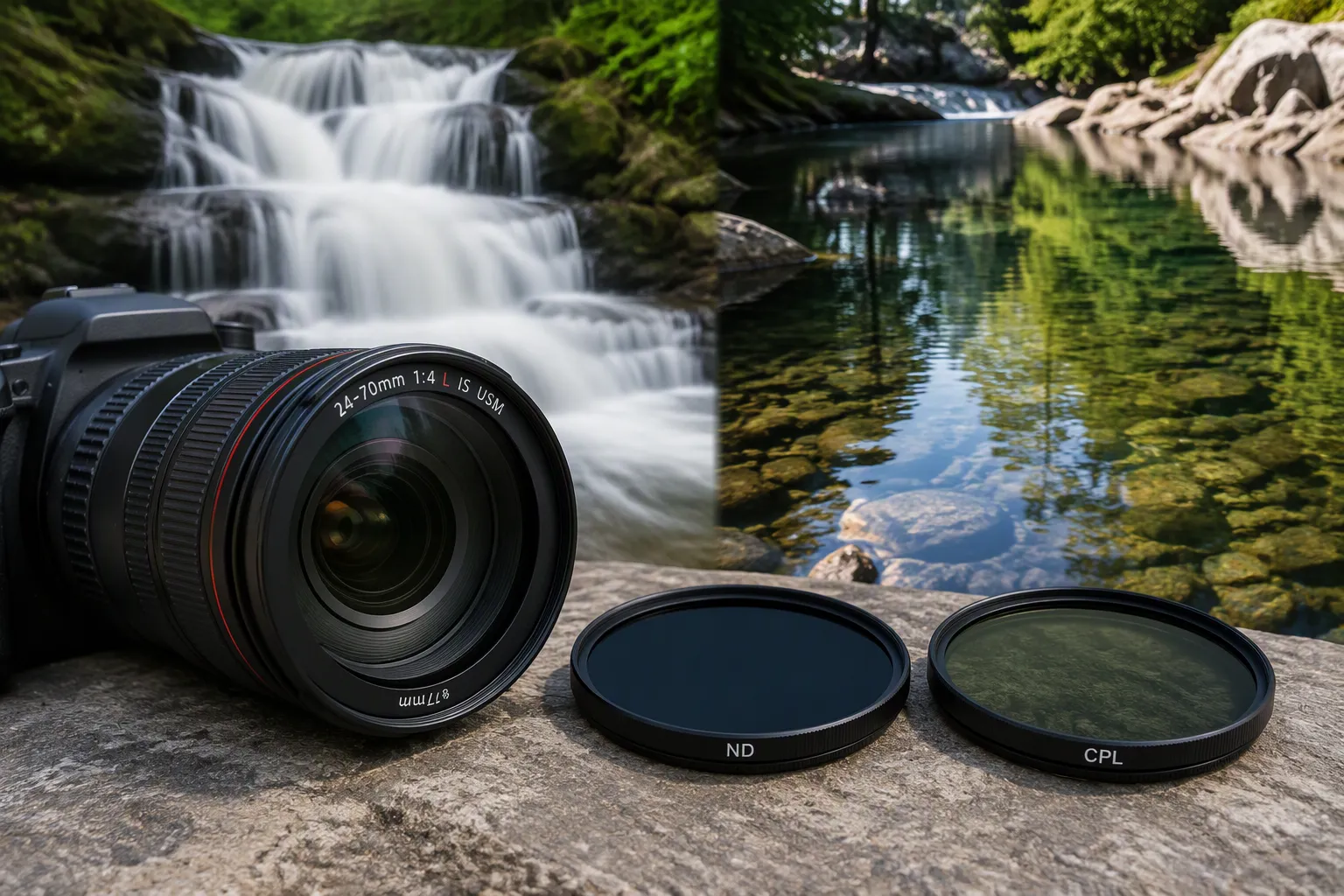
Picture a bright waterfall or a glassy lake on a sunny day. The first scene calls for longer exposures and softer motion. The second calls for less glare and richer tones. The choice becomes clear once the goal is clear.
An ND filter cuts down light evenly, while a polarizer controls glare and reflections.
Use an ND filter for long exposures or wide apertures in bright light.
Use a polarizer to reduce glare and make colors in skies and water look deeper.
Put both filters together, with the polarizer on first, to get their combined effects.
Don't stack filters on wide lenses, because this can cause vignetting and uneven polarization.
An ND filter is a piece of glass that cuts down how much light gets to the camera sensor. It does not change the scene itself. It just makes the scene darker for the lens.
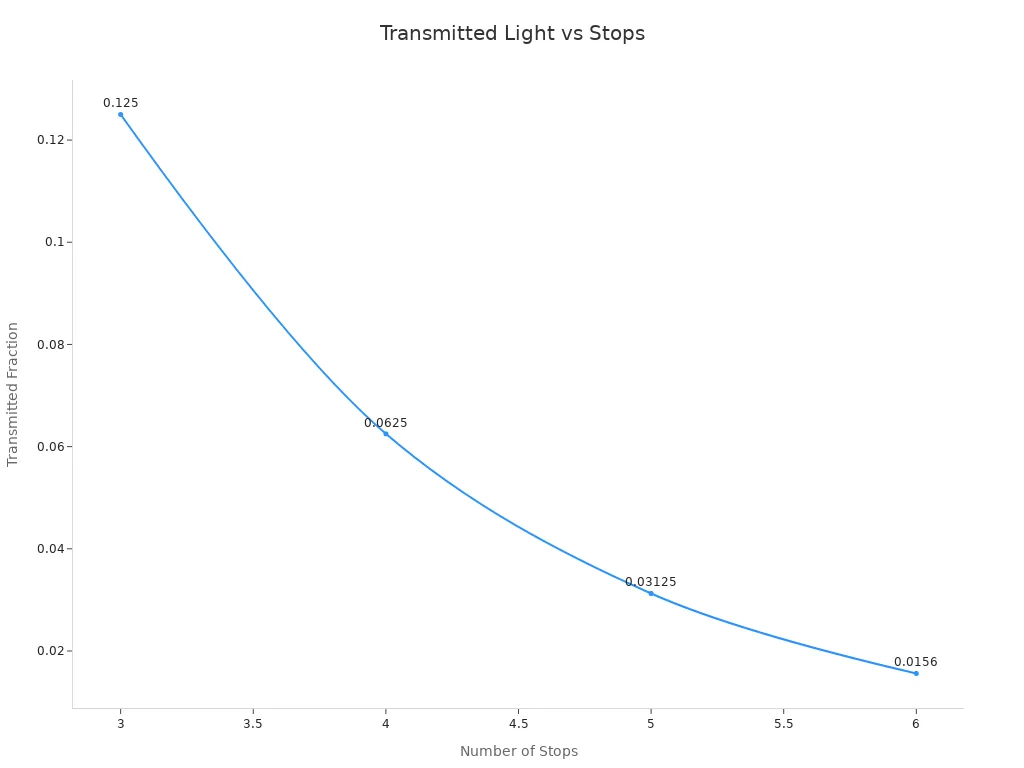
Photographers measure light loss in stops. Each stop cuts the light in half. A 3-stop ND filter lets in 1/8 of the light, because three halvings take the light from full to one half, then one quarter, then one eighth. The table below shows how the common labels line up.
ND label | Transmitted fraction | Percentage | Stops |
|---|---|---|---|
ND8 | 1/8 | 12.5% | 3 |
ND16 | 1/16 | 6.25% | 4 |
ND32 | 1/32 | 3.125% | 5 |
ND64 | 1/64 | ~1.56% | 6 |
The word neutral carries real meaning here.
The 'neutral' in neutral density means no specific wavelengths are affected — light is reduced uniformly across the entire image, allowing the camera to maintain true-to-life colors while controlling brightness, much like sunglasses for the lens but without altering colors.
An ND filter reduces light evenly because it is constructed from special optical materials that absorb or reflect light across the entire spectrum. Rather than favoring any particular color, it dims red, green, and blue wavelengths equally, which is why the image's color balance remains unchanged.
Long exposures of water and clouds are the classic case. A strong ND filter slows the shutter speed enough to blur moving water into silk or stretch clouds across the sky. Wide apertures in bright sun are another. The filter lets a photographer shoot at a wide aperture without overexposing the frame. Video shooters also rely on neutral density (nd) filters to hold a steady shutter speed under changing daylight.
A polarizer is a filter that controls how light acts, not how much light comes in. It goes after glare and reflections, and it makes color in a scene stand out.
Light bouncing off water, glass, or leaves tends to shake in one certain direction. Light that shakes in one direction is polarized, and it causes glare. A polarizing filter blocks the waves that shake along one axis, so the photographer controls how much polarized light reaches the sensor. A circular polarizer adds a quarter-wave plate after the linear stage. This plate turns the remaining light into a circular pattern, which keeps autofocus and metering systems working on modern cameras.
The effect only works on non-metallic surfaces. Water, gloss plastic, and polished wood make polarized direct reflections at certain angles. Metal surfaces and diffuse reflections stay unpolarized, so the filter cannot remove that glare. The filter works because its polarization axis sits perpendicular to the glare's vibration direction.
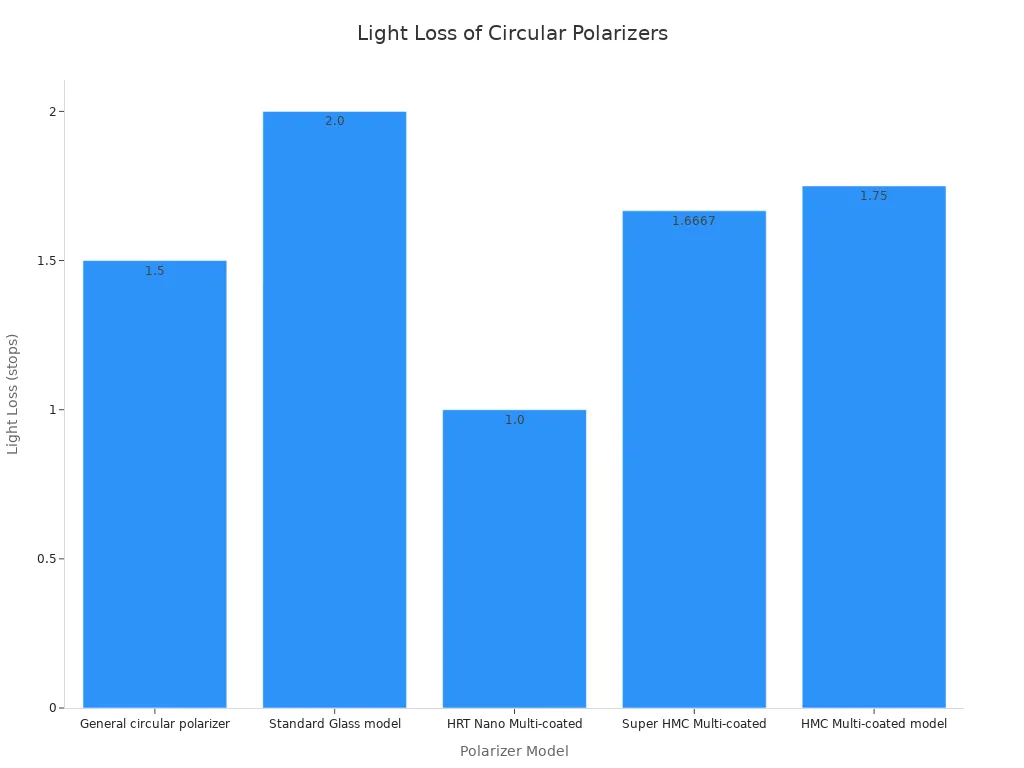
A cpl filter also costs light. Most models lose between 1 and 2 stops, and the exact figure varies by coating and model.
Polarizer model or feature | Light loss (stops) |
|---|---|
General circular polarizer | 1–2 stops |
Standard glass model | 2 stops |
HRT nano multi-coated model | 1 stop |
Super HMC multi-coated model | 1 2/3 stops |
HMC multi-coated model | 1 3/4 stops |
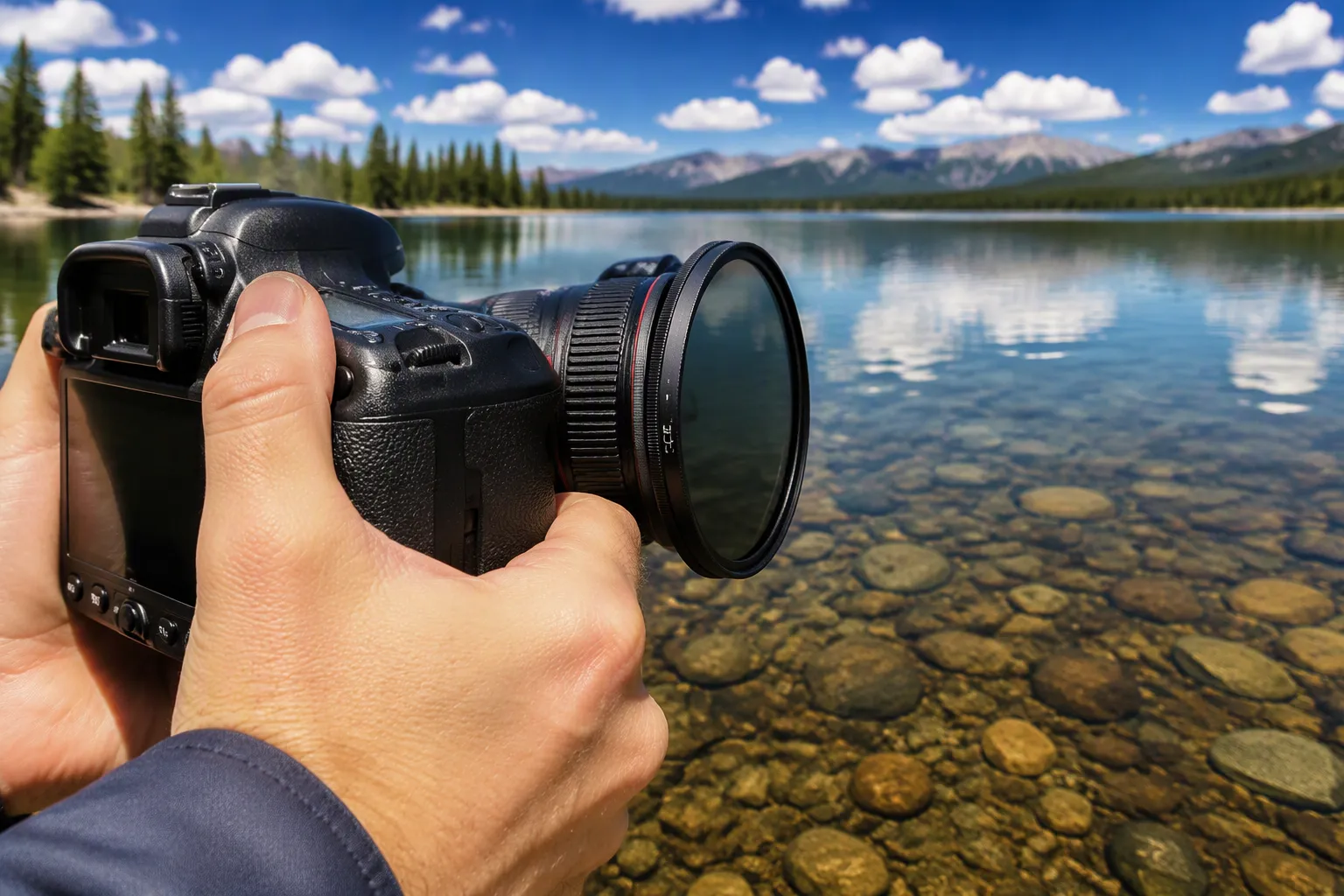
The question of when to use a polarizer comes down to the scene. A cpl deepens a pale blue sky and adds contrast so clouds stand out. It cuts haze in mountain landscapes and reveals distant peaks. On water, a cpl filter removes surface reflections so the viewer sees beneath. On foliage, cpl filters remove glare from shiny leaves, and that step restores saturation and texture that post-processing cannot recover.
Angle matters. The strongest effect appears about 90 degrees from the sun, with the sun at the photographer's left or right. Wide-angle lenses with large skies are a poor match, because polarization varies across the frame and creates uneven dark bands. Used with care, cpl filters deliver reducing light reflections and glare in one pass, and they reduce glare and reflection without touching the color balance of the rest of the frame.
The nd filter vs. polarizer comparison starts with one main idea. An ND filter controls how much light comes in. A polarizer controls how light acts. That one difference explains almost every real-world distinction between the two.
An ND filter cuts the amount of light entering the lens by a set number of f-stops. It works like sunglasses for the lens. The frame gets darker evenly, and the photographer gains room to use a slower shutter speed or a wider aperture in bright conditions. A polarizer does something else. It blocks polarized light on purpose, and it removes glare from non-metallic surfaces such as water and glass. Most polarizers also darken the scene by 1–2 stops, but that darkening is secondary. The rotatable element sits at a chosen angle and absorbs or passes polarized light selectively.
Color tells another part of the story. A polarizer raises saturation and contrast, because it cuts the reflections and glare that wash out a scene under bright sun. An ND filter leaves image color and saturation unchanged. It manages brightness alone. These cpl vs nd filter effects matter when a photographer plans the final look.
Aspect | ND Filter | Polarizer (CPL) |
|---|---|---|
Primary function | Uniform light reduction by set f-stops | Selective blocking of polarized light |
Color effect | No change to color or saturation | Higher saturation and contrast |
Typical light loss | Set by the filter's stop rating | 1–2 stops, secondary to glare control |
Best scenario | Long exposures, wide apertures in sun | Glare removal, richer skies and foliage |
The differences in purpose point to different jobs. An nd filter vs. polarizer decision often comes down to the scene in front of the lens.
ND filters suit long exposures of waterfalls and moving clouds, where motion turns soft and smooth. They let a photographer shoot wide open in direct daylight without overexposing the frame. They also help video shooters hold a steady shutter speed and frame rate. A cpl filter fits a different set of scenes. It removes glare from water, glass, and wet rocks. It deepens blue skies, greens foliage, and cuts atmospheric haze. Forest, city, water, and portrait work all benefit.
A polarizing filter cannot slow a shutter speed the way an ND filter can. An ND filter cannot remove glare the way a cpl can. Each tool solves its own problem, and neither replaces the other. A photographer who wants to control light exposure reaches for an ND filter. A photographer who wants to remove glare reaches for a cpl. Understanding the nd filter vs. polarizer split makes gear choices faster and more confident. The nd filter vs. polarizer question has no single winner. The scene decides. A careful look at the nd filter vs. polarizer roles shows why both earn a place in a camera bag.
You can put a polarizer and an ND filter on the same lens at once. The order you use matters. Put the CPL filter on first, closest to the lens, so it can still turn freely. Then place the ND filter in front of it. This setup lets you adjust the polarizing effect while the ND and polarizer pair cuts light and glare together.
Two stacked polarizers can work like a variable ND. You turn one against the other to block more light. This trick works, but it has downsides. Colors can shift, and the polarization can become uneven across the frame. A dedicated variable ND filter avoids these problems.
Stacking changes exposure, so the meter may read the scene wrong. One contributor reported that a polarizer plus 4x and 8x filters pushed the in-camera meter past +1.3 EV of correction. The viewfinder also gets dark, which makes framing harder. A photographer should check exposure again after adding each filter.
Contributor | Effect on Exposure | Effect on Image Quality |
|---|---|---|
Michael Costolo | A 0.9 ND is a 3-stop filter; most polarizers are about 2 stops | — |
+David+ | Meter needed past +1.3 EV correction with stacked filters | Viewfinder becomes very dark |
Photonutter | Stacking is possible | Polarizer controls contrast in water; stopping down can soften water from a flaring anomaly |
Stacked CPL and ND filters cause several practical problems. A photographer can plan around each one.
Vignetting from stacking: putting filters in front of the lens easily adds vignetting, and filter rims may show up in the frame. On internally zooming lenses, zoom in a little to remove it. On extending lenses, avoid stacking or plan to crop in post.
Uneven polarization on wide lenses: a CPL on a wide-angle lens under a clear sky darkens one part of the sky more than another. Turn the CPL to reduce the banding, or compose with clouds to hide it.
Added light loss: both ND and CPL filters cut light, so shutter speed and aperture need new settings.
Flare and color shift: extra glass surfaces lower contrast, and color casts can appear near maximum attenuation.
The ND vs CPL filters pairing covers most outdoor scenes, and the CPL and ND filters combination rewards careful setup.
An nd filter manages light quantity. A polarizer manages light behavior. That single difference settles most gear questions before a shoot begins.
A simple rule of thumb helps: the cpl controls reflections and colors, while the nd filter controls brightness and shutter speed. Choose an nd filter for long exposures and wide apertures in bright light. Reach for a cpl filter to cut glare and deepen skies and water. Stack both when a scene needs each effect at once. Photographers who weigh nd filters against cpl filters this way rarely guess wrong. Either filter rewards the buyer, and the better pick depends on the image a photographer wants to make.
No. An nd filter cuts light evenly across the whole frame. It does not favor one wavelength over another. Colors stay true, and the photographer only gains control over brightness
Most circular polarizers cost between 1 and 2 stops of light. The exact loss depends on the coating and the model. A photographer should meter again after mounting the filter.
Yes. Mount the cpl filter first, closest to the lens, so it can still rotate. Place the nd filter in front. This order keeps glare control adjustable while the pair cuts light.
Polarization varies across a wide field of view. One part of the sky darkens more than another. A photographer can turn the cpl to reduce the banding or frame the shot with clouds to hide it.
Yes. Extra filter rims can darken the corners, especially on wide lenses. Zooming in slightly on internally zooming lenses helps. On extending lenses, a photographer may need to crop in post.