close
Choose Your Site
Global
Social Media

Views: 0 Author: Site Editor Publish Time: 2026-01-21 Origin: Site


Aperture is a part inside a lens that can open or close. It lets light go through the lens. In photography, aperture controls how much light hits the camera sensor. A small aperture lets in less light. A large aperture lets in more light. In optics, aperture means the hole where light goes through in any lens system.
The aperture of a lens is just the opening where light enters the camera. If the opening is wider, more light can reach the camera sensor. This changes how bright the picture will be.
Aperture changes how bright a picture looks. It also changes how much of the scene is clear and sharp. In both photography and optics, changing the aperture helps make pictures look good and clear.
Aperture decides how much light goes into the camera. It changes how bright and clear your photos look.
A wide aperture (low f-number) makes the background look blurry. This is good for portraits. A small aperture (high f-number) keeps more things sharp. This works well for landscapes.
If you use aperture priority mode, you can change the aperture easily. The camera will pick the best shutter speed for you.
Knowing f-stop numbers helps you control light in your photos. Smaller numbers mean the opening is bigger and lets in more light.
Trying different aperture settings can make your photos better. It helps you get the look you want.
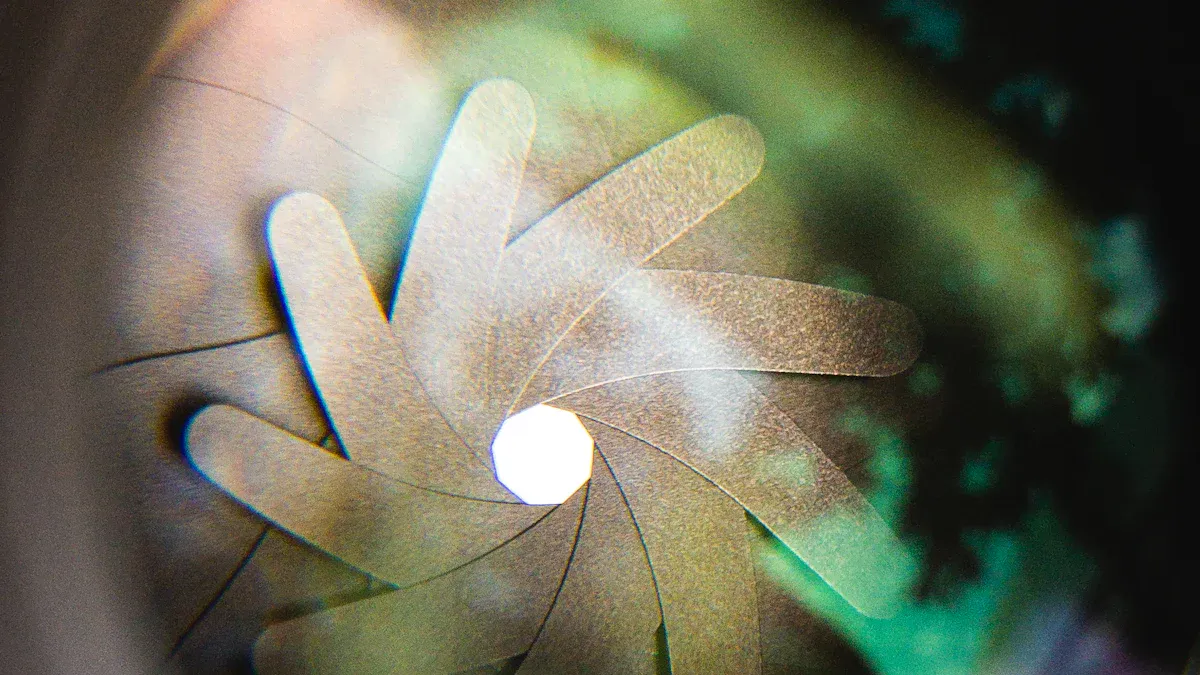
Image Source: pexels
Aperture is an opening inside the camera lens. It controls how much light goes to the sensor. The size of the aperture can change. This changes how bright the photo will be. In photography, aperture acts like your eye’s pupil. It gets smaller when it is bright. It gets bigger when it is dark. This helps the camera get the right light for each picture.
The main jobs of aperture in photography are:
It controls exposure by letting in more or less light.
It changes depth of field, which is how much looks sharp.
It helps stop problems like blurry edges or color lines by letting light through the center.
A small aperture lets in less light and makes more of the scene sharp. This means things close and far away can both look clear. A large aperture lets in more light and makes only part of the scene sharp. The rest will look blurry. Photographers pick different aperture sizes for different looks.
A diaphragm inside the lens changes the aperture. This part opens and closes like your eye’s iris. In bright sunlight, the aperture gets smaller to let in less light. In low light, the aperture gets bigger to let in more light. This helps you get a good photo in any light.
Aperture size also changes image quality. Wide apertures can cause dark corners or colored edges. Small apertures help fix these problems and make the photo sharper.
Here is a table that shows common aperture ranges for camera lenses:
| Lens Type | Typical Aperture Range |
|---|---|
| Prime Lenses | f/1.4 to f/2.8 |
| Zoom Lenses | f/2.8 to f/4 |
| Sweet Spot | f/8 to f/11 |
Photographers pick an aperture for the effect they want. For example, a portrait may use a large aperture to blur the background. A landscape photo may use a small aperture to keep everything sharp.
Aperture is important in many optical tools, like microscopes and telescopes. It is the hole that lets light go through the device. The size and shape of the aperture change how light moves inside.
In optical systems, the aperture controls:
How much light goes through the device.
How bright and clear the image is.
The depth of field, or how much is in focus.
The amount of optical errors, like spherical aberration.
Aperture size is often shown with the f-number. The f-number is the focal length divided by the aperture’s width. A small f-number means a big aperture and more light. This makes the image brighter. A big f-number means a small aperture and less light. This makes the image dimmer.
Changing the aperture in optical systems can make the image better. For example, a small aperture can fix spherical aberration and make the image sharper. Where the aperture is and how big it is also changes telecentricity. This is important for careful measurements in science tools.
Optical engineers use aperture settings to balance brightness, sharpness, and depth of field. In microscopes, a big aperture makes the image brighter but may lower sharpness. In telescopes, the aperture size decides how much light the tool collects. This changes how well you can see faint things.
Tip: In both photography and optical systems, knowing how aperture works helps you get better pictures and more correct results.
Aperture is a key part of every lens and optical tool. It controls light, changes image quality, and helps you get the effects you want in photos or science work.
Aperture is very important in every lens. It decides how much light goes into a camera or other device. If the aperture is wide, lots of light gets through. If the aperture is small, only a little light gets in. This simple change can make a big difference in photos and science images.
The aperture size sets how wide the light cone is. A bigger cone means more light reaches the sensor.
If you make the aperture twice as wide, four times more light comes in. This happens because the opening area grows fast when the diameter gets bigger.
The f-number shows how the focal length and aperture size match. A smaller f-number means a bigger opening and more light.
When you go up one f-stop, the light is cut in half. When you go down one f-stop, the light doubles.
Here is a table that shows how changing the aperture changes the light that reaches the sensor:
| Aperture Setting | Light Reaching Sensor (lux) | Change in Light |
|---|---|---|
| ƒ/1 | 100,000 | - |
| ƒ/1.4 | 50,000 | Halved |
| ƒ/2.8 | 12,500 | 1/4 of original |
| ƒ/5.6 | 3,125 | 1/32 of original |
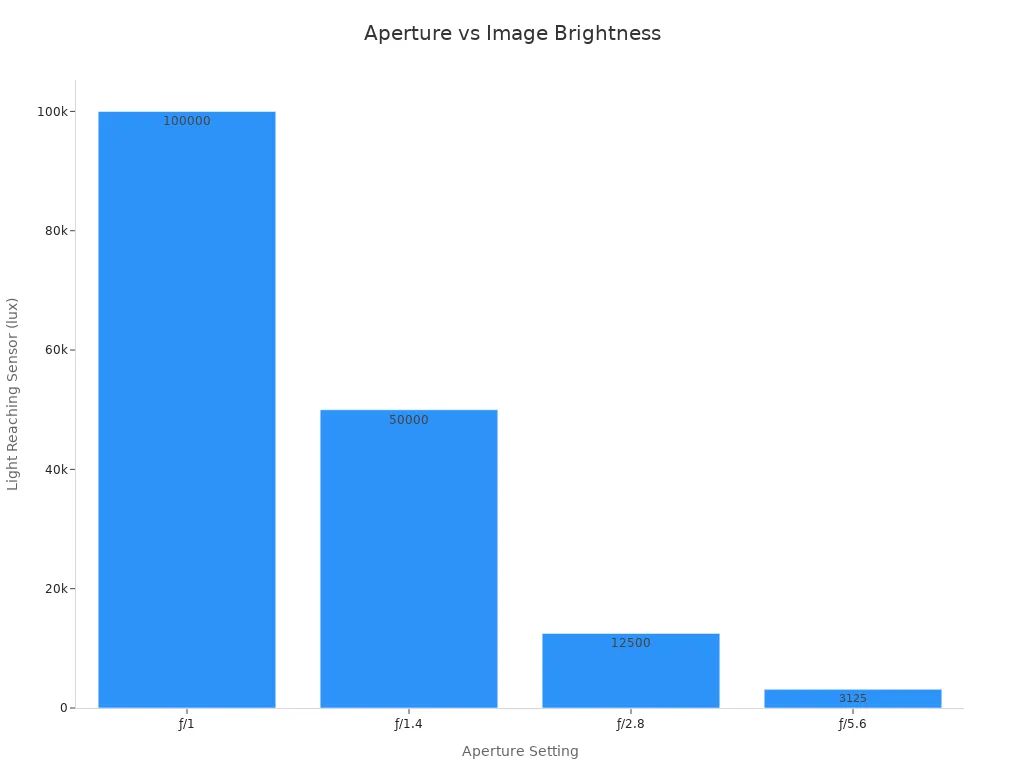
Knowing about aperture helps you understand how it works in cameras and optics. The biggest aperture in a lens is important for getting bright pictures, especially when it is dark.
Aperture does more than change how bright an image is. In precision optics, like those made by Band Optics, the size and shape of the aperture change how sharp and detailed the image looks. This matters for cameras, microscopes, and telescopes.
A good aperture design makes resolution better. Careful control can make resolution over 70% higher in science images.
Seeing tiny things, like small blood vessels, is easier with the right aperture.
Pictures look clearer because a good aperture lowers noise and makes images sharper.
Controlling the aperture well helps experts focus on the most important parts of a picture. Band Optics uses special technology to make lenses with very accurate apertures. This helps people get sharp, bright, and clear images in both photos and science tools.
Tip: If you learn how aperture works, you can control your photos and science images better. Lenses from Band Optics help you do this even more.
F-stop is a term used in photography and optics to describe how wide or narrow the aperture is in a lens. The f-stop and f-number mean the same thing. Both show the relationship between the lens’s focal length and the diameter of the aperture. When you change the f-stop, you change how much light enters the camera or optical device.
The f-number N is given by: N = f/D where f is the focal length, and D is the diameter of the entrance pupil (effective aperture).
A large aperture has a low f-stop number, like f/2. A small aperture has a high f-stop number, like f/16. The maximum aperture is the widest opening a lens can reach, while the minimum aperture is the smallest opening. These settings help control the brightness and sharpness of your image.
An 85mm lens at f/2 will have a diameter of 42.5mm (85 / 2).
If you stop down to f/2.8, the diameter becomes 30.3mm (85 / 2.8).
F-stop numbers help you understand how much light the aperture lets in. Each time you move to the next f-stop, the amount of light changes by half. This is important for exposure in photography.
| f-stop | Aperture Size (Diameter) |
|---|---|
| f/2 | Widest opening |
| f/2.8 | Wider than f/2 |
| f/4 | Half the light of f/2.8 |
| f/5.6 | Half the light of f/4 |
| f/8 | Half the light of f/5.6 |
| f/11 | Half the light of f/8 |
| f/16 | Half the light of f/11 |
Note: Each stop allows half the amount of light into the sensor compared to the previous stop.
When you use a large aperture, more light enters, and the image looks brighter. A small aperture lets in less light, making the image darker. This is called the large vs small aperture effect. If you stop down your camera’s aperture, less light reaches the sensor, so the image gets darker. To fix this, you can increase ISO or use a slower shutter speed, but these changes can add noise or blur.
Stopping down the aperture reduces the size of the opening, allowing less light to enter the camera.
This results in a darker exposure unless compensated by increasing ISO or extending shutter speed.
Higher ISO can introduce noise, while longer shutter speeds may cause motion blur.
The maximum aperture is useful in low light or when you want a blurry background. The minimum aperture is helpful when you want everything in focus. Understanding f-stop helps you control exposure, sharpness, and the look of your photos or optical results.
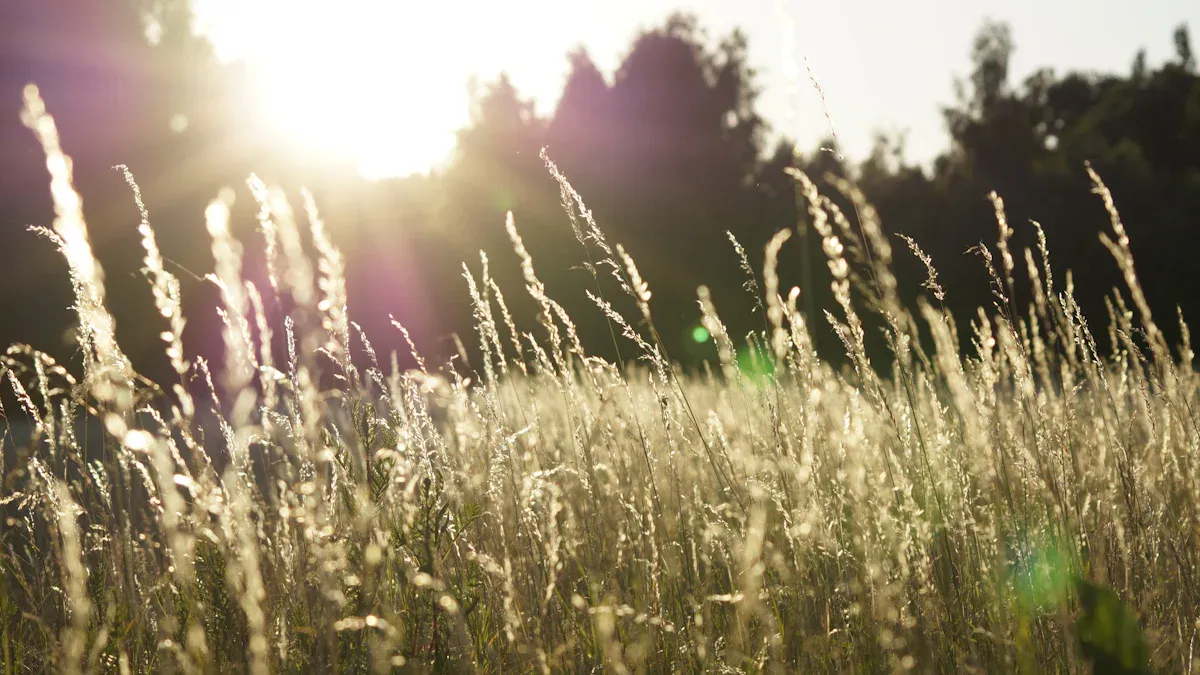
Image Source: unsplash
Aperture helps control what parts of a photo look sharp. Depth of field is the area that looks clear in a picture. If you use a large aperture, only a small part will be sharp. The rest of the photo will look blurry. This is good for portraits because the person stands out. If you use a small aperture, more of the scene will be in focus. Landscapes use small apertures so everything looks sharp.
Depth of field is the part of a photo that looks clear. It depends on the aperture you use:
Large aperture (small f-number, like f/2.8): Only a little is sharp, and the background is blurry.
Small aperture (large f-number, like f/11): More of the photo is sharp, which is good for landscapes.
| Aperture Size | Depth of Field Effect | Photography Type |
|---|---|---|
| Large (e.g., f/2.8) | Only a small part is sharp, background is blurry | Portrait |
| Small (e.g., f/16) | Most of the photo is sharp | Landscape |
Large apertures make only a small area sharp, good for portraits.
Small apertures keep more of the photo clear, good for landscapes.
Aperture lets you pick how much of your photo is sharp. Shallow focus makes one thing stand out. Deep focus shows lots of details everywhere.
Aperture also changes how bright and sharp a photo is. Exposure is how much light hits the sensor. The exposure triangle uses aperture, shutter speed, and ISO. Changing aperture changes how bright the photo is. Large apertures let in more light, so photos are brighter. Small apertures let in less light, so photos are darker.
The exposure triangle helps you get the right amount of light. Large apertures give more light and brighter photos. Small apertures give less light and darker photos. Sharpness can change with aperture too. Small apertures make photos sharper by keeping more in focus. Large apertures can make edges less sharp but give strong blur.
The camera’s aperture controls how much light comes in. If you use a bigger f-stop number, the opening gets smaller and less light comes in. Smaller f-stop numbers mean a bigger opening and more light. Photographers use the exposure triangle to balance light for each photo.
Aperture is important for making photos look the way you want. Learning how to use aperture helps you get clear and bright pictures.
Aperture controls how much light goes into the lens. Learning to use aperture priority mode helps you change exposure and depth of field. Most cameras have aperture priority mode marked as "A" or "Av." This mode lets you pick the aperture. The camera picks the best shutter speed for you.
Here are some steps to set aperture on your camera:
Choose aperture priority mode on your camera.
Turn the dial to set the aperture. A lower number means a wider opening and more light.
Look at the exposure meter in the viewfinder. Change the aperture until the exposure looks good.
Use exposure compensation if the photo is too bright or too dark.
Make sure the shutter speed is fast enough so your photo is not blurry, especially if things are moving.
Aperture changes both exposure and depth of field. A wide aperture (low f-number) gives a shallow depth of field. This makes the background blurry. A small aperture (high f-number) gives a deep depth of field. More of the scene will look sharp. This is why aperture is important for every photographer.
Band Optics precision lenses help you use aperture better. These lenses use special designs to lower optical errors. They let you use bigger apertures without losing image quality. You get brighter photos and better results in low light.
Tip: Try using aperture priority mode. See how changing the aperture changes your photos. Test different settings to find what works best for each scene.
Think about the effect you want before picking an aperture. The subject, lighting, and lens matter. Use a wide aperture for portraits. This blurs the background and makes your subject stand out. Use a small aperture for landscapes. This keeps everything in focus.
| Factor | Explanation |
|---|---|
| Depth of Field | Wide apertures make blur; small apertures keep more in focus. |
| Lighting Conditions | Large apertures help in low light; small apertures stop overexposure in bright scenes. |
| Lens Characteristics | Some lenses are sharpest at medium apertures. |
| Subject of Photograph | Portraits need wide apertures; landscapes need small apertures. |
Focal length and how close you are to your subject also change depth of field. Longer lenses and closer subjects make the depth of field shallower. Band Optics lenses help you get clear and sharp photos, even with wide apertures.
Aperture is a big part of exposure and photo style. If you learn how to change aperture, you can control brightness and focus. Practice often to get better at using this camera setting.
A lot of people get confused by f-stop numbers at first. The numbers can seem backward and tricky. A smaller f-stop number means the aperture is wider. A bigger f-stop number means the aperture is smaller. This makes it hard to remember which one lets in more light. The f-stop scale also has numbers like f/1.2, f/1.4, and f/1.8. These small changes can really change how much light comes in and what parts of the photo are sharp.
Some things that confuse people are:
Smaller f-stop numbers mean a wider opening and more light.
Bigger f-stop numbers mean a smaller opening and less light.
The difference between f/1.2 and f/1.4, or f/1.4 and f/1.8, may look small but can change how bright the photo is and what is in focus, especially when it is dark.
The f-stop scale does not go up in easy steps, so it helps to try out your camera and see what happens.
When you use your camera, try changing the aperture and watch what happens to your picture. Doing this helps you see how f-stop numbers and light work together.
Many new photographers have questions about how aperture works in their camera. Here are some of the most common questions:
What good things come from using aperture priority mode?
How does aperture priority mode change what is in focus?
How can aperture priority mode help me take better pictures?
What camera settings should I think about in aperture priority mode?
How does aperture priority mode work when the light changes?
It is important to know why aperture changes what is in focus, but it is not the only thing that matters. How close you are to your subject, how good your lens is, and the camera’s resolution also matter. Some people think you can always fix what is in focus by moving closer or changing the lens, but that is not always true.
Other things people get wrong include:
Thinking a bigger f-stop number means a wider opening, but it really means a smaller one.
Using a wide aperture like f/1.8 for group photos, which can make some people blurry.
Forgetting that what is in focus depends on aperture, lens, and how close you are to your subject.
Not thinking about the exposure triangle. If you set the aperture but do not check shutter speed and ISO, your photo might not look right.
Not knowing about the lens sweet spot. Most lenses are sharpest at middle apertures, not at the biggest or smallest ones.
Learning how aperture works in your camera helps you take better pictures. Try different settings to see how aperture changes your photos.
Aperture is very important in every lens. It decides how much light comes in. This changes how your photo looks. In photography, aperture affects how bright and sharp a picture is. It also changes what parts of the photo are clear. The lens blades move to make the opening bigger or smaller. A wide aperture lets in more light. This makes the picture brighter and the background blurry. A small aperture lets in less light. This makes the picture sharper and more things in focus. You can use aperture priority mode to pick the effect you want. Try changing the aperture to see what happens. Good lens design from Band Optics helps you get clear photos.
Aperture is one part of the exposure triangle.
The size of the aperture changes how much light comes in and what is in focus.
Lens blades move to change the size of the opening.
A wide aperture lets in more light and makes blur.
A small aperture lets in less light and makes things sharp.
A middle aperture often gives the clearest pictures.
Aperture priority mode helps you control what is in focus.
Try using different aperture settings on your lens. Watch how each change makes your photo look different. Learning about aperture helps you take better pictures and use optics well.
Aperture decides how much light goes into the lens. It makes your photo brighter or darker. It also changes what parts look sharp or blurry.
Aperture size changes how your photo looks. A wide aperture makes the background blurry. A small aperture keeps more things in focus. You can pick the style you want.
Think about your subject and the light. Use a wide aperture for portraits. Use a small aperture for landscapes. Try different settings to see what looks best.
Yes. A middle aperture often gives the sharpest photo. Very wide or very small apertures can make photos less sharp. Test your lens to find the best setting.
Aperture is very important in all optical tools. It controls light and how clear the image is. In microscopes and telescopes, the right aperture helps you see details well.


