
close
Choose Your Site
Global
Social Media
Views: 0 Author: Site Editor Publish Time: 2025-11-24 Origin: Site
When you want great photos, picking the right micro four thirds lenses is important. This complete guide helps you match lens features to your style and needs. Many photographers like micro four thirds lenses because they provide good quality and are flexible. In Japan, these systems had a 21.7% market share in 2020, which shows they are popular. You will see suggestions for both new and experienced photographers. With this guide, you can find the best micro four thirds cameras and learn how to take better pictures.
Micro four thirds lenses are good for many kinds of photography.
The complete guide gives advice for choosing the right lens.
Micro four thirds lenses are light and easy to carry. They are great for travel and taking pictures outside. - Picking the right lens can make your photos much better. This is true if you like portraits, animals, or nature scenes. - Knowing about lens features like focal length and aperture helps a lot. It lets you pick the best lens for what you want to shoot. - Teleconverters help your lens reach farther. You do not need to bring more gear. This is good for taking pictures of animals or sports. - Taking care of your lens is important. Clean your lens and use filters. This helps your lens work well and last longer.
Image Source: pexels
You may ask why the micro four thirds system is different. Olympus and Panasonic made the micro four thirds system in 2008. They wanted cameras to be small and light, but still strong. The micro four thirds system does not use a mirror. You see a live preview on the screen. This helps photographers carry less and still take good photos.
Here is a quick look at how the micro four thirds system grew:
| Year | Development Description |
|---|---|
| 2008 | Olympus and Panasonic started the micro four thirds system. It has a mirrorless design and live preview. |
| 2013 | Panasonic added sensor-based stabilization in the Lumix DMC-GX7. They called it 'Dual IS'. |
| 2016 | Olympus put lens-based stabilization in the M. Zuiko 300mm f/4.0 Pro and 12-100mm f/4.0 IS Pro lenses. |
Choosing the micro four thirds system gives you many good things. The cameras and lenses are small and light. You can travel with them easily. You can hold your camera longer and not get tired. The micro four thirds system gives you more depth of field at the same focal length. For example, an f/1.8 lens on a micro four thirds camera gives you depth of field like f/3.6 on a full-frame camera. This helps you keep more of your picture sharp.
Cameras and lenses are small and light
Easy to carry for trips and outdoor pictures
You can use many lenses with the micro four thirds system. The mft mount works with OM Digital Solutions and Panasonic cameras. You can switch lenses between these brands. Some features may not work on every camera. The micro four thirds system lets you choose from many lenses. You can pick prime lenses, zoom lenses, or special lenses for close-up or video.
OM Digital Solutions cameras use the mft mount
Panasonic cameras use the mft mount too
You can share lenses, but check if all features work
The micro four thirds system gives you lots of choices. You can build your kit with lenses that fit your needs. You can take portraits, landscapes, or close-ups.
Micro Four Thirds cameras let you use many lenses. There are more than 100 native lenses for this system. Each lens type helps you take different kinds of pictures. The table below shows some popular lens types and examples:
| Lens Type | Examples |
|---|---|
| Total Lenses | Over 100+ native lenses available |
| Prime Lenses | Panasonic-Leica 15mm f1.7, Panasonic-Leica 25mm f1.4, Panasonic 20mm f1.7 |
| Zoom Lenses | Panasonic-Leica 8-18mm f2.8-4.0 |
Prime lenses have only one focal length. You cannot zoom in or out with them. They give you sharp pictures and wide apertures. These lenses are good for portraits, street photos, and low-light scenes. A prime lens like the Panasonic-Leica 25mm f1.4 makes backgrounds look soft. Band-optics Spherical Lenses are very precise for advanced users who want custom options.
Zoom lenses let you change how close or far you see. You can go from wide to telephoto without switching lenses. These lenses are great for travel, events, and daily use. The Panasonic-Leica 8-18mm f2.8-4.0 is a popular zoom lens. You can use a teleconverter with zoom lenses to reach faraway subjects.
Portrait lenses help you take clear pictures of people. They often have wide apertures for soft backgrounds. Some top choices are:
Panasonic-Leica 25mm f1.4
Olympus 45mm f1.8
Panasonic 42.5mm f1.7
Panasonic-Leica 42.5mm f1.2
These lenses let you get close for headshots. You can use a teleconverter to get even closer.
Macro lenses let you focus on tiny things. You can take pictures of flowers, bugs, or jewelry. These lenses show small details and are very sharp. You can use a teleconverter with macro lenses to see even smaller objects.
Wildlife lenses have long focal lengths. You can take pictures of animals from far away. These lenses help you capture birds or other wildlife. You can use a teleconverter to reach even farther. Some photographers use a teleconverter for the best reach in nature.
Video lenses are made for smooth and quiet focusing. You can use them for movies, vlogs, or interviews. The table below lists some top video lenses and why they are good:
| Lens Name | Focal Length | Aperture | Suitability for Videography |
|---|---|---|---|
| Panasonic Lumix G X Vario 12-35mm f/2.8 | 12-35mm | f/2.8 | Fast, wide focal length, ideal for many video uses. |
| Panasonic Lumix G X Vario 35-100mm f/2.8 | 35-100mm | f/2.8 | Good zoom for portraits and headshots, great for video. |
| Panasonic-Leica 8-18mm f2.8-4.0 | 8-18mm | f2.8-4.0 | Wide-angle lens, works well for many video styles. |
| Olympus M.Zuiko Digital ED 12-40mm F2.8 Pro | 12-40mm | F2.8 | Fast aperture and versatile range, highly rated. |
You can use a teleconverter with some video lenses to reach distant scenes.
Travel lenses are light and easy to carry. You can use them for landscapes, city views, or family trips. The table below shows some top travel lenses and their weights:
| Type of Lens | Lens | Weight |
|---|---|---|
| Upgrade Panny Zoom | Panasonic Lumix G Vario 12-35mm f/2.8 | 305g |
| Panny Telephoto | Panasonic Lumix G Vario 45-150mm f/4-5.6 | 200g |
| Oly Telephoto | Olympus M.Zuiko 40-150mm f/4.0-5.6 | 190g |
| The Lowlight Prime | Panasonic Lumix G 20mm f/1.7 | 100g |
| The Ultrawide | Olympus M.Zuiko 9-18mm f/4-5.6 | 155g |
| The Panny Superzoom | Panasonic Lumix G Vrio 14-140mm f/3.5-5.6 | 265g |
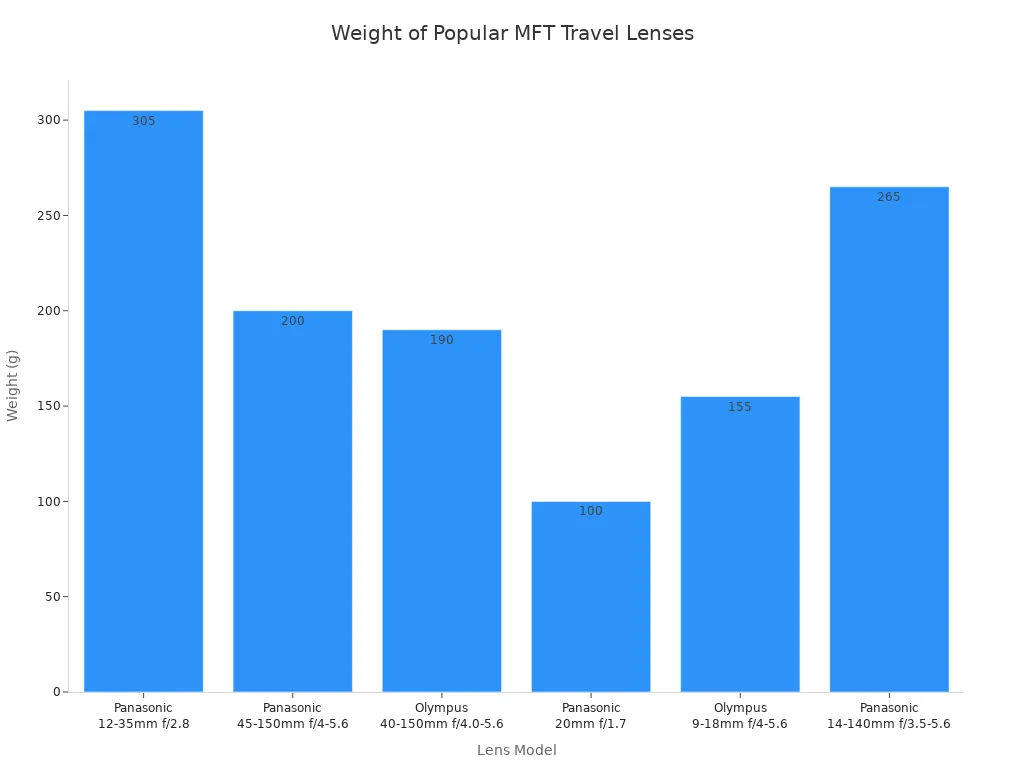
You can use a teleconverter with travel lenses to reach faraway places or animals. Band-optics Spherical Lenses can be customized for travel, giving you accuracy and reliability anywhere.
Tip: Using a teleconverter with your lenses helps you reach farther without carrying extra gear. This is useful for wildlife, sports, or travel photos.
You want to find the best micro four thirds lenses for your camera. This section helps you choose the best lens for every type of photography. You will see top picks for portraits, wildlife, macro, video, and more. You can use these lenses for travel, family, or bird and wildlife photography. You will also learn about band-optics Spherical Lenses for custom needs.
Prime lenses have one focal length. You get sharp images and bright backgrounds. Many photographers call these their favorite micro four thirds lenses. You can use prime lenses for portraits, street scenes, and creative shots. Some of the best micro four thirds lenses in this group include:
Panasonic Leica 25mm f1.4: This lens gives you soft backgrounds and sharp faces. You can use it for portraits or everyday photography.
Olympus 45mm f1.8: You get clear images and fast focus. This lens works well for headshots and family photos.
Panasonic 20mm f1.7: This lens is small and light. Many people say it is one of the best pancake lenses for micro four thirds. You can carry it anywhere.
Band-optics Spherical Lenses offer high precision for advanced users. You can customize these lenses for special photography needs. You get top quality and reliability for scientific or engineering work.
Zoom lenses let you change how close or far you see. You can use them for travel, sports, or bird and wildlife photography. The best micro four thirds zoom lenses give you sharp images and flexible use. Here is a table showing the best zoom lenses for micro four thirds:
| Lens Model | Image Quality | Versatility | Notable Features |
|---|---|---|---|
| Olympus 40-150mm f2.8 | Excellent | High | Sharp at all focal lengths, weather-sealed |
| Lumix Leica 35-100mm f2.8 | Very Good | High | Compact design, good for portraits |
| Lumix Leica 100-400mm f4-5.6 | Good | Moderate | Longer reach, suitable for wildlife |
You can use these lenses for sports, events, or travel. The Olympus 40-150mm f2.8 is one of the best micro four thirds zoom lenses for sharpness and weather protection. The Lumix Leica 35-100mm f2.8 works well for portraits and action shots. The Lumix Leica 100-400mm f4-5.6 is best for wildlife and bird and wildlife photography.
Band-optics Spherical Lenses can be made for zoom applications. You get custom coatings and sizes for your project.
Portrait lenses help you take clear photos of people. You get soft backgrounds and sharp faces. The best portrait lenses for micro four thirds include:
Panasonic Leica 42.5mm f1.2: This lens gives you beautiful blur and bright images. You can use it for close-ups and headshots.
Olympus 45mm f1.8: You get fast focus and sharp results. This lens is light and easy to carry.
Panasonic 25mm f1.7: You can use this lens for group photos or single portraits.
You can use these lenses for family, school, or creative photography. Many photographers say these are the best micro four thirds lenses for portraits.
Band-optics Spherical Lenses can be customized for portrait work. You get high precision and special coatings for studio or outdoor use.
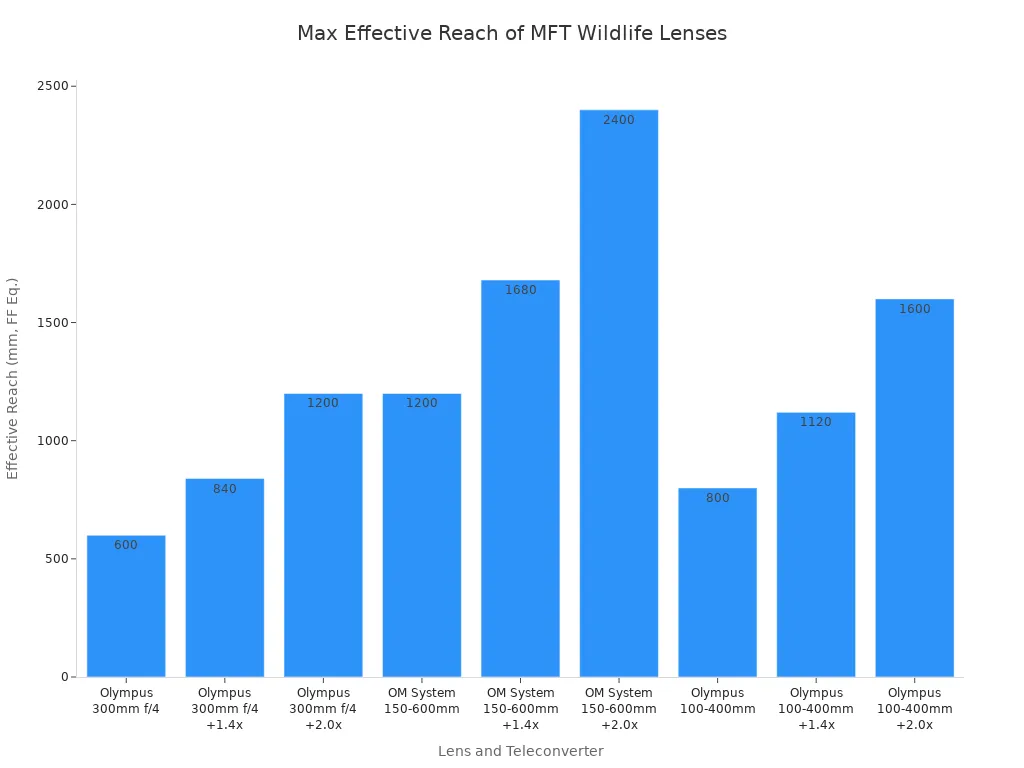
Wildlife lenses help you capture animals and birds from far away. You need long reach and fast autofocus. The best micro four thirds lenses for bird and wildlife photography give you sharp images and quick focus. Here is a table showing the best wildlife lenses:
| Lens | Focal Length | Teleconverter | Effective Reach (FF Eq.) | Resulting Aperture | Avg. Price (€/$) |
|---|---|---|---|---|---|
| Olympus 300mm f/4 IS PRO | 300mm (600mm) | None | 600mm | f/4 | 2999 |
| 1.4x | 420mm (840mm) | f/5.6 | |||
| 2.0x | 600mm (1200mm) | f/8 | |||
| OM System 150-600mm f/5.0-6.3 IS | 150-600mm (300-1200mm) | None | 300-1200mm | f/5.0-6.3 | 2600 |
| 1.4x | 210-840mm (420-1680mm) | f/7.1-8.9 | |||
| 2.0x | 300-1200mm (600-2400mm) | f/10-12.6 | |||
| Olympus 100-400mm f/5.0-6.3 IS | 100-400mm (200-800mm) | None | 200-800mm | f/5.0-6.3 | 1300 |
| 1.4x | 140-560mm (280-1120mm) | f/7.1-8.9 | |||
| 2.0x | 200-800mm (400-1600mm) | f/10-12.6 |
You can use teleconverters to reach even farther. The Olympus 300mm f/4 IS PRO is one of the best micro four thirds lenses for bird and wildlife photography. The OM System 150-600mm f/5.0-6.3 IS gives you the longest reach for wildlife. The Olympus 100-400mm f/5.0-6.3 IS is best for travel and wildlife.
Band-optics Spherical Lenses can be made for wildlife and bird and wildlife photography. You get custom sizes and coatings for harsh environments.
Tip: Use a teleconverter with your wildlife lenses to reach birds and animals far away. You get more options for bird and wildlife photography.
Macro lenses help you see tiny details. You can use them for flowers, bugs, or jewelry. The best micro four thirds lenses for macro give you sharp images and close focus. Here is a table showing the best macro lenses:
| Lens Model | Aperture | Magnification Ratio |
|---|---|---|
| Olympus M.Zuiko Digital 60mm f2.8 | f/2.8 | N/A |
| Panasonic Leica 45mm f2.8 Macro-Elmarit | f/2.8 | N/A |
You can use these lenses for science, art, or nature photography. The Olympus M.Zuiko Digital 60mm f2.8 is best for sharpness and close focus. The Panasonic Leica 45mm f2.8 Macro-Elmarit is best for jewelry and small objects.
Band-optics Spherical Lenses can be made for macro work. You get high precision and special coatings for lab or field use.
Video lenses help you make movies, vlogs, or interviews. You need smooth focus and quiet motors. The best micro four thirds lenses for video include:
Panasonic Lumix G X Vario 12-35mm f/2.8: You get fast focus and wide views. This lens is best for many video styles.
Panasonic Lumix G X Vario 35-100mm f/2.8: You can use this lens for portraits and action shots.
Panasonic-Leica 8-18mm f2.8-4.0: This lens is best for wide scenes and creative video.
Olympus M.Zuiko Digital ED 12-40mm F2.8 Pro: You get a fast aperture and flexible range.
You can use these lenses for school projects, travel, or family movies. Many people say these are the best micro four thirds lenses for video.
Band-optics Spherical Lenses can be made for video work. You get custom coatings and sizes for studio or outdoor filming.
You may want one lens for everything. The best overall lens for micro four thirds gives you sharp images and flexible use. Many buyer guides say these are the best micro four thirds lenses for general photography:
Panasonic Leica DG 10-25mm f1.7: You get a wide range and bright images. This lens is best for stills and video.
Panasonic Lumix G 25mm f1.7: You get creative shots and easy use. Many people call this their favorite micro four thirds lenses.
Olympus M.Zuiko Digital ED 12-40mm f2.8 PRO: You get a fast aperture and useful zoom. This lens is best for travel, family, and work.
You can use these lenses for portraits, landscapes, or events. The best overall lens helps you take great photos in any situation.
Band-optics Spherical Lenses offer custom solutions for users who need the best micro four thirds lenses for special projects. You get high precision, custom coatings, and reliable performance.
Note: Band-optics Spherical Lenses are made for users who need the best quality and custom options. You can learn more about these lenses at Band Optics Technology.
Picking the right lens can really change your photos. You should match lens features to what you want to shoot. This could be portraits, landscapes, wildlife, or video. This part will show you what to think about when picking lenses for your micro four thirds camera.
Focal length changes how much you see in your photo. It also changes how your picture looks. Think about what you want to take pictures of before you pick a focal length.
Shorter focal lengths let you see more of the scene. You can fit more in your photo, but you might get extra background. Wide-angle lenses are good for landscapes or groups. You need to stand closer to your subject with these lenses.
Longer focal lengths show less of the scene. You can focus on your subject and blur the background. These lenses are good for portraits, wildlife, or sports. They help you leave out things you do not want in your photo.
If you want simple photos, use a longer focal length. If you want to show more, pick a shorter one. Many people bring more than one lens for different times.
Aperture is how much light comes into your lens. It also changes how blurry the background is. A wide aperture (like f/1.4 or f/2.8) lets in more light. You can take pictures in dark places and make soft backgrounds. This is good for portraits or inside photos.
A small aperture (like f/4 or f/5.6) lets in less light. You get more of the picture in focus. This is good for landscapes or group shots. When you pick a lens, look at the biggest aperture. If you want to shoot in many places, get a lens with a wide aperture.
Stabilization helps you get sharp photos. It is helpful in low light or with long lenses. Micro four thirds cameras often have stabilization inside. Some lenses have it too.
In-lens stabilization works best with long lenses. You can use slower shutter speeds and still get sharp photos.
Stabilization helps stop blurry photos from shaky hands.
It does not stop blur from fast-moving things. You do not need it if you use a tripod.
If you take pictures of wildlife, sports, or in dark places, look for lenses with stabilization. This can help you get better photos in many situations.
Autofocus speed and accuracy are important for sharp photos. Some lenses focus faster than others. If you take pictures of sports, wildlife, or action, you need fast autofocus.
For portraits or still photos, slower autofocus is okay. Some lenses are quiet, which is good for video. Always check if the lens autofocus works with your camera.
Build quality shows how strong your lens is. It also shows how it works in tough places. You want lenses that feel strong and have weather sealing for outside use. Metal mounts and strong barrels help protect your lens.
Band-optics makes lenses from strong glass like Schott, Ohara, and Corning. You can pick special coatings for better use in different places. If you need tough lenses, think about custom band-optics lenses.
Lenses cost different amounts. You should think about your budget and what you need. The table below shows how price and performance match up:
| Price Range | Performance Insights |
|---|---|
| 500−1,000 | Lenses in this range can give pro results like more expensive ones. |
| Above $1,000 | You get less extra quality for more money; the difference is small. |
You do not need the most expensive lens for great photos. Many mid-priced lenses are a good deal. If you need special features, band-optics can make lenses for your needs and budget.
Not every lens works with every camera. You should check if the lens mount fits your camera. Micro four thirds lenses fit Olympus and Panasonic cameras. Some features may not work on every camera.
If you need special lenses for unique cameras, band-optics can help. You can pick the material, size, and coating for your camera. This is good for science, industry, or advanced photos.
Tip: Always test your lenses with your camera before important shoots. Make sure autofocus, stabilization, and other features work right.
Picking the right lens helps you get the best from your micro four thirds camera. Think about what you want to shoot, your budget, and your camera. You can also look at custom band-optics lenses for special needs. With the right lens, you can enjoy light gear and take great photos anywhere.
Image Source: pexels
Prime lenses have a fixed focal length. You get sharp images and bright backgrounds. Many people use prime lenses for portrait photography or street scenes. You can carry them easily because they are small and light. Prime lenses often have wide apertures. This helps you take photos in low light. You can blur the background for creative photography.
Pros:
Sharp images
Wide apertures for low light
Small and light
Good for creative photography
Cons:
No zoom feature
You must move to change your view
Less flexible for fast-changing scenes
Zoom lenses let you change focal length. You can capture wide scenes or zoom in on distant subjects. Many people use zoom lenses for travel photography or sports. You do not need to switch lenses often. Zoom lenses help you react quickly to different situations.
Pros:
Flexible focal length
Good for many types of photography
Easy to use for events or travel
Saves time when you need different views
Cons:
Larger and heavier
Smaller maximum aperture
May not be as sharp as prime lenses
You should pick a prime lens if you want sharp images and creative backgrounds. Prime lenses work well for portrait photography and low-light scenes. You can use them for street photography or art projects.
You should choose a zoom lens if you need flexibility. Zoom lenses help you capture many types of photography without changing lenses. You can use them for travel, sports, or family events.
Tip: Try both lens types to see which fits your photography style. You can mix prime and zoom lenses in your kit for more options.
| Lens Type | Best For | Main Benefit |
|---|---|---|
| Prime | Portrait, street, art | Sharpness, creativity |
| Zoom | Travel, sports, events | Flexibility, speed |
You can improve your photography by understanding how each lens works. Choose the lens that matches your needs and style.
When you compare micro four thirds cameras to full frame cameras, you notice a big difference in size and weight. Micro four thirds cameras and lenses are smaller and lighter. You can carry your camera all day without feeling tired. If you travel or hike, you will find it easier to pack your gear. Full frame cameras and lenses are heavier. You need a bigger bag and stronger arms. Many photographers choose micro four thirds for comfort and portability.
Micro four thirds cameras fit in small bags.
Lenses for micro four thirds are lighter.
You can hold your camera longer.
You may wonder about image quality when you pick a camera system. Full frame cameras have bigger sensors. They capture more light and detail. You get better image quality in low light. You see less noise in your image when you shoot at night. Micro four thirds cameras have smaller sensors. You still get good image quality for most uses. If you print your image or share online, you will see sharp results. For portraits, landscapes, and travel, micro four thirds cameras deliver strong image quality. You may notice a difference in image quality if you zoom in or crop your image a lot. Full frame cameras give you more control over depth of field. You can blur the background more in your image.
Tip: If you want great image quality for everyday photos, micro four thirds cameras work well. You can use high-quality lenses to improve your image.
You need to think about cost when you choose a camera system. Micro four thirds cameras and lenses cost less than full frame gear. You save money and still get good image quality. Full frame cameras and lenses cost more. You pay for bigger sensors and advanced features. If you want to build a kit, micro four thirds helps you stay on budget. You can buy more lenses and accessories for the same price.
| System | Camera Cost | Lens Cost | Total Cost | Portability |
|---|---|---|---|---|
| Micro Four Thirds | Lower | Lower | Lower | High |
| Full Frame | Higher | Higher | Higher | Lower |
You can start with micro four thirds and upgrade later if you need more image quality. Many photographers use micro four thirds for travel, family, and daily photos.
You want your lenses to last and perform well. Clean your lenses with a soft microfiber cloth. Use a blower to remove dust before you wipe. Never touch the glass with your fingers. Store your lenses in a dry place. Keep lens caps on when you are not using them. If you use band-optics lenses, you get extra durability. These lenses have coatings that protect against scratches and moisture.
Tip: Clean your lenses regularly to avoid spots and streaks in your photos.
Filters help you protect your lenses and improve your photos. You can use UV filters to block harmful rays. Polarizing filters reduce glare from water or glass. Neutral density filters let you take photos in bright light. Always choose filters that fit your lenses. Band-optics lenses work well with high-quality filters. You get better results and longer lens life.
| Filter Type | Purpose | When to Use |
|---|---|---|
| UV | Protect lens | Everyday use |
| Polarizing | Cut glare | Outdoors |
| Neutral Density | Control brightness | Sunny days |
You want superb sharpness and resolution in your images. Use a tripod to keep your camera steady. Set your aperture between f/4 and f/8 for best results. Focus carefully on your subject. Avoid touching the camera when you take the photo. Band-optics lenses give you high precision. These lenses keep your images sharp even in tough conditions.
Use a tripod for stability
Pick the right aperture
Focus on your subject
Try new ways to use your lenses. Shoot close-ups for detail. Use wide angles for big scenes. Change your viewpoint to make photos interesting. Play with light and shadows. Band-optics lenses let you experiment because they are reliable. You can trust these lenses in any environment.
Note: Practice with your lenses often. You will discover new styles and improve your skills.
You now know how to choose the best micro four thirds lenses for your needs.
Think about your photography style and what you want to capture.
Set a budget and check if the lens fits your camera.
Explore band-optics Spherical Lenses if you need advanced or custom options.
With the right lens, you can unlock new creative possibilities and capture amazing photos every day.
Micro four thirds lenses use a smaller mount and sensor size. You get lighter and smaller gear. These lenses work well for travel, street, and daily photography. You can carry more lenses without extra weight.
You can use micro four thirds lenses on Olympus and Panasonic cameras with the same mount. Always check your camera’s compatibility. Some features, like autofocus or stabilization, may not work on every model.
Think about what you want to photograph. Use wide lenses for landscapes. Pick longer lenses for wildlife or sports. Look for fast lenses if you shoot in low light. Custom band-optics Spherical Lenses help with special projects.
Yes! You can order band-optics Spherical Lenses with custom sizes, coatings, and materials. These lenses work well for science, engineering, and advanced photography. You get high precision and reliable performance.
Use a soft microfiber cloth to clean your lens. Store your lens in a dry place. Always use lens caps when not shooting. > Tip: Clean your lens often to keep your photos sharp and clear.


