close
Choose Your Site
Global
Social Media

Views: 0 Author: Site Editor Publish Time: 2026-01-09 Origin: Site


The best 10 microscope objective lenses in 2026 help experts and students. Brands like band-optics, Nikon, Zeiss, Olympus, and Leica are popular. Picking the right microscope objective lens makes things clearer and more exact. It helps people see small details and find problems. New designs use mirrors to fix color mistakes and make things more exact. The world market for microscope objective lenses will be $494.9 million in 2026.
| Year | Market Size (USD) | CAGR (%) |
|---|---|---|
| 2025 | 466.88 million | N/A |
| 2026 | 494.9 million | 6.0 |
| 2027 | 524.59 million | N/A |
| 2035 | 837.07 million | N/A |
Look at the table for a fast summary. Full reviews tell what each lens does best.
Picking the right microscope objective lens helps you see better and clearer.
Think about numerical aperture and magnification to make sure the lens works for you.
Achromatic lenses are great for schools, but apochromatic lenses are better for research.
Plan achromatic lenses give flat pictures and are liked in labs and classrooms.
Always check if the lens fits your microscope for best results.
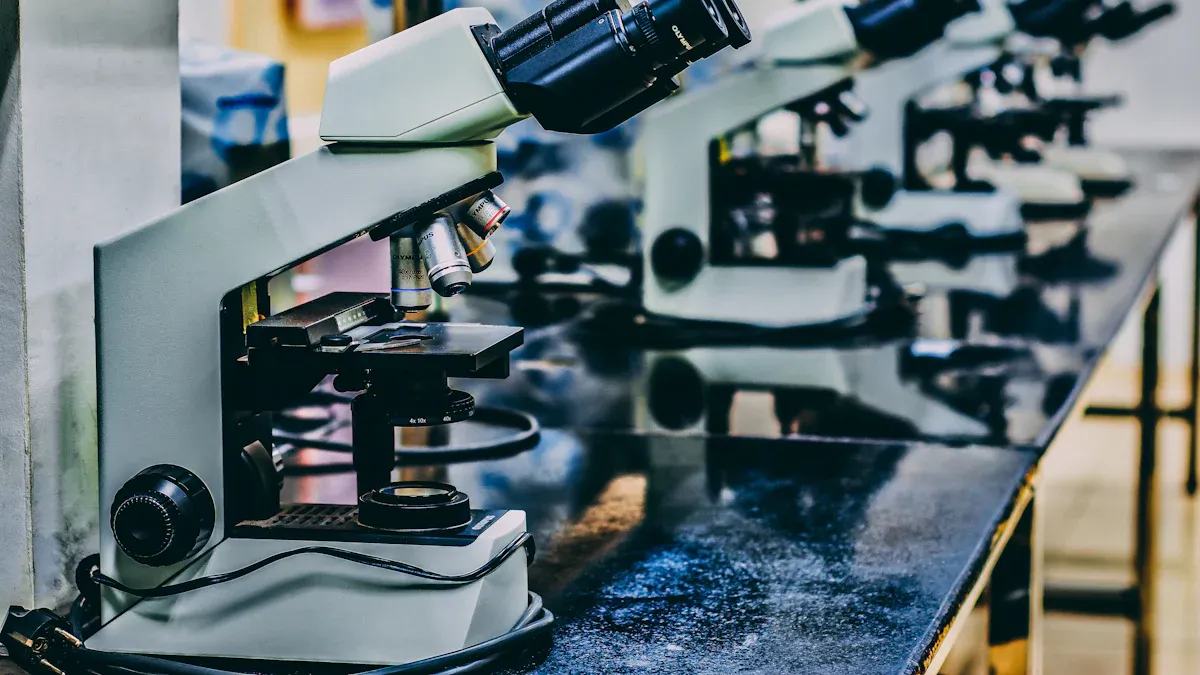
Image Source: unsplash
Picking the right microscope objective lens helps you see small things. Every lens has its own power, numerical aperture, and type. The table below shows the best 10 models for 2026. Band-optics is known for being very accurate and high quality. The table gives you the brand, model, magnification, type, price, and best use.
| Brand | Model | Magnification | Type | Numerical Aperture | Price Range | Ideal Use |
|---|---|---|---|---|---|---|
| band-optics | Plan Achromatic Objective Lens | 40x | Plan Achromatic | 0.75 | 250−350 | Both |
| Nikon | APO 60x/1.4 Oil Objective Lens | 60x | Apochromatic | 1.40 | 900−1200 | Professional |
| Zeiss | EC Plan-Neofluar 40x/0.75 | 40x | Plan | 0.75 | 800−950 | Both |
| Olympus | Plan Achromat 10x/0.25 | 10x | Plan Achromatic | 0.25 | 200−300 | Educational |
| Leica | HI PLAN 100x/1.25 Oil Objective | 100x | Plan | 1.25 | 950−1300 | Professional |
| band-optics | Achromatic 20x Objective Lens | 20x | Achromatic | 0.70 | 180−250 | Educational |
| Olympus | UIS2 Plan Achromat 4x Objective | 4x | Plan Achromatic | 0.16 | 150−220 | Educational |
| Nikon | Plan Fluor 20x/0.45 Objective | 20x | Plan Fluorite | 0.45 | 400−600 | Both |
| Zeiss | Plan-Apochromat 63x/1.4 Oil | 63x | Plan Apochromatic | 1.40 | 1100−1400 | Research |
| Leica | N PLAN 40x/0.65 Objective | 40x | Plan | 0.65 | 700−900 | Clinic Grade Microscopes |
The chart below shows how strong each lens is and how much light it can take in.
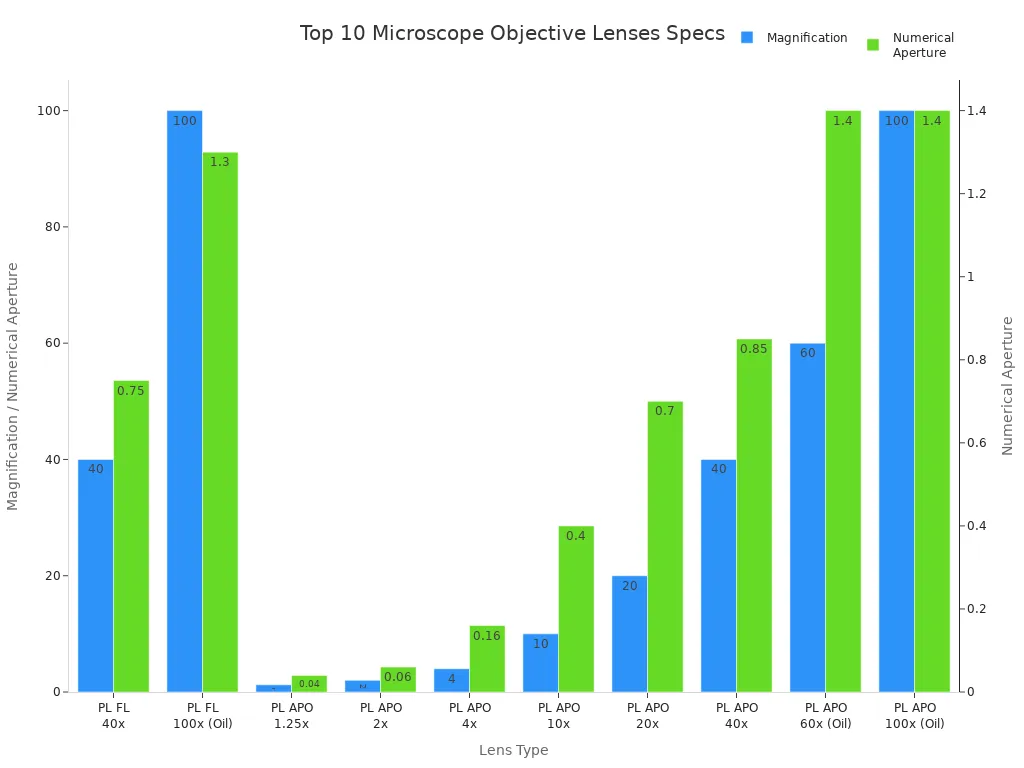
Some things are important when you pick a microscope objective lens. Numerical aperture tells you how much light the lens can collect. Resolution means how clear the picture looks. Working distance is the space between the lens and the sample. Correction for aberrations, like achromatic or apochromatic, makes pictures better.
| Feature | Description |
|---|---|
| Numerical Aperture | Shows the light-gathering ability and resolution. |
| Resolution | Depends on light wavelength and lens design. |
| Working Distance | Space between lens and specimen. |
| Correction for Aberrations | Achromatic, fluorite, and apochromatic objectives fix optical errors. |
Different microscope objective lenses are good for different jobs. Achromatic objectives are great for labs and classrooms. They fix color mistakes at two colors. Plan achromatic objective lens models give flat pictures, which help in teaching and lab work. Apochromatic objectives are best for research and special studies. They fix color mistakes at three colors and give sharp pictures for science.
Achromatic objectives help students and teachers in simple labs.
Plan objectives are good for clinic microscopes and regular tests.
Apochromatic objectives are used for research and special imaging.
Tip: Pick the lens type that fits your needs. For example, plan achromatic objective lens models are liked by professionals and students because they are not too expensive and give good pictures.
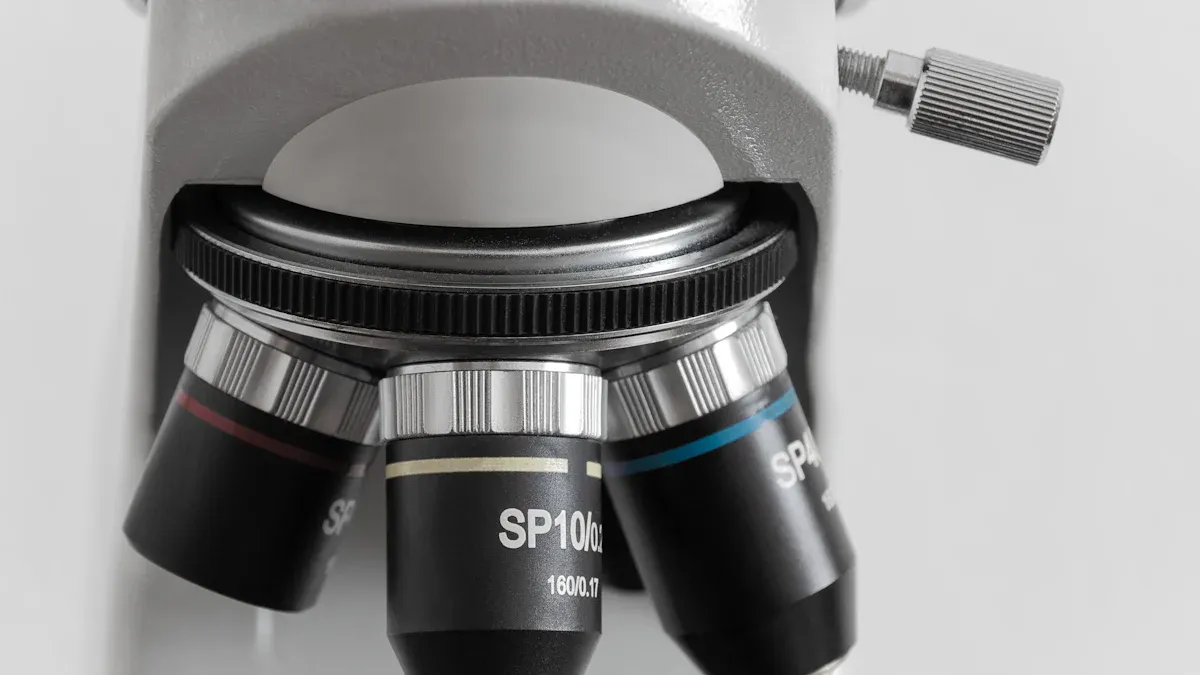
Image Source: unsplash
The band-optics Plan Achromatic Objective Lens is very precise and flexible. It uses special achromatic correction to make images look sharp. The lens gives a good view and fits many microscopes. People in labs and schools can use it. The long working distance keeps samples safe from damage.
| Specification | Details |
|---|---|
| Objective Working Distance | 9.3mm |
| Magnification | 20X |
| Type | Infinity Plan Long Working Distance Achromatic Metallurgical Objective |
| Numerical Aperture (N.A.) | /1.30 |
| Immersion Media | Oil, Water, Glycerin |
| Mechanical Tube Length | 160mm (finite) or ∞ (infinite) |
| Cover Glass Thickness | /0.17 (standard) or /0 (no cover glass) |
| Special Features | Plan, Achromatic, Long Working Distance |
| Compatibility | Various microscope systems |
| Installation Notes | Make sure it is lined up right. Do not force it in. |
Pros:
Makes images look sharp
Works with different immersion media
Long working distance keeps samples safe
Fits many microscopes
Cons:
Needs careful setup
Best for: Both professional and educational use
Why it made the list:
This plan achromatic objective lens gives clear pictures and is easy to use. It helps people in labs and classrooms see details well. The achromatic design lowers color mistakes. That is why it is great for science and teaching.
The Nikon APO 60x/1.4 Oil Objective Lens is used in labs by experts. It uses oil to help you see more details. The high numerical aperture lets you see tiny parts in cells.
High numerical aperture gives sharp pictures
Made for oil immersion
Used in research and testing
Pros:
Very clear images
Strong contrast
Good for science work
Cons:
Needs oil to work best
Costs more
Best for: Professional use
Why it made the list:
This oil immersion objective lens is trusted by scientists. It helps show very small things. It is good for research and gives great images.
The Zeiss EC Plan-Neofluar 40x/0.75 Objective gives a flat image and fixes color mistakes. It is used in clinics and labs for regular tests.
Pros:
Flat image
Fixes color mistakes
Good for clinic microscopes
Cons:
Medium magnification
Best for: Both professional and educational use
Why it made the list:
This lens has plan and achromatic features. It is good for teaching and lab work. It helps people see clear images with no bending.
The Olympus Plan Achromat 10x/0.25 Objective is great for classrooms and simple labs. It gives a wide view and uses achromatic correction for better pictures. Teachers and students use it to look at plant and animal cells.
Pros:
Wide view
Fixes color mistakes
Not expensive
Cons:
Lower magnification
Best for: Educational use
Why it made the list:
This achromatic objective lens helps students learn about microscopes. It gives clear images and fits many types of microscopes.
The Leica HI PLAN 100x/1.25 Oil Objective is made for looking at things very close up. It has a high numerical aperture to let in more light. The lens fixes color and shape mistakes.
High numerical aperture for better detail
Fixes color and shape errors
Needs oil to work best
Pros:
Very sharp images
Great for science
High quality
Cons:
Needs the right oil
Must be installed carefully
Best for: Professional use
Why it made the list:
This oil immersion objective lens is good for research and testing. It helps people see very small things in samples.
The band-optics Achromatic 20x Objective Lens is a good pick for schools. It uses achromatic correction to make images clearer. The lens fits many microscopes and is easy to use.
Pros:
Fixes color mistakes
Easy to set up
Good for classrooms
Cons:
Lower numerical aperture
Best for: Educational use
Why it made the list:
This lens helps students and teachers see clear pictures. It is good for learning and simple lab work.
The Olympus UIS2 Plan Achromat 4x Objective is made for looking at big parts of a sample. It gives a flat image and fixes color mistakes. Many schools use it for beginner lessons.
Pros:
Wide view
Flat and clear images
Strong and lasts long
Cons:
Low magnification
Best for: Educational use
Why it made the list:
This lens is great for new students. It helps them see samples clearly and learn how to use a microscope.
The Nikon Plan Fluor 20x/0.45 Objective is best for looking at glowing samples. It gives high-contrast, flat images. The lens is made for live-cell imaging and works well with fluorescence setups.
Pros:
High detail
Flat images
Good for glowing samples
Cons:
Made for special uses
Best for: Both professional and educational use
Why it made the list:
This lens is good for advanced imaging in labs and classes. It helps people see details in live and clear samples.
The Zeiss Plan-Apochromat 63x/1.4 Oil Objective is made for very clear images. It fixes color and shape mistakes. The lens works with oil and can do DIC imaging.
| Feature | Description |
|---|---|
| Magnification | 63x |
| Numerical Aperture (NA) | 1.4 |
| Immersion Type | Oil immersion |
| Correction Type | Plan-Apochromatic for best color and shape fix |
| Imaging Capability | Can do Differential Interference Contrast (DIC) |
High numerical aperture for sharp images
Advanced color and shape correction
Pros:
Very clear images
Advanced correction
Good for research
Cons:
Needs oil
Best for: Research
Why it made the list:
This lens is used in science labs to see tiny details. It helps scientists study cells and tissues very closely.
The Leica N PLAN 40x/0.65 Objective is a good choice for clinic microscopes. It gives a flat image and is good for daily lab work. The lens balances magnification and clear pictures.
Pros:
Flat images
Good for clinics
Strong build
Cons:
Medium numerical aperture
Best for: Clinic grade microscopes
Why it made the list:
This lens helps doctors and lab workers see samples clearly. It is good for daily tests and checking samples.
Tip: Using led lighting with these objectives can make images brighter and clearer.
There are a few things to think about when picking a microscope objective lens. Magnification tells you how big the sample will look. Numerical aperture shows how much light the lens can take in. It also affects how clear and bright the image is. A higher numerical aperture means you see more details. This helps you spot tiny parts in your sample. The lens type, like achromatic or plan achromatic, changes how good the picture looks. It also helps fix color mistakes. The lens and eyepiece must work well together. This is called compatibility. Price is important too. Some lenses cost more because they have special features.
Tip: Make sure the lens fits your microscope and gives you the magnification and clarity you need.
| Factor | What to Consider |
|---|---|
| Magnification | Size of the image |
| Numerical Aperture | Resolution and brightness |
| Lens Type | Achromatic, plan, apochromatic |
| Compatibility | Fit with microscope system |
| Budget | Price and required features |
People who work in labs or hospitals need lenses that show very clear images. They use lenses with high numerical aperture and extra features. These features help with things like seeing glowing samples. Teachers and students need lenses that are easy to use and strong. Achromatic objective lens models are common in schools. They make pictures clear and fix simple color mistakes. Professionals often pick plan achromatic or apochromatic lenses for more exact work.
Professionals want high resolution and special corrections.
Educational users like simple, tough, and low-cost lenses.
Plan achromatic objective lens models are liked in both science labs and classrooms. These lenses give a flat picture from edge to edge. This is important for seeing things the right way. They fix color and shape mistakes, so images look better at high power. This helps scientists and doctors see small details in their samples. More people want plan achromatic lenses because they show clear pictures with little distortion. They are used in research and medical tests because they are very accurate.
The best 10 microscope objective lenses are special for many reasons. They work well in different conditions and give flat images. They fix color mistakes and have strong magnification. Some use oil or water to help see better. The way you look at samples can change with each lens. When picking a lens, think about how much it zooms in. Check how much light it can take in. Look at the space between the lens and the sample. See if it fixes picture problems. Make sure it fits what you need. It is smart to pick a brand people trust. Good brands make strong products and help customers after buying. Band-optics is a good choice for schools and labs in 2026.
Tip: Always pick a lens that works with your sample and where you use it for the best results.
A microscope objective lens is a part that collects light. It makes the sample look bigger. Scientists and students use it to see tiny things. These details are too small for our eyes to see.
Use lens paper or a soft cloth to clean it. Wipe the lens gently in circles. Do not use strong chemicals. If you need to, use a little lens cleaning solution. Be careful so you do not scratch the lens.
Oil or water helps the lens take in more light. This makes the image look brighter and clearer. Scientists use oil immersion for high magnification. It is helpful for looking at cells or bacteria.
Not all lenses fit every microscope. Always check if the lens matches your microscope. Look at the mounting type and other details. Using the wrong lens can make images blurry or break the microscope.
Achromatic lenses fix color mistakes at two colors. Plan achromatic lenses also give a flat image. This helps you see the whole sample clearly from edge to edge.


