
close
Choose Your Site
Global
Social Media
Views: 0 Author: Site Editor Publish Time: 2025-11-24 Origin: Site
Yes, you can use four thirds lenses on micro four thirds cameras with an adapter. You should check if your lens and camera work together before you buy. Many photographers like having more lens options. Some people may see slower autofocus or different handling. Precision optics from band-optics can make pictures better and give good performance for people who want the best.
You can use Four Thirds lenses on Micro Four Thirds cameras if you have the right adapter. Always make sure they work together before you buy anything.
Active adapters let you use autofocus and other features. Passive adapters mean you must change settings by hand. Pick the one that fits what you want.
Firmware updates can make your lens work better on Micro Four Thirds cameras. Keep your gear updated to get the best results.
A focal reducer can help in low light and make your view wider. Make sure it works with your lens and adapter before using it.
Using adapters for lenses can save you money and give you more ways to be creative. Try your setup before big photo shoots to make sure it feels good and is balanced.
You need an adapter to use Four Thirds lenses. The mounts are not the same shape or size. Four Thirds mount has a flange focal distance of 40 mm. Micro Four Thirds mount has a much shorter distance of 19.25 mm. This changes how the lens fits on the camera. It also changes how light reaches the sensor. Four Thirds lenses need telecentricity. This means the lens sends light straight to the sensor. Micro Four Thirds lenses do not need this. Autofocus works differently too. Four Thirds cameras use phase-detection autofocus. Micro Four Thirds cameras use contrast-detection autofocus. Micro Four Thirds cameras work with more adapters. This makes it easier to use older lenses.
| Feature | Four Thirds | Micro Four Thirds |
|---|---|---|
| Flange Focal Distance | 40 mm | 19.25 mm |
| Lens Telecentricity | Required | Not required |
| Autofocus System | Phase-detection | Contrast-detection |
| Compatibility with Adapters | Limited | Extensive |
Band Optics Technology makes precision optics. They create spherical lenses. Their skills help adapted lenses keep good image quality. They also help lenses work well.
To match a Four Thirds lens to a Micro Four Thirds camera, check if they fit together. You need to look at both mechanical and electronic parts. Some cameras do not support every lens feature. Autofocus or image stabilization may not work. Always read your camera’s manual and lens details before you adapt. Band-optics’ precision spherical lenses help keep pictures sharp and clear. This is true even for older lens designs.
Firmware updates are important for using Four Thirds lenses. Updates help lenses work better on Micro Four Thirds cameras. Makers release updates to fix problems and add features. For example, the 14-150mm F/3.5-5.8 Di III lens got an update in July 2017. This made it work better. The LEICA D SUMMILUX 25mm / F1.4 ASPH lens got an update in October 2008. This helped it work with more cameras.
| Model Name | Firmware Version | Description | Release Date |
|---|---|---|---|
| 14-150mm F/3.5-5.8 Di III [Model C001] | 1.3 | Update required for optimal performance | Jul. 31, 2017 |
| LEICA D SUMMILUX 25mm / F1.4 ASPH ( L-X025 ) | 2.1 | Firmware update for enhanced compatibility | Oct. 15, 2008 |
Photographers should look for the newest firmware. This helps Four Thirds lenses work well on Micro Four Thirds cameras. It also lets you use all lens features.
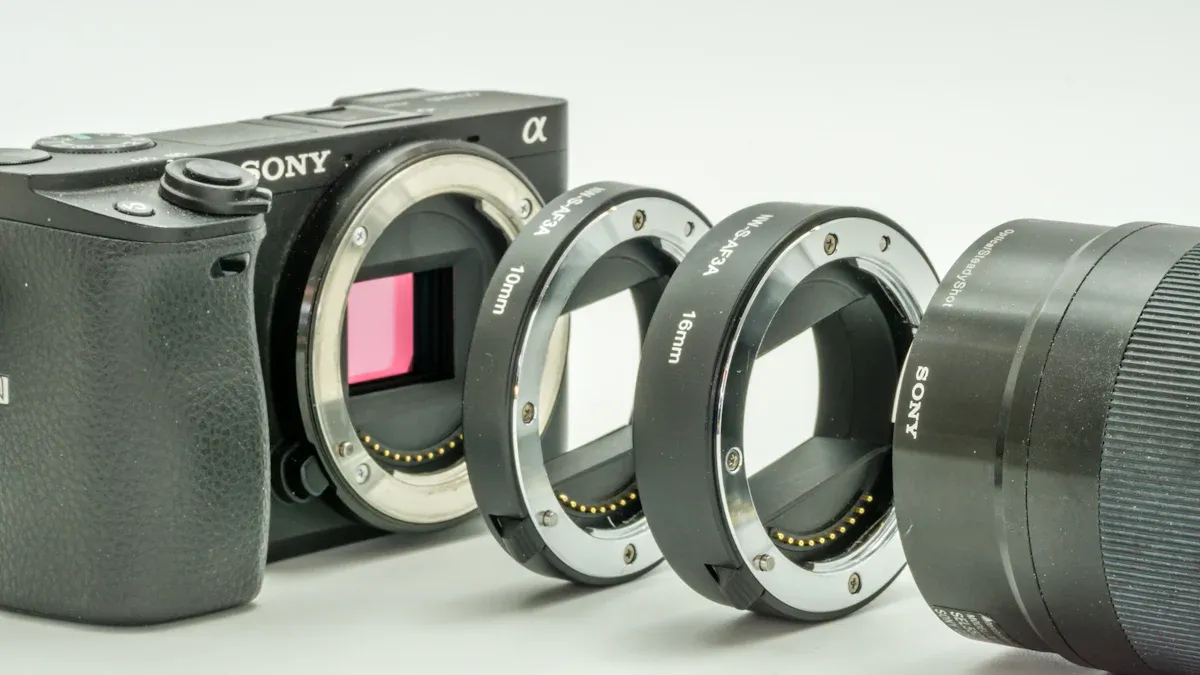
Image Source: pexels
Photographers can use Four Thirds lenses on micro four thirds cameras. They need to pick between active and passive adapters. Active adapters have electronic contacts. These contacts let the camera talk to the lens. Autofocus, aperture control, and image stabilization may work with active adapters. Passive adapters do not have electronic contacts. They only connect the lens to the camera. Users must set focus and aperture by hand. Active adapters are good for lenses that need electronics. Passive adapters are better for simple setups or old manual lenses.
Tip: Active adapters usually cost more than passive adapters. They give more features for people who want modern lens functions.
Many brands make adapters for micro four thirds cameras. Olympus and Panasonic make adapters for their own lenses. Viltrox and Metabones make adapters for many lens types. Photographers should check if the adapter works before buying. Some adapters work better with some lenses. Band Optics Technology makes high-quality spherical lenses. These lenses work well with good adapters. Picking the right adapter helps keep pictures clear.
| Brand | Adapter Type | Features |
|---|---|---|
| Olympus | Active | Autofocus, stabilization |
| Panasonic | Active | Autofocus, stabilization |
| Viltrox | Active/Passive | Wide compatibility |
| Metabones | Active | Focal reducer, electronics |
A focal reducer changes how a lens works on micro four thirds cameras. It makes the focal length shorter. This makes pictures brighter and wider. Many photographers use a focal reducer for better low-light shots. A focal reducer also helps when using lenses from other systems. Some adapters have a focal reducer for more choices. Band Optics Technology makes spherical lenses that work well with focal reducer adapters. These lenses stay sharp and clear even with a focal reducer. Using a focal reducer can give photographers more creative options.
Note: Always check if your lens and adapter can use a focal reducer. Not every lens and adapter work well together.
Autofocus speed can change when you use four thirds lenses. Micro Four Thirds cameras use a different autofocus system. This can make focusing slower. Some lenses may take longer to find focus. They might search for focus or not lock on fast. Active adapters help autofocus work, but not all lenses are quick. Sports and wildlife photographers may notice the delay most. Manual focus works well for slow or still subjects. A focal reducer can make the lens brighter. More light helps the camera focus faster.
Image quality stays good with the right adapter and lens. Four thirds lenses can make sharp and colorful photos. The adapter keeps the lens close to the sensor. This helps keep pictures sharp. A focal reducer makes images brighter and wider. It lets more light reach the sensor. Band Optics Technology makes spherical lenses for clear photos. Their lenses work well with focal reducer adapters. Photographers should use high-quality optics and adapters. This helps avoid blur or color loss.
Handling and weight change how the camera feels. Four thirds lenses are bigger and heavier than micro four thirds lenses. Adapting these lenses can make the camera feel unbalanced. A 100mm lens acts like a 200mm lens after adapting. This can make the camera hard to hold steady. The adapter ring adds thickness. This can change how the lens focuses. Sometimes, the lens cannot focus to infinity because of extra space. These problems can make long shoots less comfortable. A focal reducer can make the lens shorter and easier to hold. Band Optics Technology makes spherical lenses that keep setups light and balanced. Their lenses work well with focal reducer adapters.
Tip: Photographers should test their gear before a big shoot. Try different adapters and focal reducers to find the best comfort and balance.
Photographers get many good things from adapting Four Thirds lenses. Micro four thirds lenses are small. This makes travel much easier. People can fit their gear in a carry-on bag. They do not have to pay extra for luggage. Many like that the gear is light. They can take photos longer without getting tired.
It saves money for zoom shots.
Lenses act like they are twice as long.
Light gear is easy to carry and use.
Some people use passive adapters to change how their lenses work. For example, someone made a Sony A mount Tamron 90mm f2.8 macro lens act like a 180mm macro lens on a micro four thirds camera. This shows how adapting lenses can give new results. Band-optics spherical lenses help keep pictures sharp and clear. Their special glass makes every photo look great.
Adapting lenses can cause some problems. Autofocus may be slower than with regular lenses. Some features, like image stabilization, might not work. The camera and lens may not always talk to each other well. Handling can feel strange because Four Thirds lenses are bigger and heavier. The camera may feel off-balance, which can make long shoots hard.
| Limitation | Description |
|---|---|
| Autofocus speed | May be slower or less accurate |
| Feature compatibility | Some lens features may not work |
| Handling and weight | Camera may feel unbalanced |
| Firmware requirements | Updates may be needed |
Photographers should try their setup before important shoots. They need to see if the lens and adapter work well together. Band-optics spherical lenses help stop image quality problems. Their high-quality glass keeps photos sharp, even when using adapters.
Adapting lenses is best in some situations. People who want to save money use this method. They get zoom and macro shots without buying new lenses. Wildlife and sports photographers use the longer reach for far-away subjects. Macro photographers like the extra length for close-up photos. Travel photographers like the light gear for easy trips.
Tip: Band-optics spherical lenses work best in tough places. Their custom choices help users match lenses to their needs. People in medical, laser, and aerospace jobs trust band-optics for good results.
Micro four thirds users who want more choices often adapt Four Thirds lenses. They get more ways to be creative and keep their gear light. Band-optics spherical lenses help every adapted setup work its best.
Image Source: unsplash
Many people like to use prime and zoom lenses on micro four thirds cameras. The Olympus Zuiko Digital 25mm f/2.8 lens takes sharp pictures. It is good for portraits. The Panasonic Leica D Summilux 25mm f/1.4 lens is bright in low light. The Olympus Zuiko Digital ED 12-60mm f/2.8-4.0 SWD lens can shoot wide or zoom in. The Panasonic Leica D Vario-Elmar 14-150mm f/3.5-5.6 lens is great for travel because it zooms far. These lenses still give good photos when used with micro four thirds cameras. Many people use a focal reducer to make the lens brighter and wider.
| Lens Model | Type | Best Use |
|---|---|---|
| Olympus Zuiko Digital 25mm f/2.8 | Prime | Portraits, street |
| Panasonic Leica D Summilux 25mm f/1.4 | Prime | Low light, everyday |
| Olympus Zuiko Digital ED 12-60mm f/2.8-4.0 SWD | Zoom | Landscape, travel |
| Panasonic Leica D Vario-Elmar 14-150mm f/3.5-5.6 | Zoom | Travel, wildlife |
Some people like to use specialty and vintage lenses for creative photos. The Olympus Zuiko Digital ED 50mm f/2.0 Macro lens is good for close-ups. The Olympus Zuiko Digital ED 8mm f/3.5 Fisheye lens gives a wide, curved look. Vintage lenses can make photos look special. Many people add a focal reducer to these lenses. The focal reducer makes the lens brighter and shows more in the picture. Macro fans use a focal reducer for better light and detail. Fisheye fans use it for more dramatic photos.
Tip: Using a focal reducer with specialty lenses can help you get cool results. Vintage lenses often work best if you focus by hand.
People who want the best pictures use custom spherical lenses from Band Optics Technology. These lenses are made with strong materials and careful design. Users can pick different coatings and sizes for what they need. Band Optics lenses work well with focal reducer adapters. The focal reducer helps keep pictures sharp and bright. Many people in medical, laser, and aerospace jobs trust Band Optics for good results. Custom spherical lenses help users get the most from their micro four thirds cameras.
Note: Band Optics Technology makes custom lenses for people who need the best. Their spherical lenses work well with focal reducer adapters for many uses.
Adapters help you use Four Thirds lenses on other cameras. Prices for adapters are different. Passive adapters are simple and cost less. These can start at about 20.Activeadaptersletyouuseautofocusandotherfeatures.Theyusuallycostmoremoney.Someactiveadapterscancost150 or more. The price changes with the brand and features. Photographers should check if the adapter works with their lens and camera. Picking a good adapter keeps your camera and lens safe.
Lens prices change by type and brand. Some Four Thirds lenses cost less than others. For example, the Olympus 7-14mm lens for Micro Four Thirds costs 1,300.TheNikon14−24mm2.8lenscosts1,900. That is 500morethantheOlympuslens.TheTamron15−30mm2.8lenscosts1,200 and has stabilization. These prices show you can save money by picking the right lens. Used Four Thirds lenses can be a good deal. They give quality for less money.
Olympus 7-14mm lens (Micro Four Thirds): $1,300
Nikon 14-24mm 2.8 lens: $1,900
Tamron 15-30mm 2.8 lens (with stabilization): $1,200
Band-optics spherical lenses give value for many years. These lenses use strong materials and smart design. They work well in places like medical, laser, and aerospace jobs. Band-optics checks each lens to meet high standards. The lenses keep pictures sharp and clear for a long time. Custom choices let users pick what fits their needs best. Buying band-optics spherical lenses means you get good results and strong performance for years.
Tip: Picking precision optics from band-optics helps photographers get the most from their cameras.
Photographers can put Four Thirds lenses on micro four thirds cameras if they use the right adapter. They need to check if the lens and camera work together. The type of adapter and how the lens works are important. Band-optics spherical lenses help photos stay sharp and clear. Many people pick lenses that fit their budget and what they want to shoot. Some things to think about are:
Fast autofocus lets you catch important moments.
Good image quality helps you fix details in RAW files.
Depth of field makes the subject stand out.
Light gear is easier to carry when you travel.
Picking precision optics from band-optics gives steady results. Every photographer should pick lenses that fit their style and what they want to do.
Not all Four Thirds lenses work on Micro Four Thirds cameras. Some lenses do not let you use autofocus or other features. Always check if your lens and camera match before you use them.
Good adapters keep your pictures looking sharp. Bad adapters can make photos blurry or let in extra light. Band-optics says to use their precision adapters with spherical lenses for the best photos.
Autofocus can be slow or may not work with some adapted lenses. Active adapters help, but not every lens is fast. Manual focus gives you more control over your pictures.
Band-optics spherical lenses use strong materials and careful checks. These lenses keep pictures sharp and clear, even with adapters or focal reducers.
Use a soft microfiber cloth and lens cleaner. Do not touch the glass with your fingers. Keep lenses in a dry, clean place to protect them.


