close
Choose Your Site
Global
Social Media

Views: 0 Author: Site Editor Publish Time: 2026-01-09 Origin: Site


Spy lenses from surveillance technology have changed telescope optics. They help us get better pictures and do more science in astronomy and cosmology. High-precision lens systems, like the ones used in nasa missions, make it easier to study dark energy and the universe. Band-optics is a top company in making optical parts. They give aspherical lenses to space telescopes like hubble. These lenses are lighter and make images clearer. People want better pictures for defense and astronomy. This need has made technology improve very fast.
| Growth Factor | Impact on Infrared Telescopes |
|---|---|
| Detector advancements | Telescopes can see more and show clearer details |
| Investment growth | Scientists get better telescopes for their research |
| Surveillance demand | Telescopes work well even when it is hard to see |
Spy lenses have changed telescope optics a lot. They help make images clearer and lighter. This helps us explore space better.
Band-optics is very important for making better lenses. These lenses help telescopes like Hubble and James Webb work better.
Adaptive optics technology comes from surveillance systems. It makes images sharper by fixing blurs from the atmosphere.
Scientists and engineers work together to make new discoveries faster. This teamwork helps telescope technology improve quickly.
Lightweight materials and new designs come from surveillance technology. They help space missions work better and let us look deeper into space.
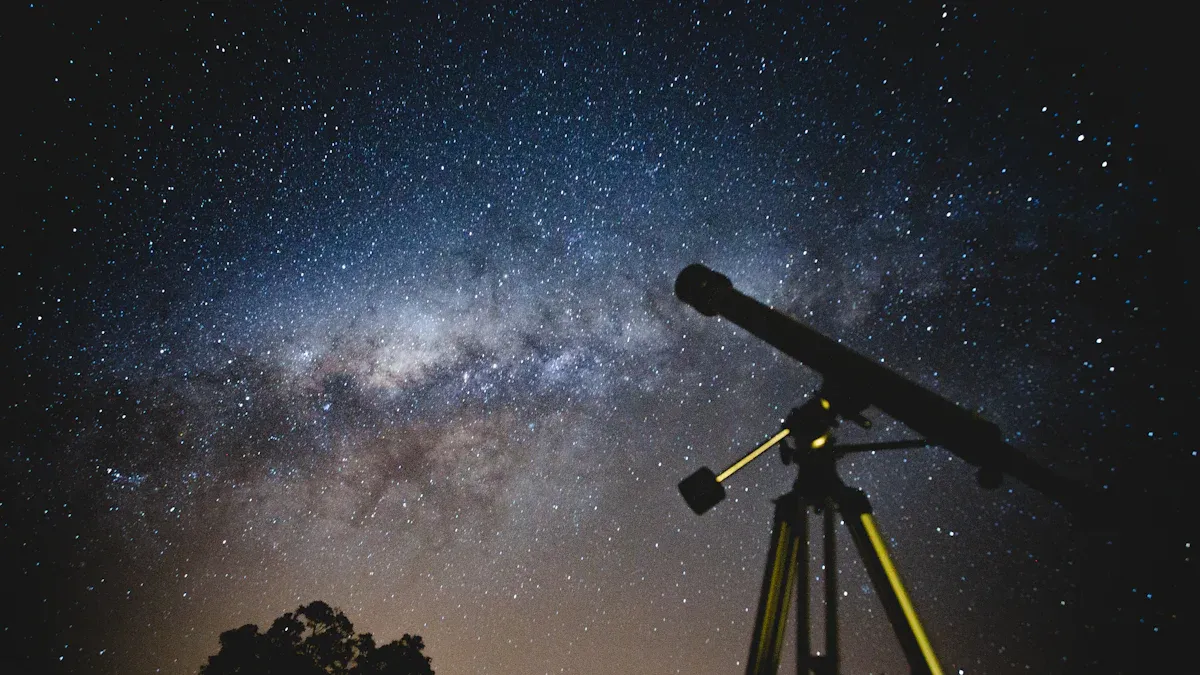
Image Source: pexels
Spy lenses were first made for secret missions and satellites. At first, these lenses helped people see things far away with lots of detail. They used special glass and coatings to make pictures better. Later, engineers made spy lenses smaller and lighter. This made them easier to use in satellites and telescopes. People wanted clear pictures for space and security. This need pushed new technology to be made.
Spy lenses changed how scientists look at space. They made telescope lenses sharper and stronger. NASA used these lenses to see farther into space. The James Webb Space Telescope uses advanced lenses for better views. These lenses help scientists learn about dark energy and the universe. Hubble also uses special lenses to take pictures of faraway galaxies.
Band-optics is important in this progress. The company makes precise optical parts for both spying and astronomy. Their products help telescopes work really well. Band-optics uses new materials and designs for telescope lenses in space. Their work helps scientists make new discoveries in astronomy and cosmology.
There are many big moments that link spy lenses and telescope optics. Here are some important ones:
Spy lenses made satellite pictures better. This helped NASA study space.
Telescope lenses got lighter and stronger. Hubble and other telescopes use these new lenses.
Band-optics began making custom telescope lenses for space and science.
Using spy lenses in astronomy gave better views of stars and galaxies.
New ideas in telescope lenses helped scientists explore dark energy and the universe.
Spy lenses and telescope lenses now have many things in common. Both use high-precision optics and advanced imaging. These changes help scientists find out more about space and cosmology.
Spy lenses have changed how scientists make telescope lenses. These lenses use special shapes and coatings to make pictures clearer. NASA uses high-precision lenses in many space missions. These lenses help telescopes see far into space with great detail. Band-optics makes high-quality lenses for both spying and astronomy. Their products use strong materials and careful design for the best results.
High-performance lenses are important for science work. They let telescopes gather more light and show more detail. Hubble uses advanced lenses to take clear pictures of faraway galaxies. These lenses help scientists study dark energy and learn about space. Band-optics uses its skills to make advanced lenses for NASA and other space projects. Their careful work helps telescopes take sharp pictures and helps scientists explore the universe.
Modern telescopes use adaptive optics to fix blurry pictures. This idea comes from surveillance systems that need clear images in hard places. Adaptive optics use small mirrors that change shape to fix air movement. This makes the pictures much sharper. NASA uses these systems in its telescopes for better detail.
Advanced image processing also helps telescopes. The James Webb Space Telescope uses software to clean up pictures of faraway galaxies. These programs come from surveillance technology. They help astronomers see faint things and study space in more detail. The LSST Science Pipelines use open-source software to handle lots of data. This helps scientists find rare events and study dark energy. Band-optics helps these systems by making precise lenses that work well with adaptive optics and cameras.
Surveillance technology has made lenses smaller and lighter. This helps telescope makers build strong and small systems. NASA needs light telescope lenses for space missions. Band-optics uses new materials to make lenses that are light and strong. This makes it easier to send telescopes into space.
| Year | Researcher | Key Findings |
|---|---|---|
| 2020 | N. Takaki | Made a small four-mirror telescope with a wide view. |
| 2022 | Liu | Found a way to make systems smaller but still work well. |
| 2023 | Zhang | Improved a special optical system for better pictures and less stray light. |
| 2023 | Zhao | Designed a compact system with good image quality using new parts. |
Lightweight telescope lenses help NASA send more tools into space. These lenses keep high detail and good quality. Band-optics uses careful work to make lenses that fit tough space rules. Their work helps scientists discover new things in space and study the universe with better pictures.
Note: Making lenses smaller and lighter from surveillance technology has helped build better telescope lenses for space. These changes make telescopes work better and help scientists learn more about space.
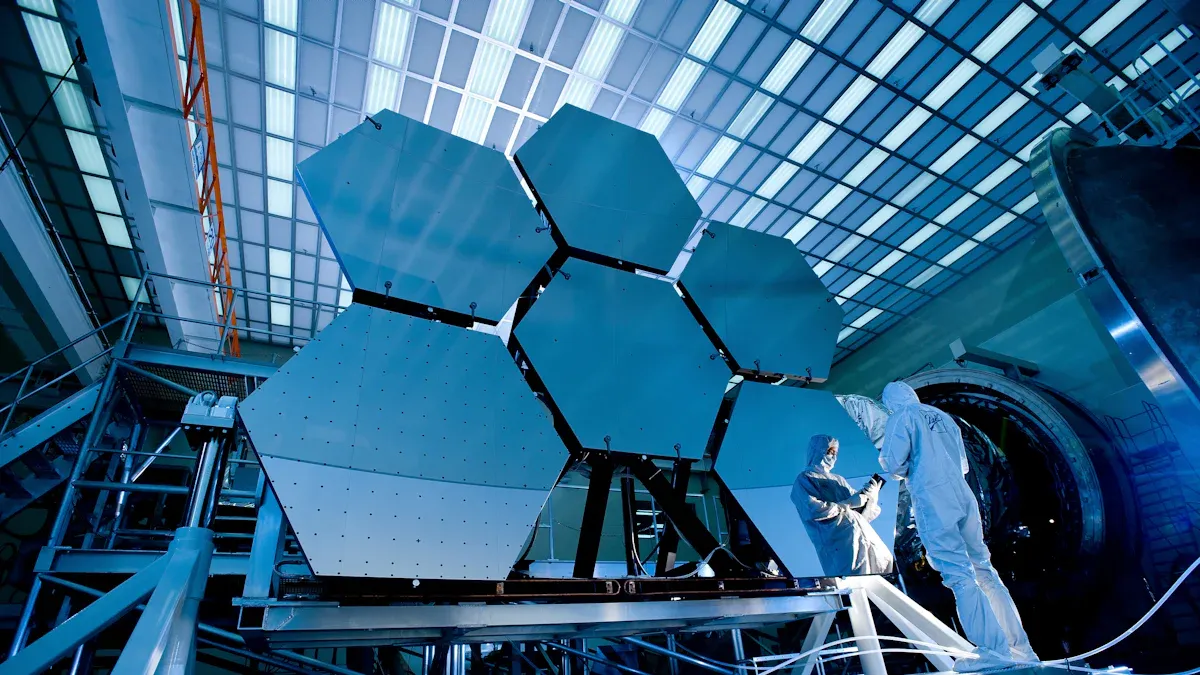
Image Source: pexels
Military-grade spy lenses help scientists study space. These lenses give very clear and strong pictures. Band-optics uses special materials to make good lenses for telescopes. NASA and other space groups use these lenses to see stars and galaxies. The hubble space telescope uses these lenses to take sharp photos of faraway things. These lenses help scientists learn about dark energy and cosmology. Band-optics makes telescope lenses that follow strict science rules.
Security sensor technology has made astrophotography tools better. Many telescopes now use sensors for taking pictures and watching space. These sensors give clearer pictures and work well in the dark. They also let scientists record video all the time. This helps them watch things happen in space. The sensors do not bother the environment, so astronomers can study space without problems.
Better pictures from new sensor technology.
Clearer images in dark places.
Video recording helps watch space events.
Sensors do not disturb the environment.
Band-optics puts these sensors in telescope lenses to help scientists study space and cosmology. The sensors make it easier to see faint things and learn about dark energy.
Dual-use technologies change how Band-optics makes and sells telescope lenses. These technologies can be used for both science and the military. Rules help control how companies send optical tools and science equipment to other places.
| Regulatory Agency | Regulation | Description |
|---|---|---|
| Department of State | ITAR | Controls defense and military technology. |
| Department of Commerce | EAR | Controls products used for both military and civilian needs. |
| Department of Treasury | Specially Designated Nationals List | Controls exports to certain people or countries. |
Many telescope lenses and imaging tools need special permission before being sent out. Companies must check if their products are for military or science use. Sharing technology with people in other countries may need a license. Band-optics follows these rules to make sure their telescope lenses and tools meet world standards.
Many space discoveries happen because people work together. Scientists and engineers from many countries join forces on telescope projects. These teams use telescopes on four continents to see more in space. They can find new things fast, like signals from gravitational waves. These projects help students learn about astronomy and technology. Young scientists join teams and get real experience.
Many telescopes work together for better results.
Sharing data quickly helps find new things in space.
Students learn by joining research projects.
Universities and companies work together and create new ideas. When people share goals, they solve problems as a team. This teamwork helps science and technology grow.
New technology is changing how telescopes are made. Engineers use computer tools to design better telescopes for space. These tools let them test ideas before building anything. The Space Surveillance Telescope is one example. It has a short focal length and a wide field of view. This helps it find faint objects in deep space. Its special mirrors make it very fast at tracking asteroids.
Simulation tools help engineers make better microbolometers and microlens arrays. These parts help telescopes collect more light. New designs use freeform mirrors and systems that can fold up. These changes make telescopes lighter and stronger for nasa missions.
Band-optics helps space exploration with advanced optical solutions. The company gives high-quality lenses to nasa and other space projects. Band-optics uses free-space optical communication for fast data transfer. These systems use narrow laser beams for less interference and more security. They also use less power, which is important for satellites.
| Feature | Description |
|---|---|
| High Data Rates | Fast data transfer for lots of information. |
| Low Power Consumption | Saves energy for long space missions. |
| Narrow Beams | Focused signals mean less interference and more security. |
| Less Susceptible to Interference | Works well even in tough space environments. |
Band-optics builds ground stations with advanced tracking. These stations help keep connections strong during space missions. The company’s work helps nasa and other groups make new discoveries with the hubble space telescope and other missions.
Teamwork and new technology push space exploration forward. Band-optics helps scientists see deeper into space.
Spy lenses from surveillance technology make telescope lenses clearer and lighter. Band-optics works hard to make better lens systems for space missions and science. New ideas and working together will help scientists see more in space.
The future for telescope lenses is exciting. Companies like Band-optics will help find new things.
Spy lenses are camera lenses used for surveillance. They help people see faraway things with clear detail. These lenses use special glass and coatings to make pictures better.
Spy lenses use strong materials and smart designs. Telescope makers use these ideas to make lenses lighter and sharper. This helps telescopes see stars and galaxies more clearly.
Band Optics makes precise lenses for space telescopes. The company uses new technology and strong materials. Their lenses help scientists get better pictures of space.
Lightweight lenses make it easier to send telescopes into space. They lower the weight of the spacecraft. This saves fuel and money for space missions.
Yes! Many sensors and lenses from telescopes work in security cameras. These tools help watch big areas and take clear pictures in low light.


