close
Choose Your Site
Global
Social Media

Views: 0 Author: Site Editor Publish Time: 2026-03-18 Origin: Site


Medical optics are changing healthcare. They help doctors find and treat diseases in new ways. Recent market data shows many people use these technologies:
The market for minimally invasive surgeries may reach US$ 35.3 billion by 2032. It is growing each year.
Medical fiber optics for illumination had 29.8% of the market share in 2022.
Asia Pacific leads with a 31% share. This shows these tools are spreading around the world.
| Breakthroughs in Medical Optics | Impact on Patient Outcomes |
|---|---|
| Optical coherence tomography (OCT) | Better diagnosis of eye problems |
| Laser-assisted eye surgery | Faster healing and better results |
| High-performance optics in robotic surgery | Safer and more exact surgeries |
Advanced medical optics are now used in hospitals. For example, microscope-integrated OCT helps doctors do eye surgery more accurately. Fluorescence imaging helps surgeons take out tumors more fully. In cardiology, intravascular OCT and AI help doctors make better choices. New research keeps bringing more new ideas.
Medical optics are changing healthcare. They help doctors find diseases sooner. They also give more ways to treat people.
Optical coherence tomography (OCT) gives very clear pictures. This helps doctors find eye diseases more easily.
AI makes medical imaging better. It finds patterns fast. This helps doctors find problems early. Patients get better results.
Nano-optics and biophotonics make medical imaging better. They let doctors check for sickness without surgery. Doctors can also watch treatments as they happen.
Home-based optical imaging lets patients check their health at home. This helps more people get care when they need it.

Optical coherence tomography gives doctors sharp images of tissue layers. New upgrades make image capturing faster. This helps doctors watch diseases as they happen. Higher resolution shows more details in the retina. This makes eye disease diagnosis more accurate. Better depth penetration lets doctors see under the surface. Now, they can check areas that were hard to see before.
Swept-source oct uses longer wavelengths for deeper and quicker imaging. This makes the field of view bigger and easier to use in clinics. Oct angiography maps the retinal blood vessels without surgery. It gives important vascular biomarkers without needing invasive tests. These improvements help intraoperative oct guide surgeons during eye surgery.
| Advancement Type | Description | Impact on Diagnostic Accuracy |
|---|---|---|
| Imaging Speed | Faster image capture means doctors get pictures quickly. | Helps doctors track diseases as they happen. |
| Resolution | Sharper images show more details in the retina. | Makes eye disease diagnosis more accurate. |
| Depth Penetration | Better depth lets doctors see under the surface. | Helps doctors check areas that were hard to see before. |
| Swept-source OCT | Uses longer wavelengths for deeper and faster imaging. | Makes the field of view bigger and easier to use. |
| OCT Angiography (OCTA) | Maps retinal blood vessels without surgery. | Gives important vascular biomarkers without invasive tests. |
Clinical studies show optical coherence tomography is noninvasive and gives sharp images of cell layers. This is important for learning about tiny structures in the brain and eyes. Researchers use it to spot changes in the retinal nerve fiber layer. These changes may show diseases like Alzheimer's and Parkinson's. The retina’s special structure helps study axonal damage. Optical imaging technology is a good tool for checking how well neuroprotective agents work.
Swept-source oct helps doctors see the edges of the retina better.
Oct angiography checks blood vessels without surgery. This is important for diabetic retinopathy and glaucoma.
Optical coherence tomography gives very detailed images.
Artificial intelligence is making medical optical imaging better and faster. AI helps doctors read images quickly and more accurately. In heart imaging, AI finds changes early. This helps doctors spot problems sooner. For brain scans, AI sees small patterns. This leads to earlier diagnosis of brain diseases.
AI systems find cancer signs better and cut down on mistakes. This means doctors can treat cancer sooner. In bone imaging, AI helps find fractures, especially in the spine and hips. AI also helps doctors find and sort brain tumors. This makes doctors more confident in their diagnosis.
AI makes scans faster and builds images quickly. This helps doctors work faster and finish more cases. Radiology departments can handle more images without losing quality. Better efficiency saves money and cuts down on repeat scans.
AI finds tiny patterns and details that people may miss.
In burn care, AI helps doctors avoid mistakes when checking burn depth. Sometimes doctors disagree by 20–30%.
AI speeds up diagnosis, so patients get answers faster and pay less.
One study showed AI found more prostate cancers on MRI than doctors. It found 6.8% more cancers at the same accuracy.
AI is changing how images are taken. Deep-learning algorithms make low-dose CT scans clearer and safer. In busy trauma centers, AI tools help doctors focus on urgent cases. This cuts wait times and helps doctors manage their work.

Nano-optics and embedded optical solutions make medical imaging sharper and more sensitive. Nanoparticles help doctors reach blood vessels better. Nanotechnology stents lower problems after surgery. Filters made with nanomaterials work better. Drug-eluting catheters release medicine to stop clots. Aneurysm coils with nanotechnology improve treatment results. Many devices have FDA approval. Other nanodevices are still being tested.
| Application Type | Description | Status |
|---|---|---|
| Vascular Access | Nanoparticles help doctors reach blood vessels better. | FDA approved |
| Vascular Stents | Nanotechnology stents work better and cause fewer problems. | FDA approved |
| Inferior Vena Cava Filters | Filters with nanomaterials work better. | FDA approved |
| Drug-eluting Vascular Catheters | Catheters release medicine to stop clots. | FDA approved |
| Aneurysm Coils | Coils with nanotechnology improve treatment results. | FDA approved |
| Other Nanodevices | Some devices are still being tested for diagnosis and treatment. | Preclinical |
Nano-optics give sharp images at the micrometer scale. Au NPs help doctors see ozone go deep, up to 311 μm. Bi2Se3 nanostructures make optical coherence tomography brighter by 2 to 4 times. The spatial resolution of 214 lp/mm at 120 mm distance helps doctors see tiny details in micro-endoscopy and other systems.
| Evidence Description | Quantitative Data |
|---|---|
| Spatial resolution of nano-optic imager | 214 lp/mm |
| Depth of imaging with Au NPs in OCT | 311 μm |
| Increase in OCT intensity with nanoclusters | 2 to 4 times increase |
Nano-optics and embedded optical solutions help doctors see deeper and clearer. This makes diagnosis and treatment better.
Biophotonics uses light to help doctors diagnose and treat without surgery. Techniques like fluorescence and Raman spectroscopy help find diseases early. This includes cancer, heart, and brain conditions. Light-based imaging lets doctors watch treatments in real time. It also helps doctors give care that fits each patient.
Biophotonics lets doctors diagnose without surgery using optical imaging.
It helps find diseases early and watch treatments as they happen.
Light-based imaging helps doctors track how treatments are working.
| Medical Field | Improved Clinical Outcomes |
|---|---|
| Oncology | Cancer detection and treatment are better with optical coherence tomography and Raman spectroscopy. Early detection and precise surgery are possible. |
| Infectious Diseases | Fast and accurate diagnosis helps doctors find germs quickly and treat faster. |
| Cardiovascular Health | Noninvasive imaging helps doctors find blood vessel problems early. This improves surgery and patient results. |
| Neurodegenerative Diseases | High-resolution imaging and optogenetics help doctors learn about and treat brain disorders. |
Biophotonics makes outcomes better in cancer, infections, heart, and brain diseases. High-resolution imaging and optogenetics help doctors understand and treat brain problems. Optical systems and solutions in biophotonics make healthcare safer and more effective.
Optical medical imaging has changed eye care. Doctors use special tools to see the retina and other parts of the eye clearly. These tools help find diseases early and watch how they change over time. Intraoperative OCT helps surgeons during surgery. They can see tissue layers while working. Remote monitoring lets patients take pictures of their retina at home. This means doctors can check progress often.
AI makes diagnostics better by checking image quality and finding problems. Retinal imaging shows signs of other diseases too. Doctors learn about a patient’s health, not just their eyes. When the retinal nerve fiber layer gets thinner, it affects vision. This gives a clear measure of atrophy. Non-invasive ocular imaging is a biomarker for peripheral artery disease. It helps doctors diagnose more and avoid problems.
| Application | Description |
|---|---|
| Intraoperative OCT | Gives real-time guidance during surgery. Surgeons see tissue planes without stopping work. |
| Remote Monitoring | Lets patients take retinal images at home. This helps doctors check often. |
| AI Integration | Makes diagnostics better by checking image quality and finding problems. |
| Systemic Disease Markers | Retinal imaging shows signs of other diseases. Doctors learn about overall health. |
Thinning of the retinal nerve fiber layer affects vision and shows atrophy.
Non-invasive ocular imaging is a biomarker for peripheral artery disease. It helps diagnose more without causing problems.
Optical medical imaging is important in cancer care. Noninvasive imaging lets doctors see inside tumors. This helps find cancer early and plan treatment. Real-time imaging shows how cancer changes. Doctors can make better choices.
Contrast agents make images clearer. They boost the signal from the target and lower background noise. This helps doctors diagnose more accurately. Optical methods make surgeries and treatment monitoring better. Patients have better results and fewer problems. Light-based technologies keep improving. They will help doctors find and treat cancer in new ways.
| Aspect | Description |
|---|---|
| Noninvasive Imaging | Optical tools let doctors see inside tumors without surgery. This helps find cancer early and plan treatment. |
| Real-time Imaging | These tools show how cancer changes. Doctors get more information. |
| Contrast Agents | Contrast agents make images clearer. They help doctors diagnose better. |
Optical methods make surgeries and treatment monitoring better. Patients have better results.
New light-based technologies will help doctors find and treat cancer.
Cetuximab-IRDye800CW is good at finding regional metastatic disease in head and neck cancer.
Photodynamic diagnosis and narrow-band imaging are good for bladder cancer diagnosis.
Using photodynamic diagnosis during TURBT helps doctors find more bladder cancers and lowers recurrence.
Doctors use optical medical imaging for the heart and brain. Intracoronary OCT gives clear pictures of blood vessels. It helps doctors study atherosclerotic lesions and diagnose better. This technology leads to better results than traditional angiography. Doctors can pick the right stent and check after procedures.
OCT helps doctors diagnose and watch neurological disorders. It looks at changes in the retina that show neurodegeneration. OCT is a good alternative to MRI. It works when MRI cannot show changes. The retina is a marker for neurodegeneration because of its special features.
Intracoronary OCT gives clear pictures of blood vessels. It helps doctors study atherosclerotic lesions and diagnose better.
It leads to better results than traditional angiography.
The technology helps doctors pick the right stent and check after procedures.
OCT helps doctors diagnose and watch neurological disorders. It looks at changes in the retina that show neurodegeneration.
It is a good alternative to MRI, especially when MRI cannot show changes.
The retina is a marker for neurodegeneration because of its special features.
Medical optics now go beyond hospitals. Home-based optical imaging lets patients take and send pictures for doctors to check. This helps doctors watch patients from far away and manage chronic diseases. Doctors can track conditions without clinic visits. Decentralized diagnostics and treatments help people in remote places.
Raman and infrared spectroscopy help doctors find diseases early. Low-cost systems like smartphone imaging give more options where regular tools are not available. Biophotonics lets doctors see images in real time during surgery. It helps doctors see blood flow and vessel structure better. Doctors can place stents more precisely. Optical spectroscopy checks tissue or biofluids for early disease signs. It helps doctors sort diseases and choose treatments.
Note: Biomedical optical technologies are moving from research to clinics. Low-cost LED light sources for photodynamic therapy are now used in Brazil and other countries. In vivo Raman spectroscopy helps guide brain cancer surgery and has led to new companies.
Medical optical imaging helps doctors make better decisions and guide procedures.
It helps doctors watch patients from far away, especially for chronic diseases.
Home-based optical imaging lets patients take and send pictures for doctors to check. This makes care easier to get.
Biomedical optics help with decentralized diagnostics and treatments. This helps people in remote places.
Raman and infrared spectroscopy help doctors find diseases early and watch them.
Low-cost systems like smartphone imaging give more options where regular tools are not available.
Biophotonics lets doctors see images in real time during surgery. It helps doctors see blood flow and vessel structure better.
It helps doctors place stents more precisely.
The technology is good for studying neurodegenerative diseases at the cell level.
Optical spectroscopy checks tissue or biofluids for early disease signs.
It helps doctors sort diseases and choose treatments.
Optical technologies make standard diagnostic procedures better by giving more information.
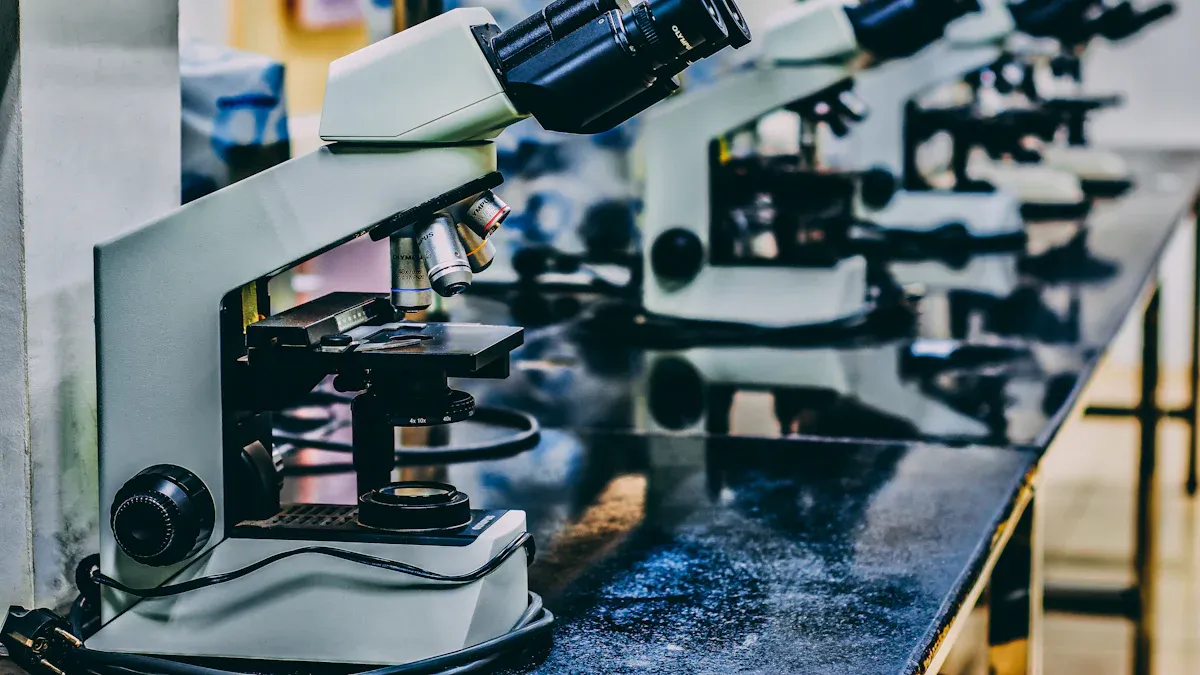
High-precision manufacturing is very important for medical devices. Companies use special inspection methods to check each part. They track every component from beginning to end. This makes sure parts are good and helps find problems. Manufacturers use new technologies to make parts more accurate and waste less material. These steps help patients get better results.
| Evidence Description | Impact on Product Quality |
|---|---|
| Implementation of 100% inspection of unique parts | Every part is checked to meet standards. This lowers defects. |
| Device-specific traceability | Tracking parts improves quality control and accountability. |
| Integration of advanced technologies | New tech makes devices more precise and wastes less material. |
Manufacturers care about the environment too. They use smart materials and save energy in their processes. These changes help nature and make important parts better. More devices are made just for each patient. Medical CNC machining makes custom implants and tools with great accuracy. Agile workflows help make special parts quickly for each patient.
Miniaturization has changed how doctors use imaging tools. Small devices let doctors give care right at the bedside. This means patients do not need to move and get help faster. Companies make portable imaging tools for places outside hospitals. These tools help more people get care in their communities.
Small devices help doctors work faster and give care sooner.
Portable diagnostics help doctors reach people who need care most.
Mini imaging tools let doctors help patients directly and quickly.
Miniaturization also lets doctors use advanced optics in tiny devices. This means doctors can help more patients in more places.
Digital health systems are important in making medical devices today. Manufacturers and clients work together to fix design problems. This teamwork makes products better and gets them ready faster.
A MedTech customer worked with Flex to fix problems in a small diagnostic device. Flex used its optomechanical skills to make a strong design that was easy to build. This partnership helped the product get better and showed how working together helps.
Working with partners like Flex helps companies make and deliver devices with high-performance optics. These partnerships make the product process better and support new ideas in healthcare. Digital health lets imaging data move fast between devices and care teams. This helps doctors make good choices and improves patient care.
People who make medical optics face many problems. Money limits how many features can go in a device. Teams build simple prototypes and use digital tests to save money. Devices are hard to make because they are complex. Modular prototypes and early tests help lower risks. Experts from different fields work together to get better results. Rules and regulations need careful planning and lots of paperwork. Picking good suppliers is important. Companies want partners who know medical materials well. They also keep backup suppliers to stop delays. Projects can slow down if goals change too much. Clear goals and step-by-step plans help teams stay on track.
| Challenge | Solutions |
|---|---|
| Budget Constraints | MVP approach, 3D printing, academic partnerships |
| Technical Complexities | Modular prototyping, multidisciplinary collaboration |
| Regulatory Hurdles | Early consultant engagement, follow standards, thorough documentation |
| Supplier and Material Selection | Qualified suppliers, certifications, secondary sources |
| Design Iterations and Scope Creep | Clear scope, phase-gate process, change control |
Medical optics must follow strict rules. High-risk devices with AI need checks for bias and strong cybersecurity. New rules explain how to label devices and register them. Inspections show that 22% of devices do not follow all rules. Makers must update documents to meet new standards. Some countries now want more control for devices using machine learning.
| Regulatory Issue | Description |
|---|---|
| High-Risk Medical Device AI | Bias mitigation, transparency, cybersecurity required |
| Master UDI-DI Requirements | New labeling and registration timelines |
| Market Surveillance Findings | 22% non-compliance found in inspections |
| EU Harmonised Standards Update | Updated technical documentation needed |
| Machine Learning Device Oversight | Enhanced governance and cybersecurity |
Medical optics are growing fast. From 2025 to 2032, the market will grow 6.4% each year and reach US2.3billion.AsiaPacificleadswitha311,500 per unit, can make access hard. Rules can delay market entry by up to a year. Supply chain problems can cause up to 15% loss in production. These things affect how fast new tools reach patients.
High starting costs per unit
Regulatory delays of 6–12 months
Supply chain losses up to 15%
A SWOT analysis shows strengths, weaknesses, opportunities, and threats in medical optics.
| Category | Description |
|---|---|
| Strengths | Optical systems give doctors clear images during exams. This helps doctors see inside the body and diagnose better. |
| Weaknesses | Light scattering makes deep tissue imaging hard. Special systems are not easy to share across medical fields. |
| Opportunities | New consumer tech can lower costs and add features. There are chances for home monitoring tools and better molecular sensing. |
| Threats | Gaps between academic and industry goals, lack of guidance, and risk of misuse or poor training. Physician burnout may slow new technology use. |
Note: Data security, privacy, and regulatory rules are still big concerns as imaging and diagnostic tools get more advanced.
Artificial intelligence and machine learning are changing imaging. These tools help doctors find diseases sooner. They also help doctors make better choices. Deep learning algorithms can do better than glaucoma specialists. They spot optic nerve damage very well. Machine learning finds changes in fundus photographs before doctors do. In perimetry, AI finds glaucoma before it is diagnosed.
AI makes work easier for doctors and nurses. It lets them help more patients. More people can get good imaging because of AI. This helps reduce health gaps. In diabetic retinopathy, AI is as good as top eye doctors. These new tools help patients get care faster and have better results.
| Study Focus | Findings |
|---|---|
| Deep Learning Algorithm | Did better than glaucoma specialists at finding optic nerve damage |
| Detection of Damage | AI found changes on fundus photographs that OCT confirmed |
| Perimetry | Machine learning found glaucoma before doctors diagnosed it |
Personalized medicine uses imaging and smart devices for each patient. Photonics and flexible electronics are used in smart clothing. These clothes watch health all the time. They send lots of data fast and safely with 5G or 6G networks. Multispectral sensors in smart clothes help doctors see health changes early. This technology makes care better and helps patients feel better.
Smart clothing helps doctors check health in real time.
Fast networks let doctors share data safely.
Multispectral sensors help solve care problems.
Imaging tools are helping global health. Optical technologies can make care better in places that need it. Raman and infrared spectroscopy help doctors find diseases early. Smartphones can make imaging better and cost less. Cheaper optical tools help with surgery and diagnosis.
But some equipment still costs a lot. For example, a colposcope can cost $20,000. This is hard for some places to buy. Even with these problems, optical tools like colposcopy help find cervical cancer early. This is important in sub-Saharan Africa. Decentralized solutions let doctors use imaging far from hospitals. This helps close health gaps. New research is making devices that do both small and big imaging. This could change healthcare everywhere.
Optical imaging helps doctors find diseases early and watch them.
Decentralized tests help stop diseases in low-income countries.
Better consumer technology helps imaging grow in new markets.
Medical optics have made it easier for doctors to find and treat diseases. New devices and smart tools make patient care better. Experts keep working together and doing research to create new ideas. Companies and hospitals team up to share these tools with more people. In the future, doctors will give better care and help more patients everywhere.
Medical optics uses light to help doctors see inside the body. These tools help doctors find and treat diseases. Some examples are OCT, laser surgery, and fluorescence imaging.
Yes. Most medical optical devices follow strict safety rules. Regulatory agencies check these devices before they are used. Doctors learn how to use them safely.
AI looks at images quickly and finds patterns people may miss. This helps doctors diagnose faster and more accurately. AI also lowers mistakes when reading scans.
Some portable devices let patients take pictures at home. Doctors can look at these pictures from far away. This helps manage chronic diseases and telemedicine.
Experts think AI will be used more, and devices will get smaller. There will be better access in remote places. Personalized medicine and wearable sensors will change medical optics in the future.


